
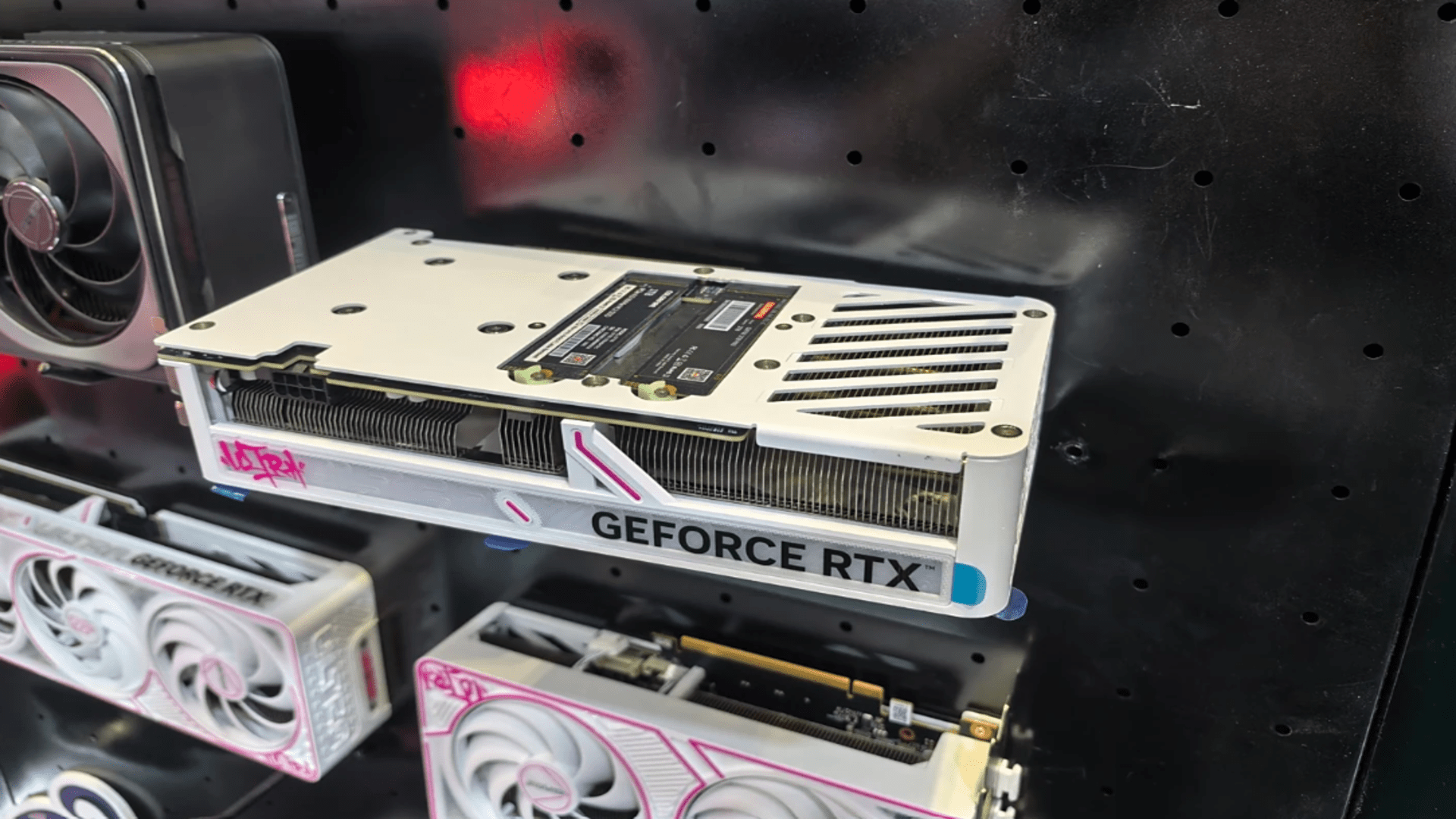
- The assembly of SSDs on a GPU limits your ability to upgrade graphics and storage independently
- The shared PCIe bandwidth creates more complications than the benefits for most office systems manufacturers
- GPU in colorful mid -range iGame ultra tries to do too little justification
Colorful revealed a curious hybrid product in Bilibili World 2025: a graphics card from its ultra iGame series which includes two SSD M.2 locations mounted directly on the PCB.
Integration of storage and graphic treatment may seem effective for compact systems, but it raises questions about practicality and long -term value.
Colorful did not confirm the architecture of the GPU, although observers think that it is based on the NVIDIA GB206 or GB207 silicon, perhaps aligning with the RTX 5050 or 5060.
An integrated approach to graphics and storage
This configuration firmly positions the card in the mid -range category, far from what most would consider the best GPU level.
The remarkable feature of this card is the presence of double SSD m.2 locations at the rear, near the E / S support, allowing users to install readers without separate wiring.
These slots are supported by assembly points for thermal dissipators and are cooled by the same two fans system that manages the GPU itself.
Using PCIE bifurcation, the card divides a single X16 location in eight tracks for graphics and four lanes each for SSDs.
This configuration aims to preserve the bandwidth for both functions while reducing the need for additional extension cards.
For manufacturers working with limited mother locations of mothers or compact ITX cases, this might seem a space saving solution.
The cooling arrangement also suggests that SSD thermal will be actively managed under load – however, the advantages of this provision may not justify compromises.
The storage connection directly to a GPU introduces additional layers of complexity into the configuration of the system, including the management of the BIOS, the sharing of tracks and the upgrading constraints.
Storage and graphics are generally upgraded on separate deadlines and combining them on a single card limits this flexibility.
Visually, the map adopts a white and clean white aesthetic which is distinguished from the most common darker GPU conceptions.
Although this can appeal to personalized PC manufacturers who prioritize appearance, basic performance considerations remain unchanged.
It is unlikely that the SSD locations will support the largest SSD capacities or offer the best SSD speeds on the market, and the GPU itself, depending on its probable architecture, does not target high-level performance.
This puts the product in a case of close use, providing integration without providing leadership in one or the other category.
Currently, the company has not provided detailed specifications or prices, and without this information, the card seems more experimental than practical.
This device is technically interesting, but it is not yet clear why such a product must exist beyond novelty.
For users who care to maximize storage capacity, continue the best GPU performance or build for future flexibility, this design can offer more limitations than advantages.
Via guru3D


