
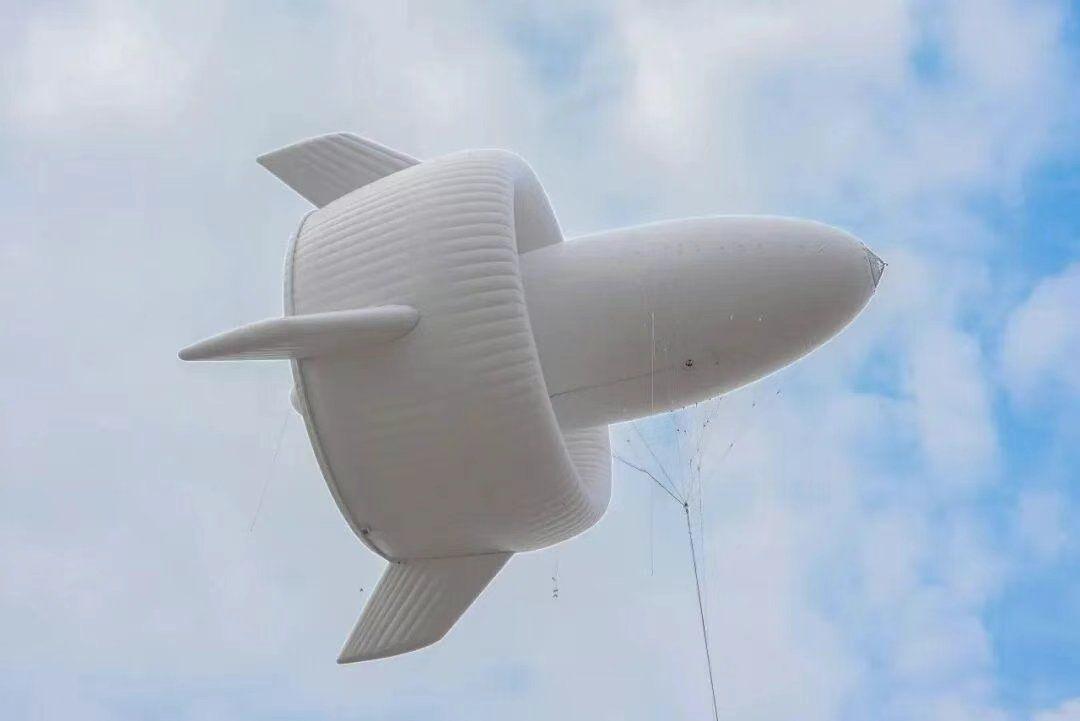
- Chinese company tests megawatt-class airborne wind system supplying electricity to the grid
- Helium-lifted S2000 airship reaches 2 km and generates electricity on the grid
- Developers target urban and off-grid wind energy applications
A Chinese company has tested what it describes as the world’s first megawatt-class airborne wind system, designed to feed electricity directly into the grid.
The helium-lifted platform, known as the S2000, rose to about 6,560 feet and generated power during a recent flight test in southwest China.
The system was developed by Beijing-based Linyi Yunchuan Energy Technology and carried out its first grid connection test near Yibin, Sichuan province.
The first MW S2000 class stratospheric airborne wind power system (SAWES) for urban use successfully completed a test flight in Yibin, southwest China’s Sichuan Province. During the test, the system climbed to an altitude of 2,000 meters, generating and powering 385… pic.twitter.com/CFynQ6h0b8January 13, 2026
385 kilowatt hours of electricity
During the flight, the airship climbed up to about 2 km and generated 385 kilowatt hours of electricity, which was fed into the local grid.
The test marked the first real power generation demonstration for the S2000, also called the Stratosphere Airborne Wind Energy System, or SAWES.
Visually, the platform resembles a large airship, with a floating envelope and an integrated power generation structure suspended below.
The company said the system is approximately 197 feet long and 131 feet wide and tall, making it suitable for deployment closer to urban areas than many experimental airborne wind systems.
The S2000 relies on a helium-filled aerostat to lift a lightweight wind turbine unit into higher altitude wind layers, where airflow is typically stronger and more stable.
The electricity generated at altitude is transmitted to the ground via a tether, which also plays a role in stabilizing and positioning the platform.
Weng Hanke, chief technology officer of Linyi Yunchuan, said the company is targeting both off-grid uses and integration with conventional wind farms.
“One is for off-grid environments such as border outposts, where they can serve as a relatively stable conventional energy source. The other is to complement traditional ground-based wind energy systems, creating a three-dimensional approach to energy supply,” he said.
A key feature of the design is its ducted airflow system, formed between the main shroud and an annular wing.
“It’s like wrapping the wind from all sides, restricting the airflow inside this conduit so that as much wind as possible is captured by the blades. We deployed 12 wind turbines on this conduit,” Weng said.
The company claims that the system can achieve a nominal capacity of up to 3 MW, supported by a total volume of almost 20,000 cubic meters.
Linyi Yunchuan has started small batch production and plans to expand its casing material manufacturing capacity in Zhejiang province.
Follow TechRadar on Google News And add us as your favorite source to get our news, reviews and expert opinions in your feeds. Make sure to click the Follow button!
And of course you can too follow TechRadar on TikTok for news, reviews, unboxings in video form and receive regular updates from us on WhatsApp Also.


