
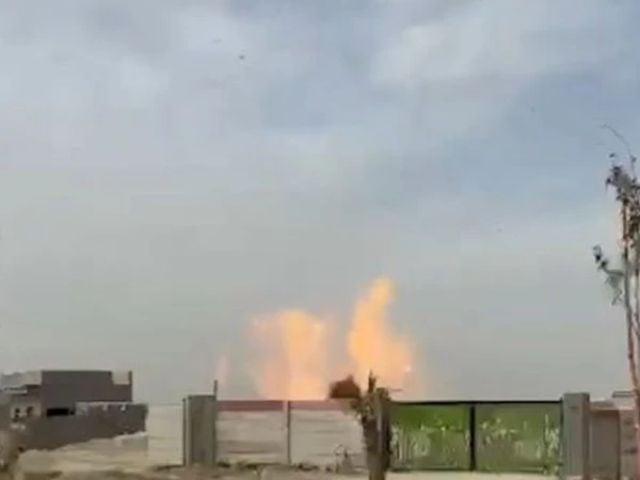
The relentless fire that has raged for more than two weeks in the Karangi Creek region of Karachi was finally extinguished, concluding an episode of 18 days which drew generalized attention.
The fire, which started on March 29 following a drilling drilling 1,200 feet deep, raised serious concerns concerning the nature and volume of the underground gases which fueled it.
Although the flames have calmed down, gas emissions continue from the pit, which caused an eruption of water – initially used by firefighters – to be bursting on the site. The situation remains unstable, with hot water and visible vapors always emerging from the ground.
In response, the Ministry of Petroleum has created a special committee to test methane gas and consulted Cudd Well Control, a global expert in the United States in response to emergency wells.
Technical teams from Pakistan Petroleum Limited (PPL) and United Energy Pakistan Limited made a joint visit, noting that the intensity of the fire had remained unchanged for days, indicating a potentially significant underground gas reserve.
The crater has widened due to the displacement of sand and overflowing water. The preliminary chemical analysis of the site’s water has revealed dangerous levels of chemicals, in particular benzene, toluene, tetrachlorethylene and o -xlene.
Tetrachlorethylene was recorded at 33 µg / L, far exceeding the safety limit of 5 mg / L. Benzene levels have reached 19 mg / L – almost four times the eligible quantity – while toluene was found at 15 µg / L.
Although hydrocarbons were within eligible limits, experts warn that the presence of these dangerous substances poses continuous environmental and health risks.
Additional surveys are underway to assess the long -term dangers and identify the exact source of the gas leak.


