
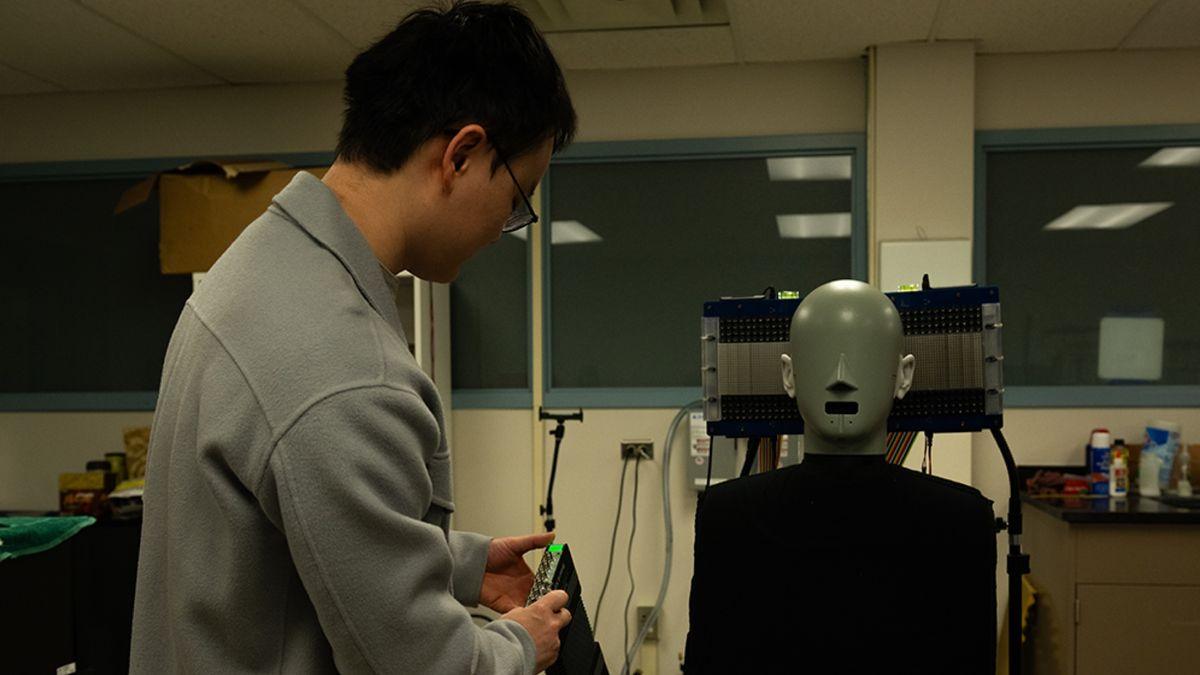
- Twin ultrasonic transducers create a very targeted audio
- Curved sound waves are not audible if you are not in the sweet spot
- Could be great in classrooms, exhibitions or vehicles
Wouldn’t it be great if you could have all the advantages of headphones without having to worry about headphones? This is a new technology creating “audible enclaves” could one day provide.
The technology comes from the acoustics professor Yun Jing at the Pennsylvania State University, whose team has found a way to project sound so that only the planned listener can hear it. It is currently short – approximately 1 m – and relatively silent at 60 dB, but the beach and the volume must be improved using higher power transmitters.
How do audio enclaves work?
The audio enclaves are made using ultrasound waves, which are a higher frequency than the sound waves that we can hear. Two waves have passed through acoustic lenses that fold them, creating a curved path for the waves to follow. These paths converge at destination – it’s you.
The intelligent song here is that each individual wave is inaudible in itself, so no one hears anything unless you are at the ideal point where the two waves are in the right place for the listener’s ears – so they form something that your brain can really distinguish.
Hope is that technology could be used to deliver private audio to public places, as in classrooms or in open-air places, and perhaps also inside vehicles.
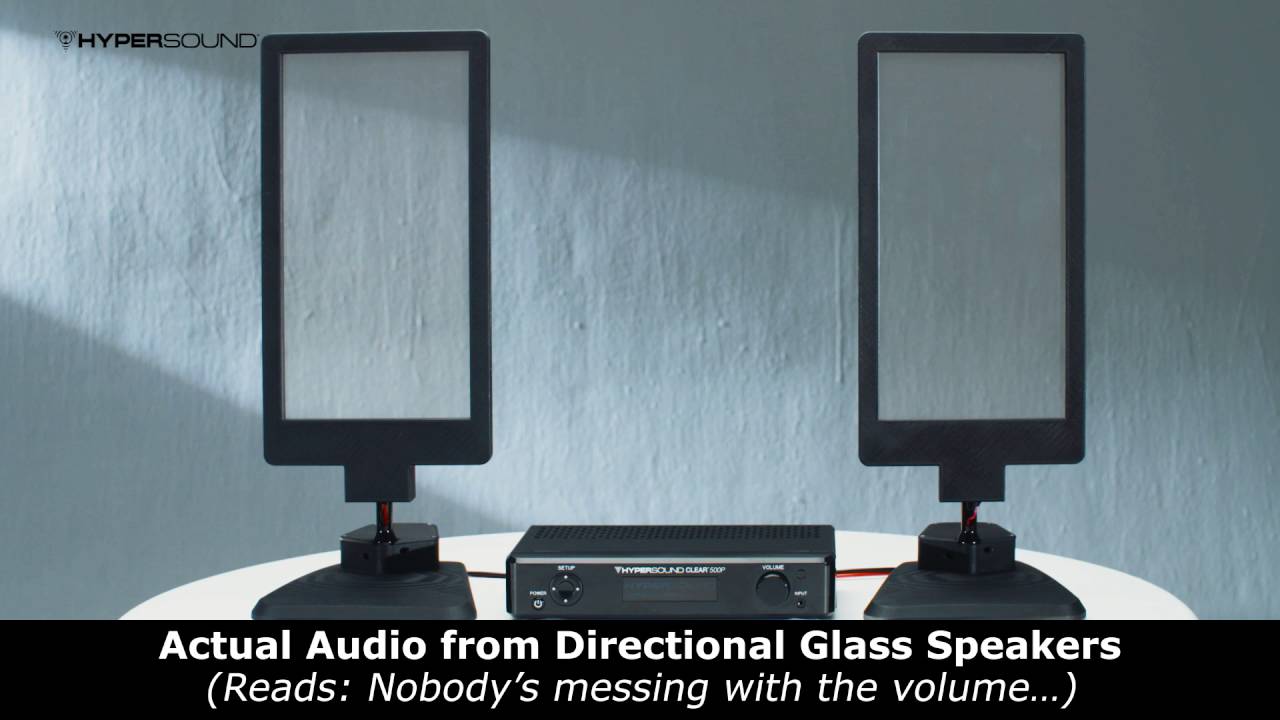
This is not the first time that we have been promised personalized directional audio. In 2016, Turtle Beach announced their hypersound speakers that used transparent glass to create “a highly directional audio”. The promotional video is below.
Turtle Beach announced a partnership with the Chinese audio firm Audfly in 2021, and the resulting development speakers demonstrate one of the drawbacks of technology: where normal speakers start at a low two-digit frequency (that is to say until 20Hz), these directional speakers have a much higher starting point: 500 Hz. For speech but not great for music.
To watch
This technology is not likely to delete all the needs of the best wireless headphones, and may not work on something like an airplane, where the ambient noise is so strong that you will always need some of the best noise cancellation headphones – but imagine if you can pass your television to sending sound that you can hear simply by standing in the button once the family will be in progress, or imagine place. No headsets required – I like the sound of this (if I’m in the Sweet Spot).


