
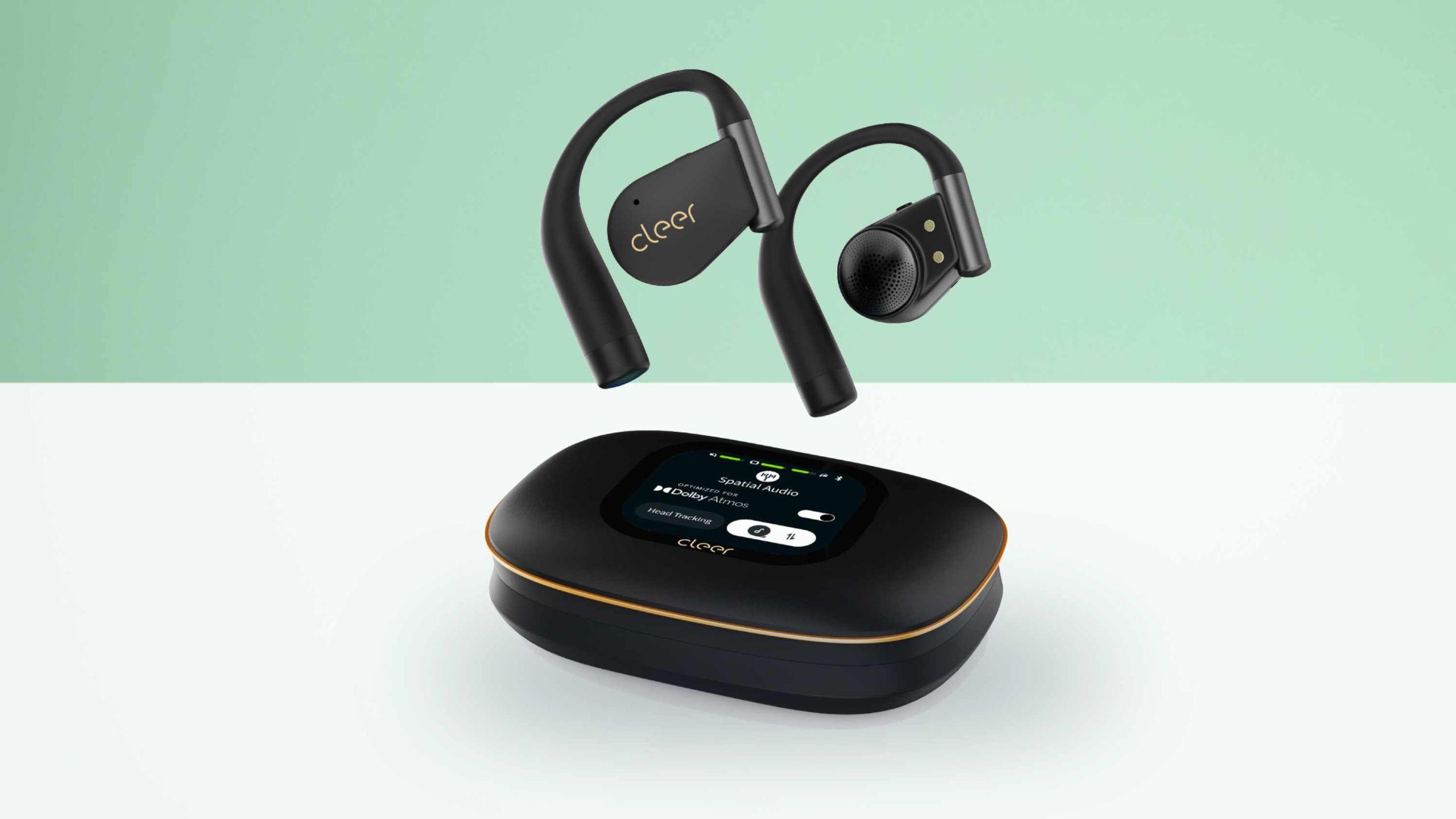
- Cleer Arc 5 has been revealed
- Premium open-back headphones with sports loop
- Offer Dolby Atmos and THX Spatial Audio
I was under the impression that the best open-back headphones were designed for athletes, but I must have missed a memo. The Cleer Arc 5 have just been revealed and are aimed at a very different market.
These new headphones, revealed only four months after the Arc 4, are undoubtedly high-end headphones; they cost $219.99 (around £170, AU$340), and in my opinion only the $299 / £299 / AU$449.95 Bose Ultra Open Earbuds cost more – although the Shokz OpenFit Pro launching in 2026 are about the same price as these new Cleer Earbuds (and also offer spatial audio support, although not the THX-certified kind).
From a glance at the specs list, there’s a lot to like from Cleer here. The headphones have 16.2mm drivers, up to 12 hours of endurance in the headphones (up to 60 with the case), support for a wide range of wireless codecs – LDAC, aptX Adaptive and aptX Lossless – and a case with a built-in touchscreen. But it doesn’t seem like that’s all.
Article continues below
The name of the game Cleer Arc 5 is, according to the company, this particular type of spatial audio. Not only are the headphones optimized for Dolby Atmos, but they are also certified for THX Spatial Audio, thanks to head tracking. As far as I remember, this is brand new for open-back headphones (the aforementioned Shokz set can do immersive head-tracking audio, but they don’t come with the THX badge of approval).
Spatial audio traces
Spatial audio tools like Dolby Atmos and THX aren’t just useful for movies or games; they help develop the soundstage of your music. This is a popular feature with some (but not all) audiophiles, as it can bridge the gap between affordable and high-end kit.
But you know what’s not so popular among audiophiles? Open the headphones. This form factor is useful for security when you’re in busy public spaces, but the nature of the beast usually means audio quality suffers.
In this type of earphone, the speaker is held a little further from your ear: no seal is created between the ear canal and the tip to maximize the path of the sound wave from the speaker to the eardrum. Surrounding sound leaks in and detail, definition and impact (especially in the bass) are lost. Even the best open-back headphones usually struggle with audio quality, compared to budget in-ear headphones.
So it seems like an odd choice for Cleer to offer fancy codec support and features in open-back headphones, since you might not really be able to appreciate them due to their physical design.
Despite features like Dynamic Bass Enhancement, which could go some way to solving this problem, I’d still be surprised if you can actually appreciate spatial audio when noisy traffic zooms and honks all around you.
I bet they’ll sound fantastic when you’re in a quiet place: the spec list puts them above and beyond most of the alternatives I’ve tested recently.
I’ve been wrong about open-back headphones in the past, and I hope I’m wrong again. Otherwise, it will be difficult to justify the high price of open-back headphones that you cannot appreciate…
The best open-back headphones for every budget
Follow TechRadar on Google News And add us as your favorite source to get our news, reviews and expert opinions in your feeds. Make sure to click the Follow button!
And of course you can also follow TechRadar on YouTube And TikTok for news, reviews, unboxings in video form and receive regular updates from us on WhatsApp Also.


