
- NVIDIA Blackwell AMD Target Blackwell with an ACCTINDER MI355X instinct to come
- Oracle Massive Plans 30,000 MI355X Units Cluster for High Performance Workloads
- This is added to Stargate, the Oracle Nvidia GB200 cluster.
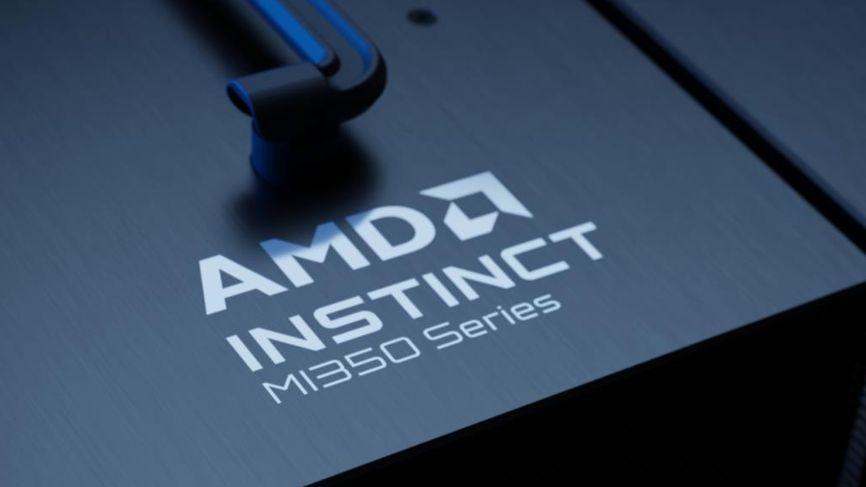
While AI Darling Nvidia continues to dominate the ACC accelerator market, with a share of more than 90%, its nearest rival, AMD, hopes to challenge the Blackwell range with its new GPU MI355X instinct series.
The MI355X, which should now arrive by mid-2025, is manufactured on the 3NM node of TSMC and built on the new AMD 4 AMD 4 architecture. It will include 288 GB of HBM3E memory, a bandwidth up to 8 to / dry, and the management of FP6 and low -precision IT, positioning it as a strong rival of Blackwell B100 and B200 from Nvidia.
In 2024, we reported a number of large victories for AMD, which included the shipment of thousands of its i300x accelerators to Vustr, a leading private cloud computing platform, and in Oracle. Now the latter has announced its intention to build a group of accelerators of 30,000 Mi355X.
Stargate
The latter news was revealed during the recent call for profits from Oracle T2 2025, where Larry Ellison, president and chief of technology, told investors: “In the third quarter, we signed a contract of several billion dollars with AMD to build a group of 30,000 of their last GPU Mi355X.”
Although he did not enter more detail beyond that, Ellison spoke of Project Stargate, saying: “We are in the process of building a gigantic NVIDIA GB200 cluster of 64,000 GPU for the formation of AI.”
He added later: “Stargate seems to be the largest training project on AI, and we expect it to allow us to develop our RPO even higher in the next quarters. And we expect our first big Stargate contract to be soon. ”
Questioned further on Stargate by a Deutsche Bank analyst, Ellison responded who could just as well apply to the group of MI355X Oracle accelerators plans to build.
“The ability we have is to build these huge AI clusters with a technology that actually works faster and more economically than our competitors. It is therefore really a technological advantage that we have on them. If you run faster and you pay on time, you cost less.
Ellison also addressed the strategy of the Oracle data center, saying: “Thus, we can start our smaller data centers than our competitors, then we grow according to demand. The construction of these data centers is expensive, and they are really expensive if they are not full or at least half full. So we tend to start small and then add a capacity as demand occurs. ”


