
.
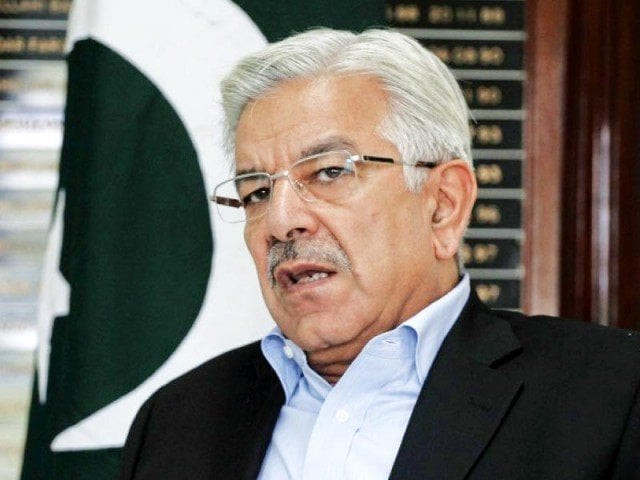
Khawaja Muhammad Asif. PHOTO: REUTERS
ISLAMABAD:
Defense Minister Khawaja Muhammad Asif declared a “total confrontation” with the Taliban regime on Friday, posting on X: “Now it is an open war between us and you.”
The comments come as the armed forces have silenced enemy weapons along the border. It was Pakistan’s most extensive bombardment of the Afghan capital and its first airstrike against the Taliban authorities’ southern power base since their return to power in 2021.
The defense minister struck the harshest tone, warning Afghan Taliban leaders that Pakistan’s patience was running out and there would now be open war between the two neighbors.
“We know the position of our neighbor [Afghanistan]. We are your neighbors and we know your capabilities,” he said, adding that “our patience has limits – there will now be open war,” he wrote in a social media post.
The defense minister stressed that the Pakistani army was not a force from “across the seas”, but Pakistan’s own army, fully capable of crushing “India-backed proxies and Afghan aggression”.
Asif accused the Taliban of becoming a proxy for India after the withdrawal of foreign forces in 2021 and claimed they harbored and exported terrorists while denying the basic rights of their own citizens.
Special Assistant to the Prime Minister on Political Affairs Rana Sanaullah Khan told the Senate that the entire nation stands with the armed forces in the fight against terrorism, as the House unanimously passed a resolution reaffirming national unity against aggression and militancy.
Responding to Opposition Leader Senator Raja Nasir Abbas during a discussion on the resolution, Sanaullah said the unanimous adoption of the resolution by the House of Federation reflected the collective will of the people and upheld the resolve of the nation.
He said that at critical times, the Pakistani nation had always placed full trust in its armed forces and stood firmly behind them. Referring to the recent cross-border aggression, he said the armed forces had provided a strong and effective response while exercising restraint.
Sanaullah said the Pakistani armed forces were highly professional and fully capable of responding decisively to any hostile act, but had shown maturity and responsibility in limiting their action to what was necessary.
He warned that elements involved in cross-border activities had already been given the opportunity to behave responsibly, but if the aggression continued, they would be repressed firmly.
The advisor said the government and political leadership were fully aligned with the decisions of the military leadership regarding national security and counter-terrorism operations.
During the debate, Senator Ali Zafar proposed the formation of a regional mechanism to deal with the situation. Sanaullah suggested referring the matter to the Senate Standing Committee on Foreign Affairs for closed-door briefings from the Ministry of Foreign Affairs and relevant security institutions before a decision is taken.
He noted that friendly countries had facilitated negotiations in the past, but those efforts had not yielded lasting results. He, however, described the proposal as constructive and deserving of in-depth consideration at an appropriate stage.
Sanaullah said the central message of the resolution was clear: the nation remains united against terrorism and supports its armed forces, law enforcement agencies and the families of martyrs.
He added that while political issues should ideally be resolved through dialogue among stakeholders, national security issues require collective resolution. The prime minister has issued invitations for dialogue on several occasions, he said, adding that these discussions could take place regardless of security concerns.
He urged opposition members to separate political differences from the national stance against terrorism, saying that while disagreements are part of democratic politics, unity on national security remains paramount.


