
Defense Minister Says ‘Zionist Agenda’ Risks Provoking Regional Realignment, Threaten Pakistan’s Security As Conflict Widens
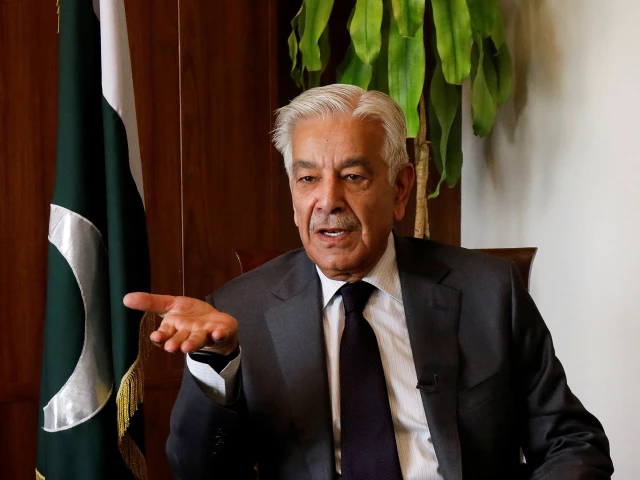
Defense Minister Khawaja Muhammad Asif has warned that the conflict involving Iran could have wider regional consequences for Pakistan, saying the war is driven by a Zionist agenda to expand Israeli influence towards Pakistan’s borders.
“Zionism is a threat to humanity. From the establishment of Israel in the land of Palestine until today, every catastrophe that has befallen the Islamic world, every war that has been imposed on it will show the direct or indirect hand of Zionist ideology and the state,” he wrote in an article on X.
Read: Pakistanis return home from Iran as conflict forces evacuation
He said such a development could create a hostile alignment involving Afghanistan, Iran and India, leaving Pakistan surrounded by adversaries and putting its security at risk.
“Zionism is a threat to humanity. Since the establishment of Israel in the land of Palestine until today, every catastrophe that has befallen the Islamic world, every war that has been imposed on it will show the direct or indirect hand of Zionist ideology and the State. Zionism has…
– Khawaja M. Asif (@KhawajaMAsif) March 3, 2026
Asif added that Pakistanis of all political and religious backgrounds must recognize what he described as a broader conspiracy against the country. He argued that the proposed regional realignment would make Pakistan’s borders insecure and risk reducing the country to a “vassal state”. His remarks come as he links the current conflict to long-standing regional tensions, placing it as part of a broader struggle involving Pakistan’s sovereignty and strategic position.
The minister also praised Pakistan’s nuclear deterrent and armed forces, paying tribute to the country’s martyrs and veterans, while praising former Prime Minister Nawaz Sharif for authorizing the nuclear tests that declared Pakistan a nuclear power. He ended his message with prayers for the unity of the Islamic world, support for Palestine and the continued strength and security of Pakistan.
“May Palestine be free. May our homeland remain strong and secure until Judgment Day.”
Iran-US/Israel War
The broader conflict continued to escalate, with U.S. President Donald Trump warning that a “great wave” of attacks on Iran was yet to come, while senior U.S. officials said the campaign could take time and result in more casualties. Washington has said its aim is to degrade Iran’s missiles, naval assets and security infrastructure, although US Defense Secretary Pete Hegseth insisted the operation would not become an “endless war”.
The fighting has also spread beyond Iran, with Israel saying it carried out strikes in Beirut targeting sites and figures linked to Hezbollah, after Hezbollah admitted launching missiles and drones towards Israel. Iranian state media reported fresh missile strikes toward Israeli targets, while residents in Tehran and Beirut described explosions and panic as the confrontation spread across multiple fronts.
Gulf states including Qatar, Saudi Arabia, Bahrain, Kuwait, Jordan and the United Arab Emirates have joined the United States in condemning Iranian missile and drone attacks in the region. Iran’s ambassador to the UN nuclear watchdog, meanwhile, said the Natanz nuclear power plant had been hit in US-Israeli strikes.
The consequences are increasingly felt beyond the battlefield. Maritime traffic in and around the Gulf was disrupted, major Middle East airports were closed and hundreds of Iranians were seen entering Turkey as fears grew of a further escalation. The growing crisis has also increased political pressure in the United States, where polls cited in the report suggest limited public support for a prolonged military campaign.


