
Islamabad court bars arrests till May 21 in over 230 cases linked to Sangjani rally and protests
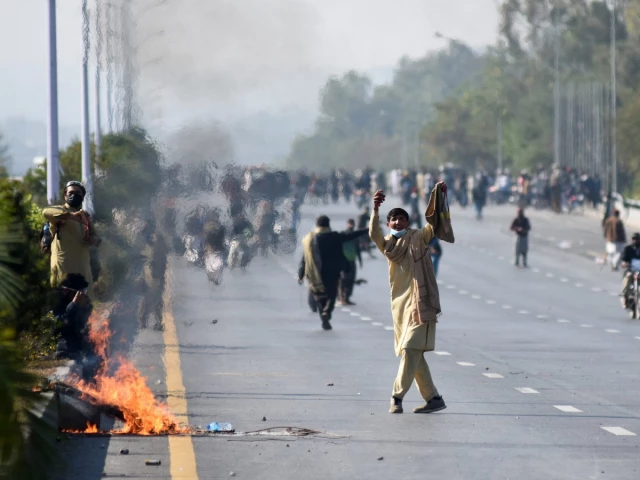
Supporters of former Pakistani Prime Minister Imran Khan’s party, Pakistan Tehreek-e-Insaf (PTI), attend a protest demanding Khan’s release, in Islamabad, Pakistan November 26, 2024. REUTERS
An Anti-Terrorism Court (ATC) in Islamabad on Thursday extended the interim bail of Pakistan Tehreek-e-Insaf (PTI) leaders in over 230 cases related to the November 26 Sangjani rally, Supreme Court protests and other protests.
ATC judge Abul Hasnat Muhammad Zulqarnain, who heard the case, also ordered authorities not to arrest PTI leaders before May 21.
PTI leaders including Umer Niazi, Raoof Hasan and Azam Swati appeared before the court. The court ordered both parties to present their arguments at the next hearing. Several cases were registered against PTI leaders in Tarnol, Ramna, Aabpara and Secretariat police stations, among others.
Read: ATC expedites hearings of PTI protest cases
The November 26 protests were sparked by a call by former Prime Minister Imran Khan and his party, Pakistan Tehreek-e-Insaf (PTI), for a “do or die” sit-in in Islamabad. Thousands of supporters marched in the capital to demand the release of jailed PTI leaders, including Khan, and the resignation of the government over allegations of fraud in the 2024 general elections.
The protests turned violent as demonstrators attempted to break through barricades and enter the capital’s high-security red zone, provoking clashes with police and paramilitary forces, leaving many dead and injured.
The case has a long history, as an anti-terrorism court in Rawalpindi sentenced 82 PTI workers to four months in jail and a fine of Rs 15,000 each after they pleaded guilty to participating in violent protests on November 26, 2024, which left three Rangers and a police officer dead.
The accused admitted being incited by the party leadership, requested leniency and pledged not to join future protests, while the Supreme Court separately granted bail to PTI senator Ejaz Chaudhry and Farhat Abbas in the May 9 cases, ordering the trial to be completed within four months.


