NEWYou can now listen to PK Press Club articles!
At least six members of the Iranian women’s football team have decided to stay in Australia and seek asylum, instead of returning to their home country where they face war and the possibility of worse if they decide to return.
Five of the six team members were granted asylum on Tuesday. Two other people were also seeking asylum, but one of them changed his mind. More than 20 team members came to Australia to participate in the Women’s Asian Cup.
CLICK HERE FOR MORE SPORTS COVERAGE ON PK Press Club
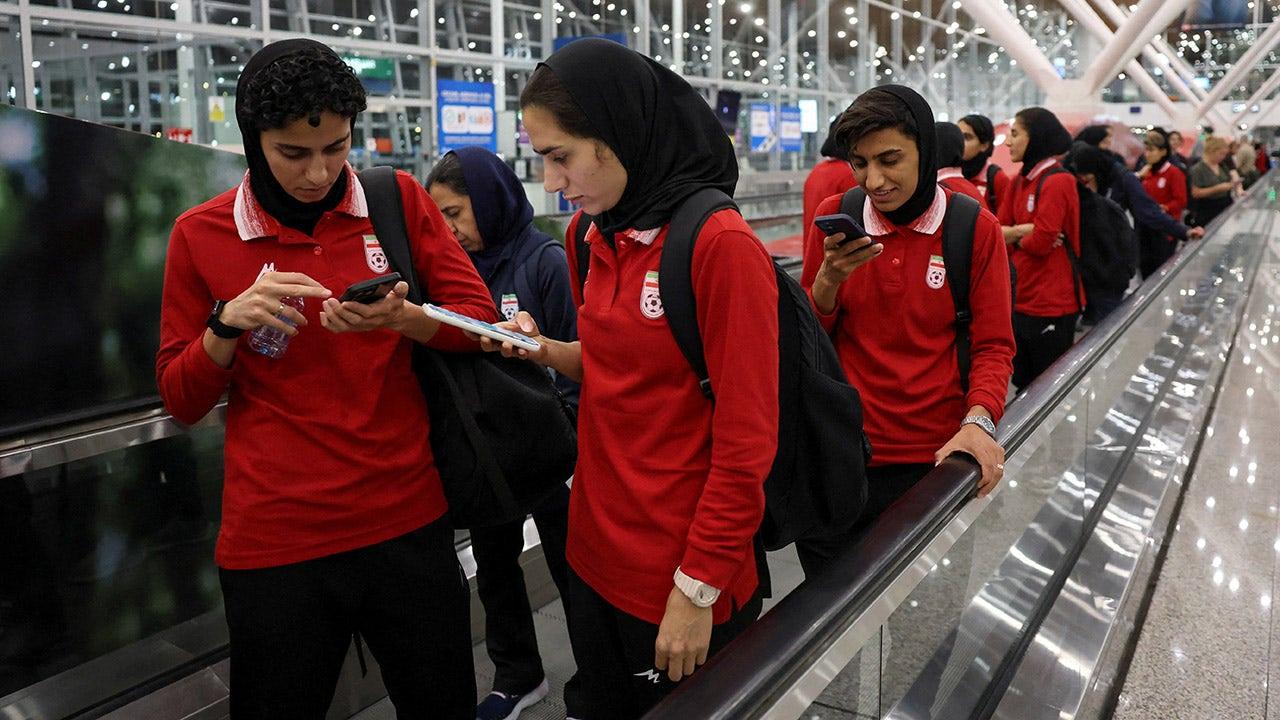
Members of the Iranian women’s national football team appear at Kuala Lumpur International Airport after watching Australia’s AFC Women’s Asian Cup Group A match in Sepang, Malaysia, March 11, 2026. (Reuters/Hasnoor Hussain)
Tina Kordrostami, a town councilor in Ryde, Australia, told PK Press Club in an interview on Wednesday that the reason most of the girls decided to return was because of their families.
“So their family is the number one reason girls want to come home and the number one thing that worries them and scares them,” she said. “The second thing, as I mentioned, is that everything they have is in Iran and they are afraid of their identity and they are losing everything they have built over the last few years for this.
“I know for a fact that they don’t want to live there. They are passionate athletes. These are women who, you know, have so much to say about their identity and who they are. And because they are in the public eye in Iran, they are even more restricted than others. No logical person would want to stay in this country, especially if they have the opportunity to stay. You know, they had it so close that it was offered to them. And they were so close to having all this that they wanted. And yet, they still chose their family over their own, to live their own future.
The team arrived in Australia before Israel and the United States launched a joint offensive against Iran on February 28. The strikes led to the death of Supreme Leader Ali Khamenei.
Iranian players refused to sing their national anthem before the defeat to South Korea last Monday, in what was seen by some as an act of resistance, described by one Iranian commentator as “the height of dishonor.” The team did not specify. But the players sang the anthem and saluted before their defeats to Australia and the Philippines.

Members of the Iranian women’s national football team arrive at Terminal 1 of Kuala Lumpur International Airport after watching Australia’s AFC Women’s Asian Cup Group A match in Sepang, Malaysia, March 11, 2026. (Reuters/Hasnoor Hussain)
More Iranian footballers accept asylum in Australia, under threat of sanctions in their home country
By the end of their participation in the tournament, the possibility of at least some players applying for a humanitarian visa became a reality.
Kordrostami told PK Press Club she thought the Australian government could have done more.
“Here’s one thing I think the government should have done: immediately after the first match, they should have gone into the girls’ hotel, they should have sat down with them,” she said. “By throwing out all the security, all the personnel they had with them, as well as officials from our government. They should have sat down with these girls and they should have prepared everything for them.
“They should have contacted the diaspora and gotten all the family contacts. They should have allowed them to have a clear and open conversation with their families in that room for as long as they needed. …In one day, they should have come up with a plan for these girls to seek safety for their families. the whole team.”
Kordrostami emphasized the importance of what the women who left the team were doing.
“I want more people to talk about these girls,” she said. “These girls are for us a window into Iran, so that everyone can understand exactly what people are going through. Control, coercion, restrictions, limitations, this is the reality for 90 million people in this country.”
Australian officials stressed that they had done everything possible to give the Iranian team the opportunity to stay.

In this photo provided by the office of Australian Home Affairs Minister Tony Burke, Minister Tony Burke, center, poses at an undisclosed location with five Iranian female footballers who have been granted asylum in Australia, Tuesday, March 10, 2026. (Australian Department of Home Affairs via AP)
Australian Home Affairs Minister Tony Burke said the players’ chance of considering asylum was based on last-minute discussions at Sydney Airport, where the women were separated from their guards and given time to call their families.
CLICK HERE TO DOWNLOAD THE PK Press Club APP
“It was all about ensuring the dignity of these individuals so they could make a choice,” he said. “We couldn’t remove the pressure of context on these individuals, of what might have been said to them before, of the pressures they might have felt on other family members.”