
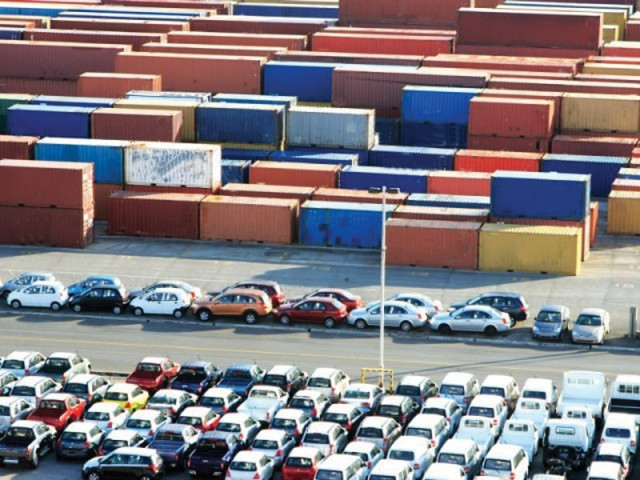
Stalled robotic assembly lines, slowing production and shrinking workforces illustrate the depth of the crisis
Pakistan’s domestic automobile industry is facing intense pressure, weighed down by heavy taxation, uneven import policies and an uncontrolled influx of used vehicles. The situation is particularly alarming given that the sector contributes about 2 percent of the country’s GDP and earns more than $600 million a year in foreign exchange from skilled Pakistani technicians working abroad. In FY 2025 alone, the industry paid over Rs 700 billion in taxes, highlighting its economic importance.
Stalled robotic assembly lines, slowing production and shrinking workforces illustrate the depth of the crisis.
Officials at the Ministry of Industry and Production say regulations are being strengthened to combat the misuse of used car imports and that standards are being aligned with international benchmarks. They added that the new auto policy has been finalized and will be presented to the Prime Minister soon. The IMF is also considered regarding tax and tariff issues, after which the policy will be published. According to the ministry, the new framework addresses concerns raised by automakers, parts manufacturers and other stakeholders.
Read: Auto industry claims Rs50 billion loss from car imports
Manufacturers say that if the government streamlines taxation and regulates imports of used cars, production could stabilize and the livelihoods of hundreds of thousands of families could be protected. Pakistan has become the only auto-producing country in Asia where imported used cars hold a significant market share, accounting for almost 25% of all sales between December 2024 and December 2025. New data compiled from December 2024 to October 2025 shows that used car imports are once again on a sharp rise.
By comparison, used cars account for almost zero percent of sales in India, 0.3 percent in Vietnam and 1.2 percent in Thailand – a contrast that experts say highlights Pakistan’s policy inconsistencies. Other regional economies have restricted these imports to protect their automotive value chains, while Pakistan has moved in the opposite direction.
This divergence widened after the notification (No. 1895) of the Ministry of Commerce of September 30, 2025, authorizing the importation of vehicles up to five years old. Reports suggest that after June 2026, even this limit could be removed, paving the way for a much larger influx.
Pakistan’s automotive sector currently has around 1,200 factories, employing over 2.5 million people. It contributes about 500 billion rupees annually to government revenue and has attracted about $5 billion in foreign investment.
Learn more: Auto sales jump 67% year-on-year
Shehryar Qadir, senior vice president of the Pakistan Automobile Parts and Accessories Manufacturers Association (PAAPAM), warned that pro-import policies could erode the industry’s hard-won gains at a time when industrial revival and localization have been declared government priorities.
Of the 45,758 used vehicles imported into Pakistan between December 2024 and December 2025, almost 99% came from Japan – a right-hand drive market compatible with local road conditions. Imports from other countries remained negligible: 130 units from Thailand, 55 from the United States, 49 from Jamaica, 47 from Germany, 22 from Australia, 20 from China and only five from the United Arab Emirates.
Former PAAPAM chairman Abdul Rehman Aziz said, “There is a lack of coordination between the State Bank, FBR and provincial excise departments, leading to cases where vehicles are imported under one person’s name but registered under that of another.
“99% of used cars go directly from ports to showrooms because importers are not required to use them for any period, which defeats the original intention of easing the situation of overseas Pakistanis,” he added.
Industry estimates show that the local seller sector suffered losses of around Rs 50 billion during this period. The impact on currencies is also clear: local manufacturers use documented banking channels for imports worth around $10,138 per vehicle, while used car importers spend around $14,010 per vehicle, largely through informal means.
Although the government is developing a new auto policy aimed at stabilizing domestic production, stakeholders remain divided on whether localization is feasible under a liberal import regime.
The data indicates that Pakistan is standing out from – and in some ways against – global trends in auto manufacturing, both in terms of policy and market outcomes. Experts say the key question for policymakers is not whether imports should be allowed, but how much they should be and whether the current trajectory aligns with national industrial, employment and fiscal goals.
Car importer and dealer Naveed Muddasir said The Express PK Press Club that “if the misuse of imports of five-year-old used cars is controlled, the local industry could have a good chance of recovery.
Former PAAPAM President Nabeel Hashmi said, “Streamlining taxes and improving the import regime could not only restore the lost position of the sector, but also help Pakistan develop the capacity to export vehicles in the future, thereby unlocking billions of dollars of investment and job creation.”
Despite internal challenges, the automobile industry contributed over Rs700 billion to the national exchequer last year, or 6% of total tax revenue, while employing over 2.5 million people across the country. But falling production, political uncertainty and growing investor anxiety are compounding the sector’s fragility.
Experts say only a clear, robust and long-term auto policy can stabilize this industry – one that protects local manufacturers and allows Pakistan to eventually introduce its vehicles to global markets, potentially earning billions in foreign exchange.
They say the automotive sector remains a vital pillar of the economy and urgently requires firm policy direction. Timely action, they warn, could revive the industry and help get the economy as a whole back on track.
According to the Ministry of Industry and Production, new standards are being developed to combat the misuse of used car imports. A mandatory holding period is also being introduced, during which importers will not be able to sell a vehicle before the government-specified time frame; Advance sales will incur duties and taxes at standard rates.
Officials say the new policy was drafted after extensive stakeholder consultation, with input from committees across the automotive sector. The ministry maintains that the upcoming policy will benefit the auto industry and address its long-standing concerns.


