
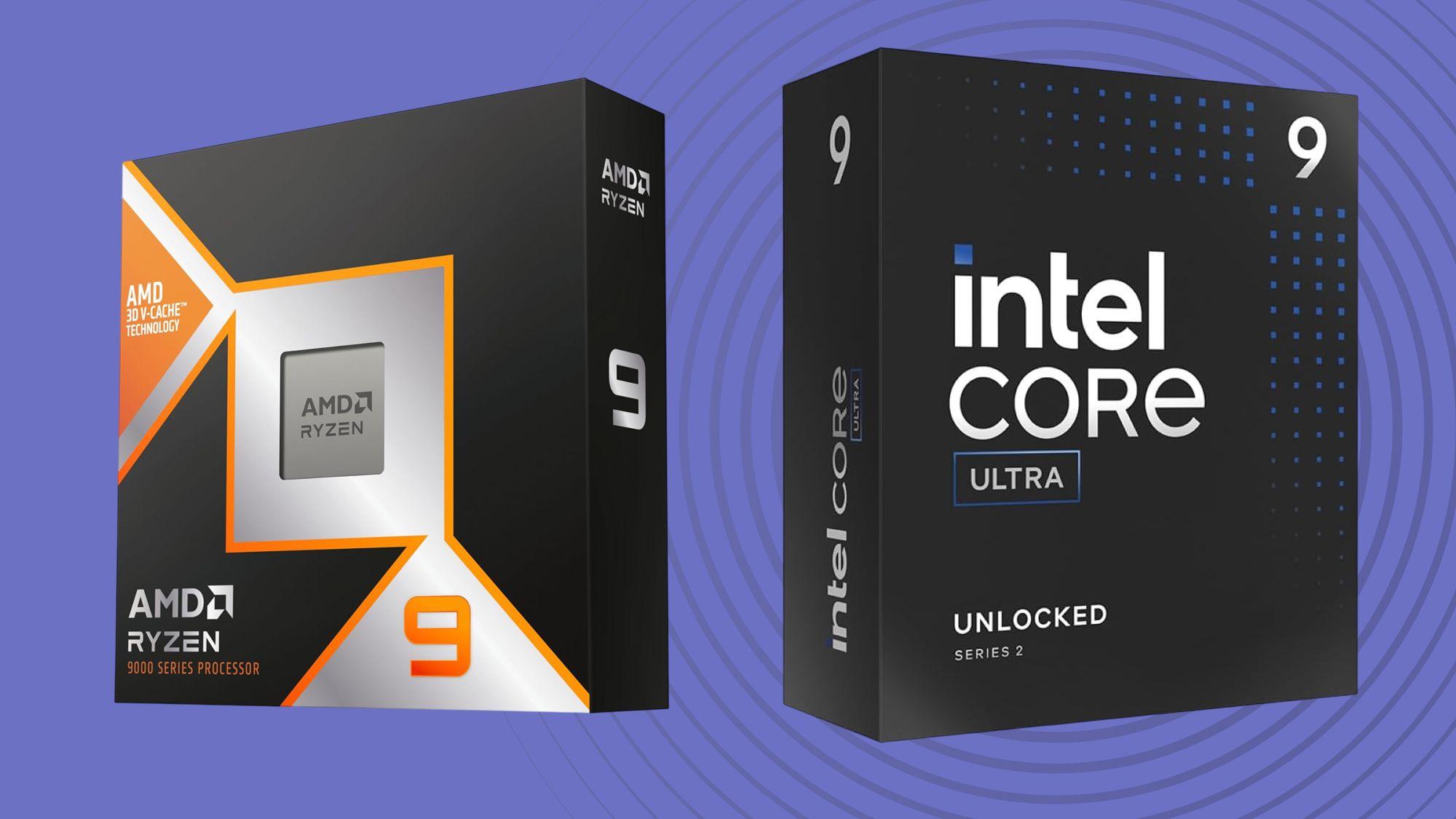
- Intel flagship outperforms AMD while delivering similar overall desktop performance
- AMD charges a lot more for modest gains while at the high end
- Energy efficiency and price now define the flagship value of the processor
I’ve written before about Intel offering buyers better value in the desktop CPU market, wondering if the iconic chipmaker is becoming the new AMD. This question seems even more relevant given that the same pattern is also noticeable when looking at high-level processors.
Intel’s Core Ultra 9 285K is Team Blue’s fastest desktop chip and currently sells for $519 on Amazon (was $599). AMD’s competing Ryzen 9 9950X3D, positioned as a high-end gaming and content creation processor, costs around $676 there.
Despite this price difference, test results show that the performance gap between the two processors remains relatively narrow.
Single-threaded performance favors Intel
Before continuing, I should note that the following comparison is only for mainstream desktop processors. It does not include high-end desktop or server platforms such as Threadripper Pro or Xeon and EPYC processors, which target very different workloads and price ranges.
Looking at the overall CPU benchmarks, the Ryzen 9 9950X3D comes out on top with a CPU Mark score of around 70,155.
The Core Ultra 9 285K follows closely at around 67,427, leaving AMD ahead by a single-digit percentage.
Hardware configurations explain some of the difference, but certainly not all of it.
AMD’s chip offers 16 cores and 32 threads with 170W of power, while Intel’s processor uses 8 performance cores and 16 efficiency cores for 24 threads at 125W.
Single-threaded performance favors Intel. The Core Ultra 9 285K scores around 5,092, compared to around 4,739 for the Ryzen 9 9950X3D, which is important for games and everyday applications that don’t scale well on many cores.
Energy consumption also separates the two. Estimated annual energy costs put the Intel chip at around $22.81, while the AMD processor sits closer to $31.03 under similar assumptions.
This combination of price and efficiency explains much of the cost difference. Intel trades a small amount of peak multithreaded performance for lower power consumption and a much lower retail price.
AMD’s advantage appears most clearly in heavily threaded workloads and cache-sensitive tasks, where the X3D design can still get ahead.
While these gains exist, they don’t double performance as the price difference between the two chips might suggest.
For buyers focused on creative tasks, gaming, general productivity, or mixed workloads, Intel’s best chip delivers near-flagship results without a flagship price.
AMD still leads in absolute performance, but the extra it charges for that certainly seems harder to justify than before.
Follow TechRadar on Google News And add us as your favorite source to get our news, reviews and expert opinions in your feeds. Make sure to click the Follow button!
And of course you can too follow TechRadar on TikTok for news, reviews, unboxings in video form and receive regular updates from us on WhatsApp Also.


