
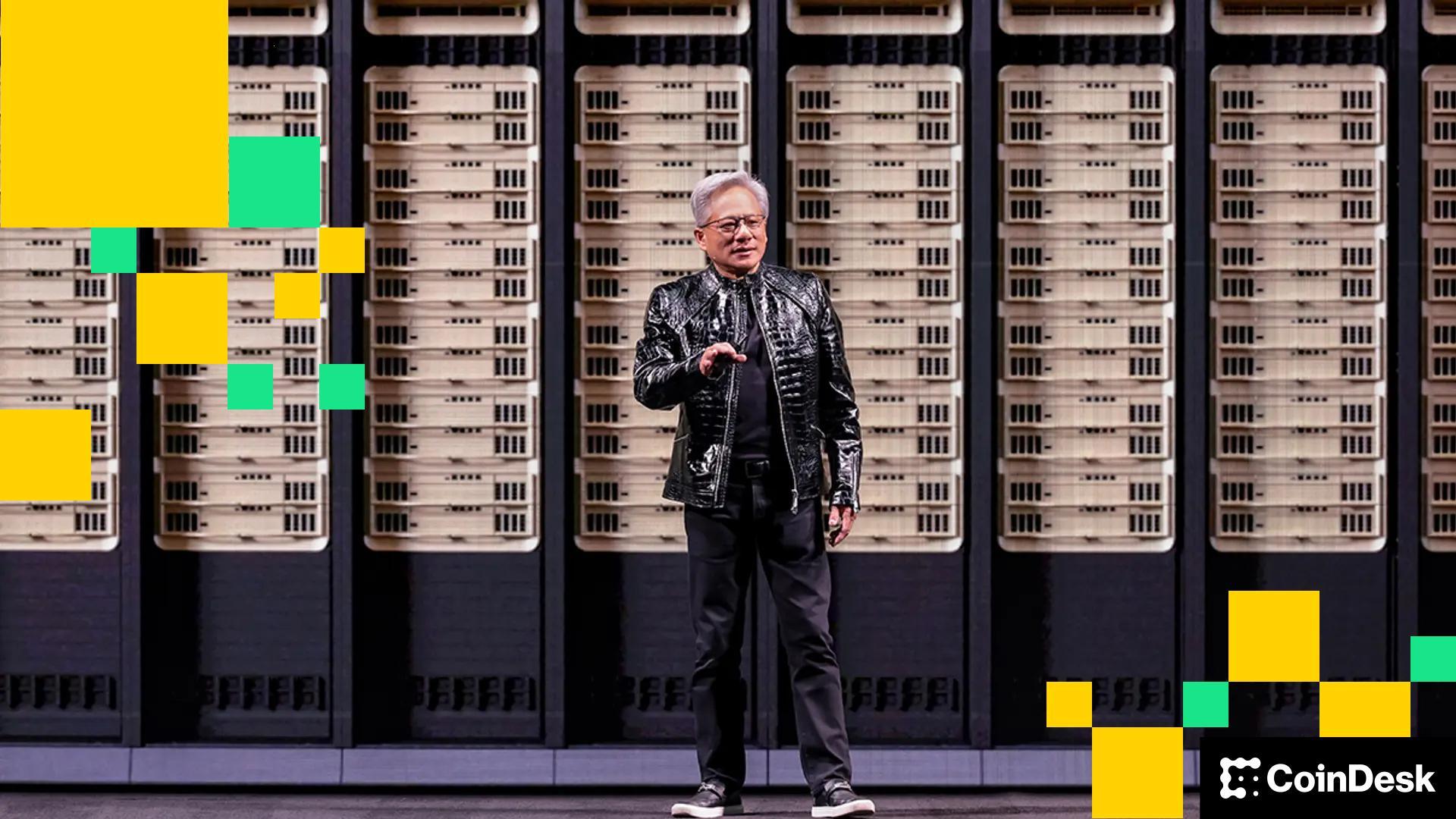
Nvidia CEO Jensen Huang said the company’s next-generation Vera Rubin platform is already in “full production,” revealing new details at CES in Las Vegas about the hardware that he says can deliver five times the artificial intelligence of Nvidia’s previous systems.
Rubin is expected to arrive later this year and is aimed squarely at the fastest-growing part of the AI sector, helping to deliver results from trained models.
Huang said Rubin’s flagship server will include 72 graphics processing units and 36 central processors from Nvidia, and can be attached to larger “pods” containing more than 1,000 Rubin chips.
Much of the discussion focused on effectiveness. Huang said Rubin’s systems could improve the efficiency of generating AI “tokens” — the basic units produced by language models — by about 10 times, aided by a proprietary data type that the company wants the industry as a whole to adopt. He added that the performance increase comes despite a 1.6-fold increase in the number of transistors.
Huang described AI development as a race in which faster processing means reaching the next milestone sooner, forcing competitors to spend aggressively on chips, networking and storage.
How Bitcoin miners are impacted
This same infrastructure race has also reshaped parts of the crypto market.
Bitcoin miners increasingly present themselves as energy and storage space operators rather than pure crypto plays, offering their energy contracts, cooling capacity and data center footprint to AI clients.
Hosting AI workloads can generate more stable cash flow than bitcoin mining during down cycles, especially for companies with cheap energy, existing sites, and cooling capacity.
But the AI boom is also raising the bar. Data center space is becoming a prime asset, and the best sites are being bid up by hyperscalers, cloud computing companies and AI startups.
This can ease rent, equipment costs and financing barriers for small miners. In other words, mining companies that look like infrastructure companies could win, while those that rely on purely mining margins will face a tougher 2026.
At the same time, Nvidia also introduced new network switches using a connection method called co-packaged optics, a key technology for linking thousands of machines into a single system.
The company said CoreWeave will be among the first to receive Rubin systems and expects Microsoft, Oracle, Amazon and Alphabet to adopt them as well.


