
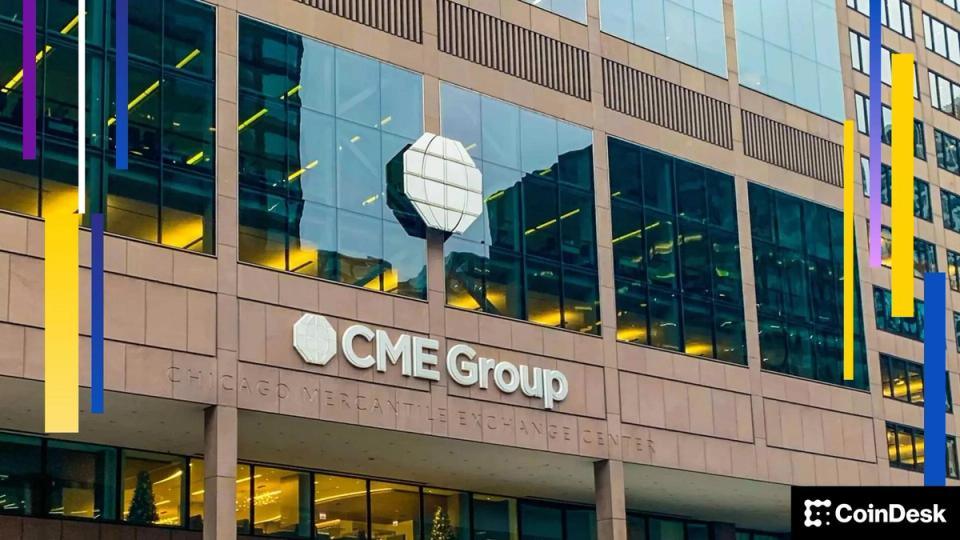
Bitcoin once hailed as an anti-establishment asset and an antithesis of Wall Street, can now pander to the savvy traders on those same floors.
Trading of the leading cryptocurrency is gradually moving to the CME Group, and the exchange’s move to 24/7 derivatives later this year could solidify its role as the dominant venue for institutional crypto risk.
The change removes one of the last advantages of crypto exchanges: seamless market access.
“You will see more traditional hedge fund managers become more interested in the asset class, because they will be able to trade them on instruments they are familiar with, without having to upgrade their technology or move their signals,” Karl Naim, chief commercial officer at XBTO, told CoinDesk. “Why would they want to take counterparty risk with an entity they don’t know?”
CME already leads the regulated bitcoin futures markets in terms of open interest, and its contracts support much of the hedging activity related to U.S. spot ETFs. However, until now, trading has paused over the weekend, producing the famous “CME gaps” and preventing institutional investors from adjusting their positions while offshore exchanges continue to operate.
Trading 24 hours a day removes this constraint. Institutions that once relied solely on exchange-traded funds (ETFs) or avoided exposure on weekends will be able to hedge permanently, narrowing the arbitrage windows between the prices of regulated futures and offshore perpetual swaps.
As these loopholes disappear, so does the need for large allocators to maintain their exposure to crypto exchanges simply to access them. For institutions that prioritize regulatory clarity and establishing clearinghouses, CME is starting to look less like an alternative and more like a default solution.
Even crypto exchange executives are aware of this. In January, OKX President Hong Fang wrote in a CoinDesk opinion piece that crypto derivatives trading could one day rival, or even surpass, spot volumes on major global exchanges, making U.S.-regulated volatility markets an even stronger anchor for bitcoin price discovery around the world.
Institutions in charge
For Naim, this change reflects a broader shift in how capital flows into bitcoin. What started as grassroots activism by retail traders seeking BTC as an alternative to Wall Street has turned around, with traditional institutions now taking the lead.
“Today we’re talking to a lot of sovereigns, a lot of institutions. They’re going with what they know,” he said, describing allocators who first accessed the asset through spot ETFs before considering more complex strategies.
As institutional positioning carries more weight, Bitcoin’s near-term direction increasingly reflects global risk sentiment.
“If [Trump attacks Iran]“Gold has already started to recover. Stocks will fall. Bitcoin will go down.
In this framework, bitcoin behaves less like a standalone cryptocurrency exchange and more like a macro instrument, valued alongside stocks and commodities rather than apart from them.
Naim recognized the irony.
“Bitcoin was all about decentralization,” he said.
But as institutional capital increases and liquidity consolidates within regulated clearinghouses, the infrastructure surrounding the asset becomes increasingly centralized – because institutional money pursues risky assets, not risky platforms.


