
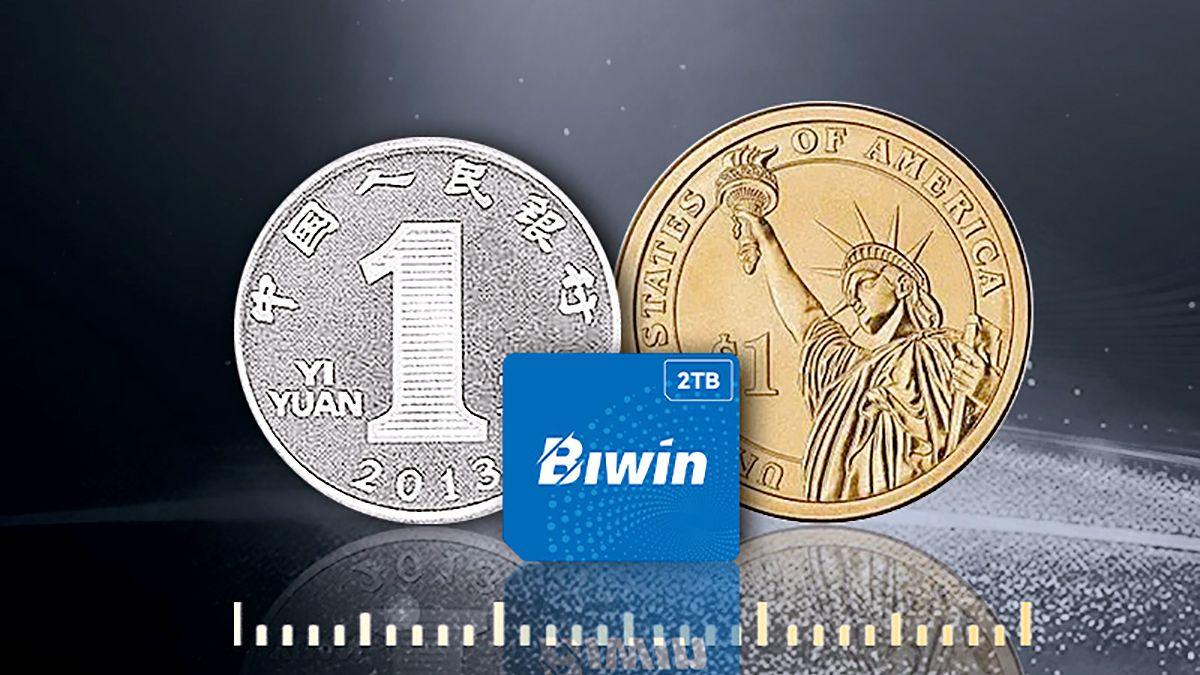
- Biwin’s mini SSD brings small NVMe storage to consumer devices
- Format’s future depends on whether Biwin opens the standard to others
- Tray-loaded design offers quick removable storage, but adoption remains uncertain
Biwin’s Mini SSD form factor has taken the next step into the consumer market with the small NVMe CL100 card now available for purchase.
The product is a faster alternative to microSD with a much smaller footprint than an M.2 2230 reader.
The CL100 measures just 15 x 17 x 1.4mm, weighs around 1g, and uses a SIM tray-style slot rather than a traditional connector. It supports PCIe 4.0 x2 and NVMe 1.4 with reported speeds of up to 3,700 MB/s read and 3,400 MB/s write. Random performance reaches up to 650,000 IOPS. The card is waterproof, dustproof and drop-proof up to 3m.
RD510 USB Enclosure
Capacity options are 512GB for ¥599 ($85), 1TB for ¥1,099 ($155), and 2TB for ¥2,199 ($311). Chinese retailers are reportedly already selling the two smaller versions.
Biwin also offers the RD510 (pictured above), a 40Gbps USB4 enclosure with a small fan that turns the Mini SSD into a portable external drive. It is intended to help push the format beyond handhelds and into laptops, tablets and cameras that could benefit from fast removable storage.
The new drive follows early use in gaming handhelds such as the GPD Win 5 and OneXPlayer Super X. These devices introduced the idea of a platter-loaded NVMe module that could be pin-swapped.
Once removed, the card functions much like an internal SSD ripped from a laptop – just much smaller.
The Mini SSD format still faces an obstacle that is difficult to ignore. We noted in September that new storage standards only gain traction when they are supported by more than one manufacturer.
MicroSD was successful because SanDisk submitted it to the SDA, allowing others to adopt it. Biwin has not confirmed any plans to follow this path.
Without support from groups like the SDA or PCI SIG, Mini SSD may remain too niche for wider adoption.
The speed, robustness and small size of the format give it obvious appeal, but unless other companies adopt the standard, it risks repeating the pattern of previous proprietary formats that never reached their true potential, which would be a huge shame.
Follow TechRadar on Google News And add us as your favorite source to get our news, reviews and expert opinions in your feeds. Make sure to click the Follow button!
And of course you can too follow TechRadar on TikTok for news, reviews, unboxings in video form and receive regular updates from us on WhatsApp Also.


