
- Broadcom reuses APU label for networking silicon rather than graphics integration
- BCM4918 takes packet handling away from processors with dedicated offload engines
- Wi-Fi 8 hotspots increasingly look like compact edge computing platforms
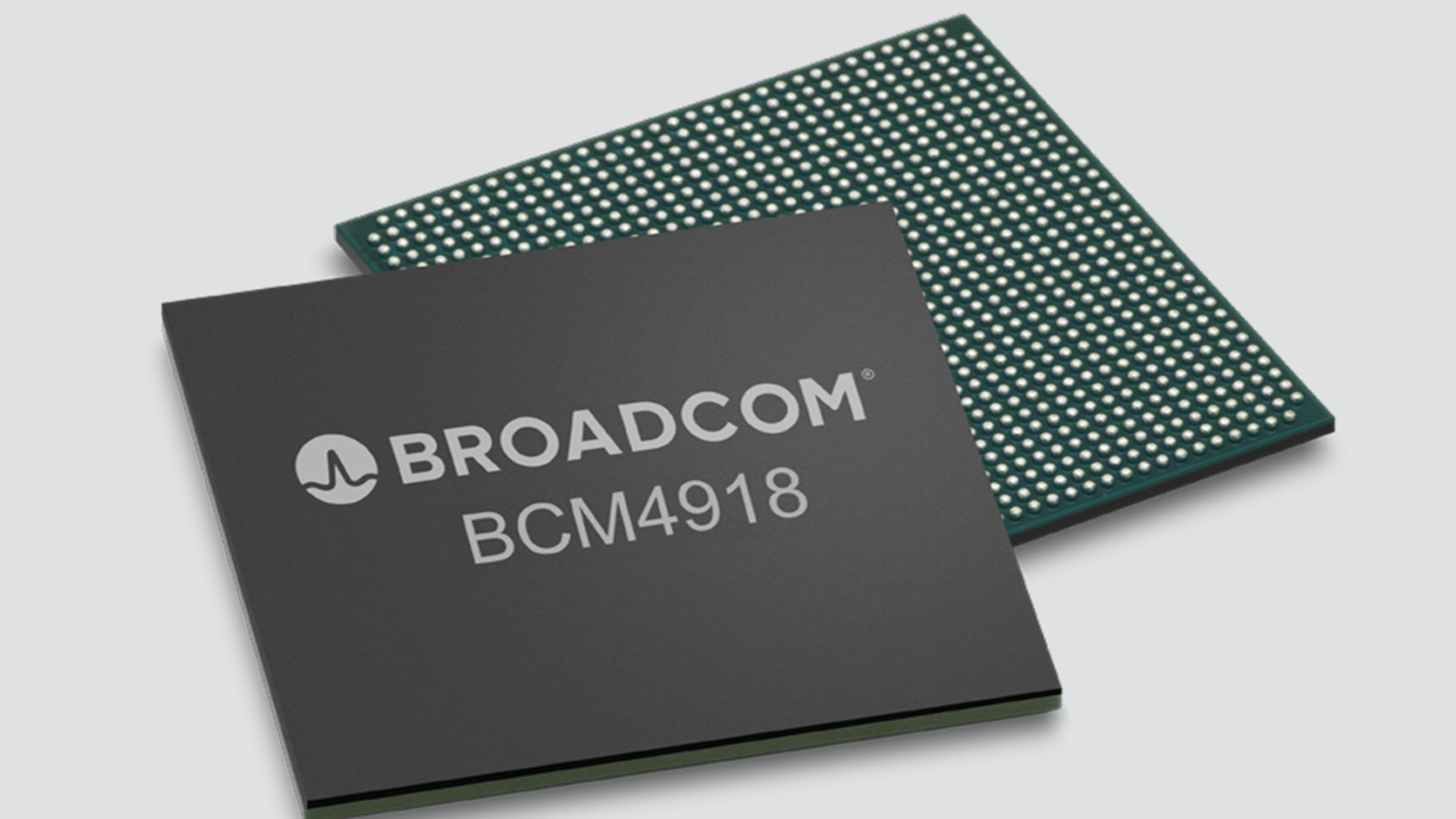
Broadcom introduced the BCM4918 network processor for high-end residential Wi-Fi 8 access points, reviving the accelerated processing unit label in a context far removed from its original meaning.
Historically, the term APU described AMD processors combining a general-purpose processor with integrated graphics on a single chip.
In contrast, Broadcom applies the phrase to a system-on-a-chip that integrates compute cores, network offload engines, security blocks, and AI logic on the device, without any GPU capabilities.
Computing and packet management architecture
At the center of the BCM4918 is an ARMv8-compatible quad-core CPU complex intended for control plane operations and client software.
Instead of directly handling traffic, the processor is complemented by a dual-execution packet processor that independently manages wired and wireless data paths.
This design allows most network traffic to bypass the CPU entirely, reducing contention and avoiding software bottlenecks under sustained throughput demands.
Such separation between control and data planes is common in high-end networking equipment, although its effectiveness in residential access points depends on the vendor’s firmware implementation.
Broadcom includes its Neural Engine as part of the BCM4918, enabling local inference for certain machine learning tasks.
This capability supports the idea of hotspots functioning as edge computing platforms rather than just connectivity devices.
However, available documentation does not quantify inference performance, supported models, or realistic workloads.
Without these details, the practical importance of in-device AI remains difficult to assess beyond general claims of autonomy and responsiveness.
The networking subsystem combines acceleration engines with integrated multi-gigabit Ethernet PHYs, including support associated with 10GbE connectivity for wired backhaul scenarios.
Expansion options include four PCIe Gen3 interfaces and two USB controllers, allowing additional radios or peripherals to be connected.
For security purposes, features like secure boot and cryptographic acceleration are built directly into the silicon, which should help residential networking hardware handle sensitive data and frequent software updates.
Broadcom focuses on reducing board complexity by consolidating processor cores, AI logic, network acceleration and security features into a single 19 x 19 mm FCBGA package for standard residential temperatures.
BCM4918 appears less focused on current AP performance and more on future software-based differentiation, assuming vendors can exploit features that remain largely described.
TechRadar will cover this year’s events extensively THESEand will bring you all the big announcements as they happen. Visit our CES 2026 News for the latest stories and our hands-on verdicts on everything from wireless TVs and foldable displays to new phones, laptops, smart home gadgets and the latest in AI. You can also ask us a question about the show in our Live Q&A from CES 2026 and we will do our best to answer them.
And don’t forget to follow us on TikTok And WhatsApp for the latest news from the CES show!


