
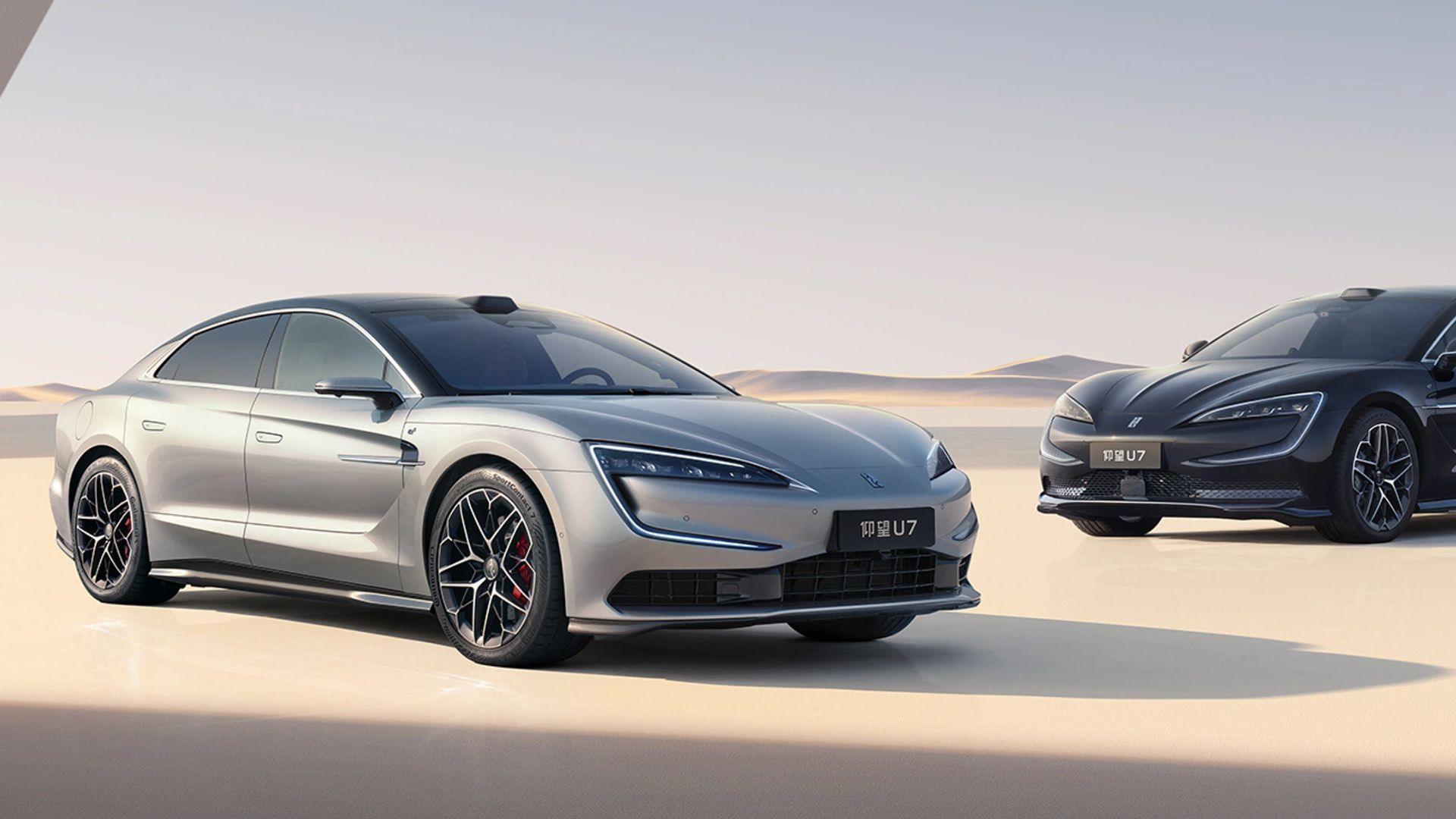
- The Yangwang U7 will be the first model to use the new Blade Battery technology
- Company claims Blade 2.0 can travel more than 625 miles on a single charge
- BYD is working on high-performance electric vehicles that also offer considerable range
Not content with being a global leader in electric vehicle sales, Chinese auto manufacturing giant BYD is preparing to reveal everything about the next generation of its batteries and charging systems during a “disruptive technology” event taking place in China this week.
Information is already being released by the company on social media, including that the Yangwang U7 will be the first high-performance electric vehicle from the BYD stable to receive the second generation of its advanced Blade battery technology.
The company claims that the high-power, four-motor electric vehicle will be capable of providing a maximum range of 1,006 km (625 miles) on a single charge, according to China’s CTLC testing standard (via Car News China).
When adjusted to Europe’s stricter WLTP cycle and North America’s EPA standards, those numbers still hover around 559 miles and 450 miles respectively, making it easily the longest-range electric vehicle on sale.
In addition to the Yangwang U7, BYD plans to introduce the Blade Battery 2.0 in a number of Denza models, as well as the BYD Seal 07, Sealion 06 and a recently announced Great Tang seven-seater SUV (see image below), which clearly has manufacturers like Kia, Hyundai and Volvo in their sights.
Even in this massive luxury crossover, the Chinese automaker says its upcoming battery technology will be capable of going 590 miles according to the CTLC testing standard, more than 200 miles more than the Kia EV9, for example.
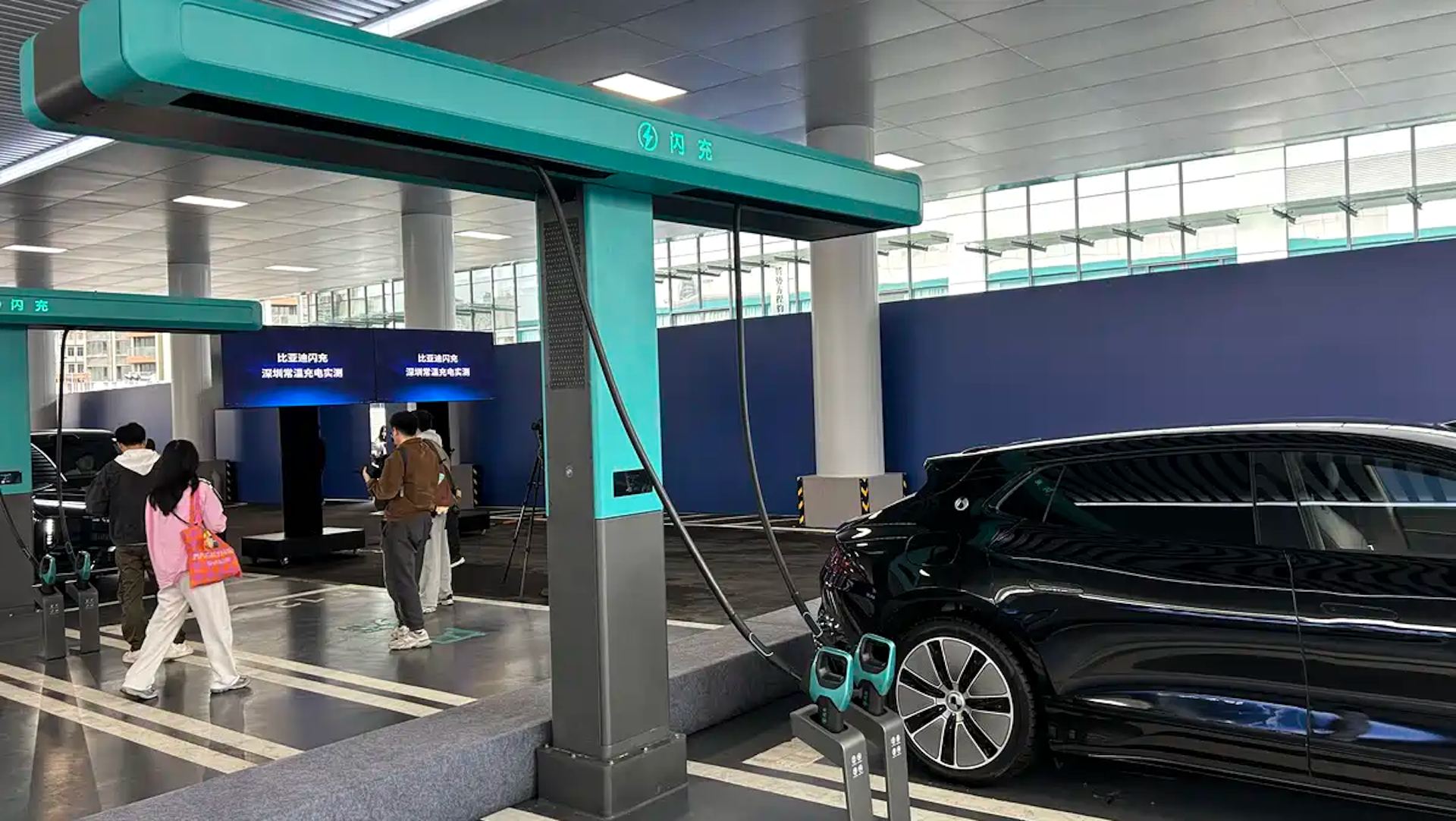
Not content with simply producing extremely energy-dense EV batteries, BYD has also been working on its megawatt “Flash Charging” network, capable of supplying up to 1,500 kW of electricity to compatible EV batteries.
It has released a number of charging times from 10 to 70 percent for models set to receive its Blade Battery 2.0 technology, with the Yangwang U7 apparently taking just four minutes and 54 seconds to reach the aforementioned state of charge.
Finding a charging outlet in Europe and the US providing just 350 kW is difficult enough, but BYD says it will roll out 20,000 of its innovative gas station-style flash charging stands in China this year.
Analysis: it’s all in the chemistry
The more relevant point here is not the fact that BYD, alongside Chinese battery manufacturing giant CATL, has managed to improve the energy density, charging rates and longevity of their electric vehicle batteries. That’s because they did it using lithium iron phosphate battery chemistry.
While its competitors explore more expensive nickel-manganese-cobalt (NMC) cathodes or await the arrival of mass-produced all-solid-state batteries, BYD has gradually improved its relatively inexpensive LFP technology to match the statistics of more expensive alternatives.
Judging by the progress being made, there’s likely even more room for improvement here, which could open the door for Blade Battery 2.0 technology to eventually seep into more affordable mass-market BYD models, both in China and elsewhere.
Currently, the BYD Seal can travel up to 345 miles on a single charge in the UK, according to WLTP testing. But the second-generation battery could see those numbers rise to over 400 miles, or even more.
In addition, future owners will also be able to use ultra-fast charging, which will better align electric vehicle charging sessions with refueling stops.
If the infrastructure can be put in place, we will start to see customer attitudes towards electrification change dramatically.
Follow TechRadar on Google News And add us as your favorite source to get our news, reviews and expert opinions in your feeds. Make sure to click the Follow button!
And of course you can also follow TechRadar on YouTube And TikTok for news, reviews, unboxings in video form and receive regular updates from us on WhatsApp Also.


