Health

World news in brief: Gaza latest, Americas lose measles-free status and Brazil recovers from tornado

Fuel is needed to power machinery for critical operations, including water, sanitation, hygiene, health and rubble clearance. Education, nutrition and protection works will also be possible through the delivery of diesel, OCHA said, noting that three-quarters of the total amount went to the south and a quarter to the north. The latest UN data also […]

World news in brief: Gaza latest, Americas lose measles-free status and Brazil recovers from tornado Read More »

Ensuring access to drinking water as climate threats increase

“Health facilities are where vulnerable people seek healing. Yet without adequate water, sanitation and hygiene, for too many people, expected care can turn into unintended harm,” said Dr Hans Kluge, World Health Organization (WHO) regional director for Europe. Stressing that health care is “put to the test like never before,” Dr. Kluge insisted that strengthening

Ensuring access to drinking water as climate threats increase Read More »

Syria’s future threatened by serious funding shortfall

The development comes 11 months after the country’s devastating civil war ended with the overthrow of the Assad regime by opposition forces loyal to new President Ahmad Al-Sharaa. Today, as Syrians return home in growing numbers, the shattered country faces chronic shortages of foreign investment, medicine, electricity and equipment. According to the WHO, only 58

Syria’s future threatened by serious funding shortfall Read More »

Catch-up vaccination campaign is “a lifeline” for children in Gaza

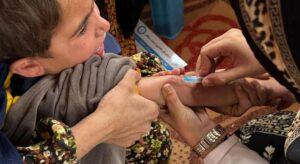
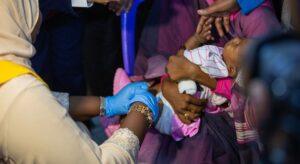
Estimates indicate that one in five children under the age of three have not received any doses or been vaccinated because of the war, putting them at risk of outbreaks of vaccine-preventable diseases. The catch-up campaign aims to vaccinate these children against measles, mumps and rubella, diphtheria, tetanus, whooping cough, hepatitis B, tuberculosis, polio, rotavirus

Catch-up vaccination campaign is “a lifeline” for children in Gaza Read More »

World news in brief: Call for self-sufficiency in financing health care, Australian treaty with indigenous peoples, Haitian women in danger

Healthcare aid from abroad is expected to see a 30% to 40% drop this year compared to 2023, according to the United Nations health agency. This has already led to reductions of up to 70 percent in key health services in some of the 108 low- and middle-income countries outlined in a new WHO report.

World news in brief: Call for self-sufficiency in financing health care, Australian treaty with indigenous peoples, Haitian women in danger Read More »

Surviving the next pandemic could depend on where you live

The study, released Monday ahead of G20 meetings later this month in Johannesburg, South Africa, shows that unequal access to housing, health care, education and employment puts millions more people at risk of disease. The report released by UNAIDS – the global agency dedicated to ending AIDS and HIV infection – reveals that inequalities not

Surviving the next pandemic could depend on where you live Read More »

A new effort is underway to combat toxic mercury pollution

Mercury is a toxic metal that can harm the brain, lungs, kidneys and immune system. It is particularly dangerous for children and pregnant women. Mercury pollution often results from industrial activities, including small-scale gold mining, and can travel long distances through the air and water. Citizens of Minamata, Japan, suffered for decades from mercury poisoning,

A new effort is underway to combat toxic mercury pollution Read More »

Around 224 million women still do not have access to family planning

This increased use reflects a major health success that has enabled millions of young people to avoid unwanted pregnancy and choose their future, but UNFPA said that “for far too many young people, the basic human right to choose whether or not to have children continues to be compromised.” “Contraceptives save lives” According to UNFPA,

Around 224 million women still do not have access to family planning Read More »

Global alliance meets in Doha to tackle hunger crisis

Addressing heads of state, ministers and international partners, UN General Assembly President Annalena Baerbock said the current food crisis is not the result of scarcity, but of inequality, conflict and policy choices. Last year, more than 670 million people went hungry and 2.3 billion faced moderate or severe food insecurity. “Billions of people wonder where

Global alliance meets in Doha to tackle hunger crisis Read More »

Scroll to Top