
India is expected to fill the reservoirs, which could reduce the river’s flow to zero.
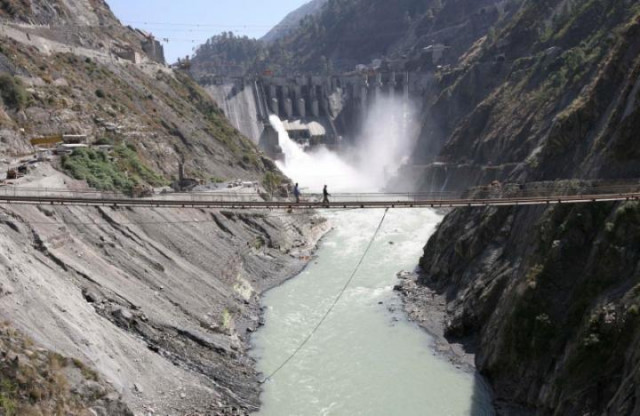
Workers walk on a bridge near the recently inaugurated 450 megawatt hydroelectric project, located at Baglihar Dam, on the Chenab River which flows from Indian Kashmir to Pakistan, in Chanderkote, about 145 km (90 miles) north of Jammu October 10, 2008. REUTERS
India released a flood of water into the Chenab River. According to reports, the flow of the Chenab River increased to 58,300 cusecs after India released water from its dams. India is expected to fill the dams, which could reduce the river’s flow to zero.
Water levels in rivers and reservoirs provided by a WAPDA spokesperson:
-
Tarbela (Indus River): inflow 20,500 cusecs; Flow rate 28,000 cusecs.
-
Mangla (Jhelum River): Inflow 3,400 cusecs; Flow rate 35,000 cusecs.
-
Chashma Dam: inflow 32,400 cusecs; Flow rate 35,000 cusecs.
-
Marala Head (Chenab River): inflow 63,200 cusecs; Flow rate 56,900 cusecs.
-
Nowshera (Kabul River): inflow and outflow 7,400 cusecs.
Tank levels:
-
Tarbela Reservoir: water level 1,490.27 feet; Storage 2.668 million acre-feet.
-
Mangla reservoir: water level 1,212.10 feet; Storage 5.051 million acre-feet.
-
Chashma reservoir: water level 646.60 feet; Storage 0.197 million acre-feet.
The total usable water in Tarbela, Mangla and Chashma reservoirs is 7.916 million acre-feet.
The spokesperson added that the inflow and outflow measurements for Tarbela, Chashma, Nowshera and Mangla are based on 24-hour average flow rates. Entry and exit data for Head Marala and other locations are recorded at 6 a.m. today.


