
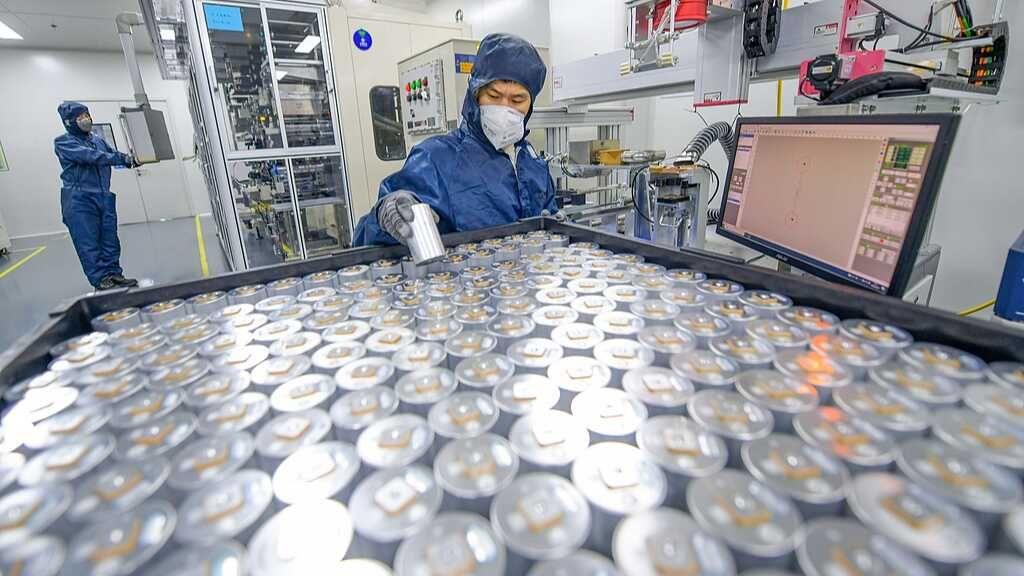
- Internal battery firewall stops overheating before fires start in the event of an outage
- Ampere-hour sodium-ion cells demonstrate complete suppression of thermal runaway reactions
- Three-part safety system improves stability without reducing power generation performance
One of the biggest risks of modern batteries is overheating which can cause fires, but scientists at the Chinese Academy of Sciences (CAS) say they have developed a sodium-ion battery material that forms a strong internal barrier when temperatures rise, stopping fires before they start.
The dangerous chain reaction it responds to is known as thermal runaway, and it occurs when heat inside a battery builds up faster than it can escape. Once it starts, temperatures rise quickly and can result in gas releases, fires or explosions.
This failure mode remains one of the biggest safety concerns for electric vehicles and grid-scale storage systems. Preventing the reaction altogether, rather than trying to contain it afterwards, has been a major goal for battery developers.
Article continues below
A three-part structure
Electric vehicles are often compared to internal combustion engine (ICE) vehicles, which carry gasoline that can ignite if damaged. A battery that stops overheating before it spreads could reduce the risk of fire.
The Chinese research team constructed what it calls a nonflammable polymerizable electrolyte, or PNE. This liquid turns into a dense solid when temperatures exceed about 302°F (150°C).
This transformation creates an internal layer that blocks the movement of heat between the battery components. In other words, the battery builds its own firewall as soon as overheating begins.
The researchers described the chemistry behind the system in their work published in Nature. “Here we propose a polymerizable and non-flammable electrolyte, which exploits the synergistic effect of anion-cation solvation and undergoes thermally triggered polymerization,” they said.
The safety design functions as a three-part structure that supports thermal stability, interface stability, and physical separation inside the battery. Each layer plays a role in preventing reactions from spreading once temperatures rise.
Testing was performed using a 3.5 Ah cylindrical sodium-ion battery, a capacity considered significant beyond small laboratory samples.
The researchers reported that this was the first demonstration of complete suppression of thermal runaway in sodium-ion cells on the amp-hour scale.
In nail penetration testing, a method typically used to simulate internal short circuits, the battery produced no smoke, fire or explosion. The cell also remained stable at temperatures up to 572°F (300°C).
The researchers said safety gains also did not reduce performance levels. The battery achieved an energy density of 211 Wh/kg, putting it within the expected range for advanced sodium-ion systems.
Reliable operation has been recorded at temperatures ranging from -40°F to 140°F, covering conditions from deep winter to extreme summer heat. Voltage stability above 4.3V was also maintained during testing.
The researchers say the materials used in the system are already common in industrial production, which could simplify scale-up if the technology reaches the stage of commercial manufacturing.
Follow TechRadar on Google News And add us as your favorite source to get our news, reviews and expert opinions in your feeds. Make sure to click the Follow button!
And of course you can too follow TechRadar on TikTok for news, reviews, unboxings in video form and receive regular updates from us on WhatsApp Also.


