
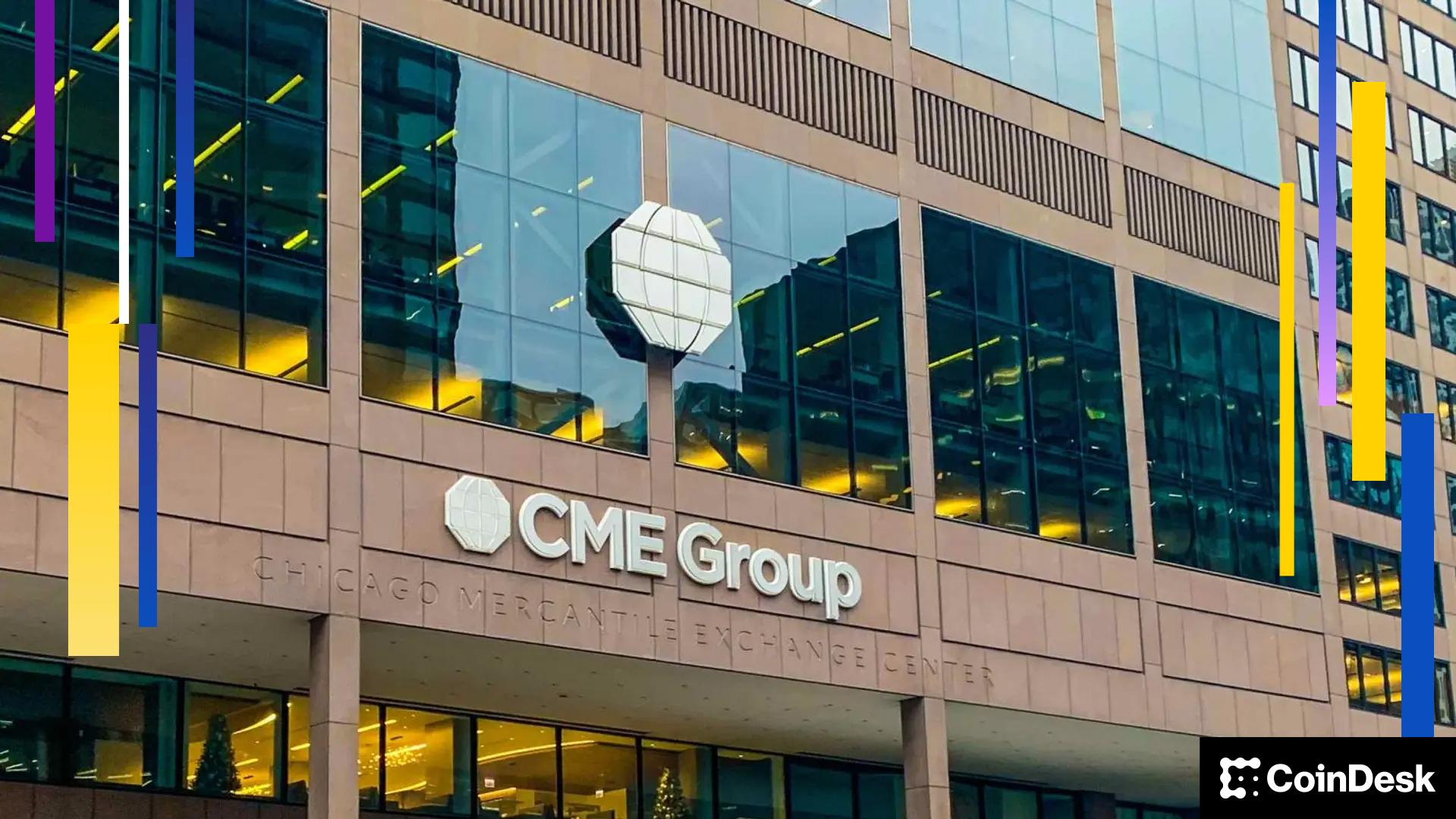
CME Group, the derivatives trading giant favored by Wall Street, announced that it will begin offering 24/7 trading for its cryptocurrency futures and options on May 29, a major step in how traditional institutions access crypto markets.
This move, according to the exchange, aims to meet the growing demand from professional investors who want to manage risks continuously, even during weekends, when the volatility of cryptocurrencies often increases with the closure of institutional venues.
The decision to open 24 hours a day was driven by growth, said Tim McCourt, global head of equities and foreign exchange at CME, adding that crypto derivatives on CME venues reached a record notional volume of $3 trillion last year.
“Client demand for risk management in the digital asset market is at an unprecedented level,” he said.
“Violent price fluctuations”
However, this move will have an even bigger impact on how cryptocurrencies are traded on weekends.
While cryptocurrency markets have historically operated 24 hours a day, CME derivatives – widely traded by hedge funds and institutions for their strict regulatory oversight – typically close on Friday evening and reopen on Sunday, while the spot market remains open 24/7.
This gap contributes to the so-called “CME gaps,” the empty price zone between Friday’s close and Sunday’s open, leaving institutions exposed to weekend price swings with no chance to hedge..
Experts say CME’s move to always-on trading could reshape liquidity and trading dynamics in institutional and retail crypto markets, especially on weekends.
“The most violent price swings occur precisely when institutional venues are dark,” said Bobby Ong, co-founder of CoinGecko. “CME’s decision is a structural recognition of what CoinGecko data has been showing for years.”
He said the cascades of liquidations that occurred over the weekend were a “predictable consequence” of weak and fragmented liquidity, noting that “CME [is] finally closing this gap.
Less dramatic movements
This will essentially make trading smoother between weekdays and weekends.
Adam Haeems, head of asset management at Tesseract Group, said the change “fills one of the last structural gaps between crypto-native markets and regulated derivatives infrastructure.”
Institutional flows that stop on Friday and resume on Sunday will continue uninterrupted, reducing the risk and cost of holding positions over the weekend. He added that the weekend’s volatility was “a direct consequence of this structural mismatch”, and that continued trading should help compress these price fluctuations and reduce spreads.
However, this does not guarantee a complete reduction in massive fluctuations; rather, price developments will be more gradual.
Haeems cautioned that simply keeping the site open does not guarantee significant liquidity. “Institutional offices may not have the same intensity of risk-taking on weekends as they do during the week,” he said. “The improvement will be real but gradual.”
For retail traders, this change could mean less dramatic price action on Monday.
“Tighter prices and fewer jarring Monday morning moves,” Haeems said. “Historically, the CME gap has been filled over 90% of the time – retail traders who follow futures structure will notice this signal fading.”
Bitcoin as a proxy for macro risk
Maxime Seiler, CEO of trading firm STS Digital, highlighted that the change offers clear benefits to institutions, particularly those wary of forced liquidation mechanisms on crypto-native platforms.
“The ability to trade CME futures and options without the risk of automatic deleveraging is a huge selling point,” he said.
He also highlighted a change in how bitcoin can be used on weekends as a professional tool to hedge global risk events when other assets are not available for trading.
“With other markets closed, bitcoin could increasingly serve as an indicator of broader macroeconomic risk, incorporating real-time global events.”


