
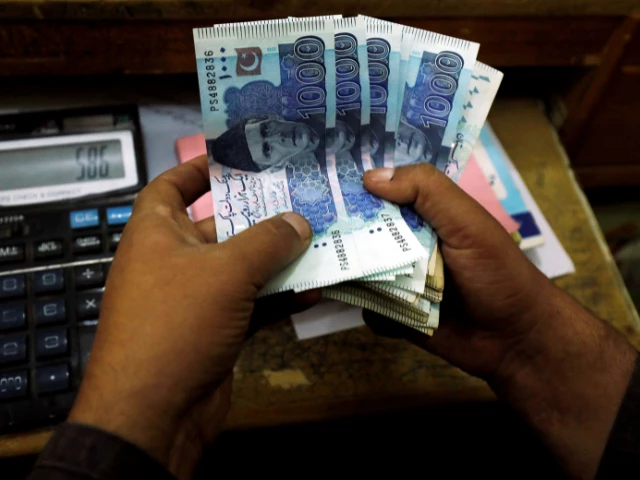
A trader counts Pakistani rupee notes at a currency exchange stand in Peshawar, Pakistan December 3, 2018. REUTERS
Consumer confidence in Pakistan fell sharply in the first quarter of the 2025-2026 financial year, reflecting household caution, although overall confidence remains stronger than last year. The consumer confidence index fell to 86.4 Since 96.2 in the previous quarter, a drop of 10.2%. Compared to the same period last year, when it amounted to 72.9the index is rising 18.5%indicating that broader stabilization continues despite short-term fluctuations.
The Pakistan Consumer Confidence Index (CCI) for the first quarter of the financial year 2025-26, released in December 2025, provides a comprehensive assessment of household confidence across the country. Prepared by D&B Pakistan in collaboration with Gallup Pakistan, the report captures perceptions of current economic conditions, future expectations, household finances, employment, savings and inflation.
Based on a telephone survey of 2,132 respondents with a margin of error of ±2.2%, the report highlights key changes in confidence compared to the previous quarter and the same period last year, providing an independent, data-driven pulse on consumer confidence in Pakistan.
This decline is due to the deterioration of current conditions. The current confidence index has fallen to 74.7entering the extremely pessimistic range, while the Future Outlook Index eased to 98.2 but remained close to neutrality. This suggests that households still expect some stability in the coming months.
Read: Floods versus economy: WB warns Pakistan’s FY26 growth at risk
Consumer confidence reflects strong concern about rising prices, with 84.3% people saying prices of everyday items have increased over the past six months, highlighting the continued impact of inflation. The net price indicator plunged by 67.6 has 32.8 in a context of persistent inflationary pressures due to the weakness of fuels, energy and currency.
Consumers showed less confidence in the current employment situation, the 56.5 net indicator which reflects a widespread perception of tensions in the labor market. Confidence in future job prospects has also weakened, highlighting widespread concern about labor market conditions.
Learn more: FinMin confirms agreement with IMF and announces that board approval for the next tranche is expected in December
Despite these challenges, households remain relatively optimistic about their finances. About 61.6% expect their financial situation to improve or remain unchanged, while the household net income indicator is at 108.1with approximately 63% anticipate growth or stability of income. Savings sentiment remained moderate with an overall net indicator of 81.3reflecting limited disposable income.
The sharpest declines in confidence were seen among urban residents and those aged 30 to 49, whose indexes fell 24 to 27%. Younger respondents under 30 remain comparatively more optimistic, particularly regarding future income prospects.


