
Judge orders arrest, revokes right to cross-examination for repeated failure to appear
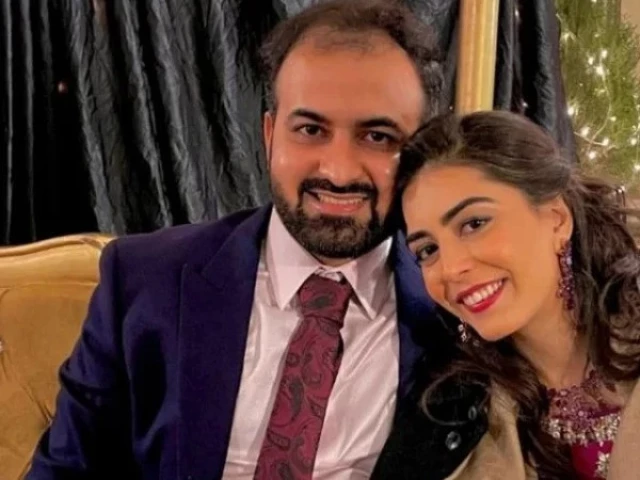
Imaan Mazari, human rights lawyer and social activist, and her husband Hadi Ali Chattha. Photo file
ISLAMABAD:
A district court in Islamabad on Thursday canceled the bail of lawyer and activist Imaan Mazar and her husband, Hadi Ali Chattha, in a case linked to controversial social media posts, citing repeated non-appearances and heated scenes during the proceedings.
Given the circumstances, the court revoked the bail granted to the two men, ordered their arrest and appearance in court, and formally withdrew their right to cross-examination.
The case was registered under the Prevention of Electronic Crimes Act, 2016 (PECA). Prosecutors accused Mazari and Chattha of inciting division on linguistic grounds through social media posts and of creating the impression that state institutions were engaged in acts of terrorism inside the country.
The hearing was headed by Justice Afzal Majoka, who expressed his displeasure after the two accused again failed to appear in court. Prosecutor Rana Usman opposed any further adjournment.
During the proceedings, the court warned that prolonged absence could result in the loss of a fundamental right of defense. “Inform the accused that if they do not appear today, their right to cross-examination will end,” Justice Majoka said.
Read: IHC orders re-recording of witness statements in Imaan and Hadi tweets case
Cross-examination allows a defendant to question witnesses against him to test the credibility and reliability of their testimony. Under Pakistani criminal procedure, denying this right is considered an exceptional measure, usually taken when courts find the delays to be deliberate.
Earlier, the defense attorney had argued that Mazari wanted to conduct the cross-examination herself, citing her legal history and health problems. “She wants to ask the witness some questions herself,” Hadi Ali Chattha told the court.
Judge Majoka then issued a strong warning: “Finish the cross-examination of the witness, otherwise I will close this right. »
Tensions escalated when Islamabad District Bar Association president Naeem Gujar appeared in court and exchanged sharp remarks with the prosecution over the conduct of the proceedings and insistence on immediate testimony. The exchange prompted the judge to briefly leave the courtroom, after which the proceedings were suspended.
The court canceled the interim bail of the two accused and ordered the law enforcement agencies to arrest them and produce them before the court. He also ordered that statements under Section 342 of the Code of Criminal Procedure, which allows accused persons to explain the evidence against them, be recorded in the next hearing.
The matter was adjourned until tomorrow.
Case history
The case against Mazari, a lawyer and human rights activist, and Chattha focuses on allegedly controversial posts and reposts on X, formerly Twitter, that authorities described as “anti-state.” The National Cybercrime Investigation Agency registered the case under PECA 2016, saying the content was aimed at inciting divisions and portraying a negative image of state institutions.
Earlier in the proceedings, the trial court issued non-bailable arrest warrants after the accused failed to appear, sparking criticism and legal challenges from the defense. Mazari and Chattha then approached the Islamabad High Court, alleging a lack of transparency and procedural irregularities, including recording of evidence in their absence and without proper legal representation.
Their request to transfer the case was heard by the High Court, which refused to grant an immediate stay. The couple then approached the Supreme Court, which ordered a temporary halt to the trial until the High Court completed its hearing.
The Islamabad Bar Association and other legal bodies criticized aspects of the trial, arguing that the defendants’ right to a fair defense had been compromised. The proceedings have seen numerous adjournments and continued litigation in the higher courts regarding due process and rights of defense.


