
Authorities must make clear they will not use broad legal threats to silence critical reporting
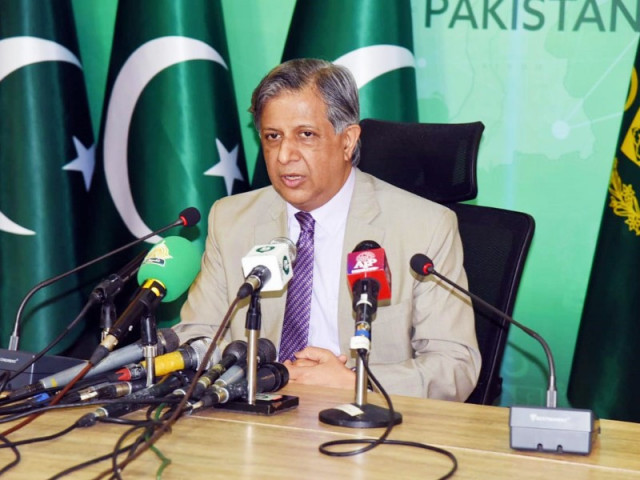
Senator Azam Nazeer Tarar, Minister of Justice, addresses a press conference in Islamabad on July 20, 2023. PHOTO: PID/File
The Committee to Protect Journalists (CPJ) on Thursday raised concerns and flagged risks of self-censorship following Justice Minister Azam Nazeer Tarar’s warning of possible legal action against journalists and commentators who crossed “red lines” while discussing Pakistan’s foreign policy amid escalating tensions in the Middle East.
CPJ’s Asia-Pacific regional director, Beh Lih Yi, expressed concern over the minister’s statement in an article on
The media watchdog said independent analysis and reporting on international affairs was essential for the public to understand how global developments affect domestic issues.
“What happens abroad affects people at home, and threats like this can encourage self-censorship within the press, which ultimately undermines the public’s right to information,” Yi said.
#Pakistan: CPJ is alarmed by Justice Minister Azam Nazeer Tarar’s vague threat of legal action against journalists and commentators who cross “red lines” when discussing foreign policy. Independent analysis and reporting on international affairs is essential for the public… pic.twitter.com/S03u4gjIUr
– CPJ Asia (@CPJAsia) March 12, 2026
She urged the government to ensure that no journalists are targeted because of their work. “Pakistani authorities must make clear that they will not use legal threats or general political pressure to silence critical foreign policy information,” it added.
CPJ is an independent, nonprofit organization that promotes press freedom worldwide and defends the right of journalists to report news safely and without fear of reprisal.
The statement comes a day after Tarar urged media and online commentators to exercise caution when discussing Pakistan’s foreign policy, saying some analyzes had caused “unease” among friendly countries.
The minister said the comments from Pakistan had led to diplomatic questions from abroad about whether the views represented official policy or personal opinion.
Read: Government warns against ‘sensational’ foreign policy comments, cites national security concerns
Tarar referred to Article 19 of the Constitution, which guarantees freedom of expression, but said such views must remain within constitutional limits.
“Regarding Pakistan’s foreign policy and its relations with the Gulf countries […] we cannot speculate if Pakistan is with Iran, so what could this mean for its relations with Saudi Arabia […] or if we are with the UAE, what does that mean for our relationship with Saudi Arabia?
The minister also warned that negative vlogs or comments on inter-country relations aimed at eliciting opinions online could harm Pakistan’s interests.
“Creating sensationalism to gain opinion is harmful. In the current situation, spreading sensationalism is not a service to the country,” he declared.
Tarar warned against “sensational” comments on Pakistan’s foreign policy, warning that action would be taken if “red lines” were crossed.
The minister did not name any individuals or social media accounts. However, since the escalation of conflict in the region, several vloggers and online commentators have been discussing the situation while raising questions about Pakistan’s foreign policy.
Read also: New Iranian Supreme Leader Affirms Importance of Closing Hormuz, Vows to Continue Attacking US Bases in Gulf States
Amid growing tensions in the Middle East following US-Israeli strikes on Iran, Pakistan has reiterated its strong strategic commitment to Saudi Arabia while calling for restraint to avoid a wider regional conflict.
Prime Minister Shehbaz Sharif also discussed the developments in a telephone conversation with Iranian President Masoud Pezeshkian, stressing that dialogue and diplomatic engagement were essential to ensure peace, stability and de-escalation in the region.
Meanwhile, Prime Minister’s Foreign Media Spokesperson Mosharraf Zaidi said Pakistan would stand firmly with Saudi Arabia if necessary, highlighting the depth of ties between the two countries.
Iran responded to the U.S.-Israeli strikes by launching waves of drone and missile attacks not only against Israel but also against Gulf states, including Saudi Arabia, that host U.S. military installations, dragging the region deeper into conflict.
The escalation has affected key infrastructure, including airports, ports, hotels and oil and military installations in the Gulf countries.
The attacks also disrupted oil and gas shipments through the Strait of Hormuz, a vital route for around a fifth of the world’s oil and LNG, while the closure of airspace in the region forced airlines to cancel around 40,000 flights, the biggest disruption to global air travel since the Covid-19 pandemic.


