
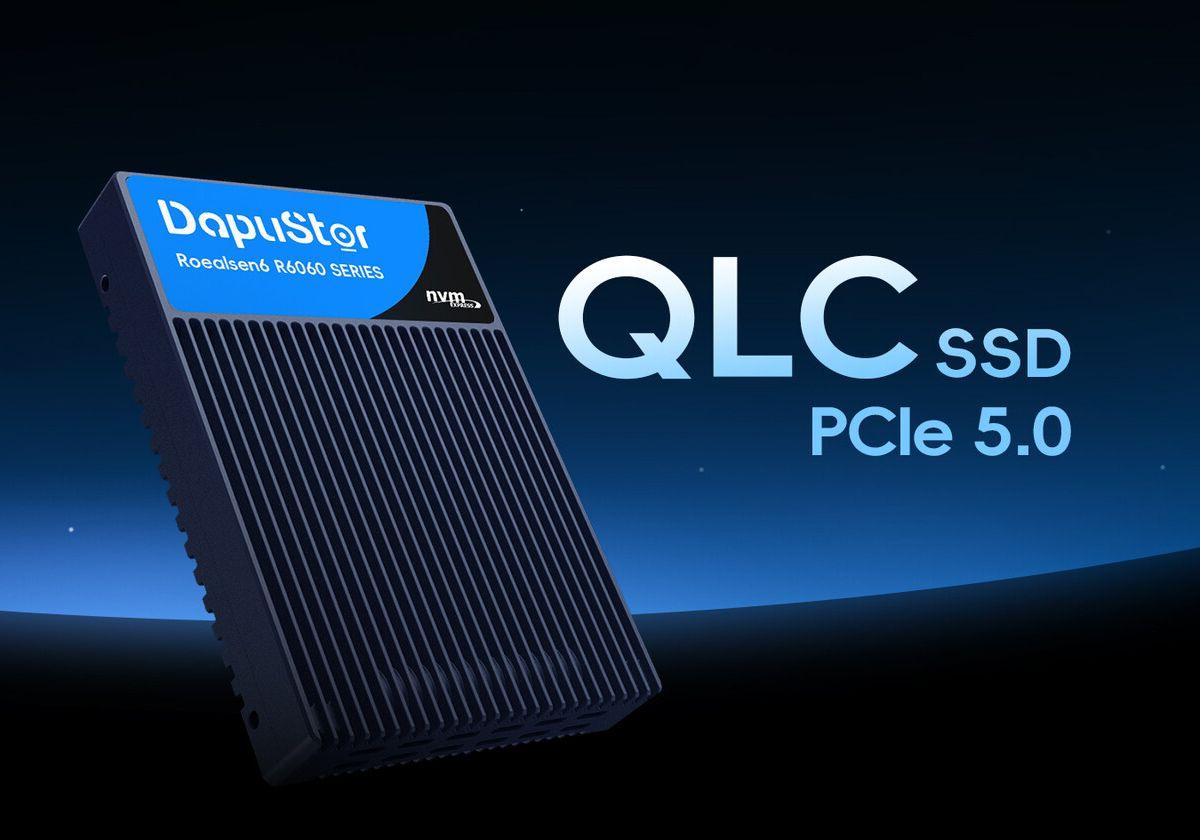
- DapuStor launched 245TB PCIe Gen5 QLC SSD for AI workloads
- Company joins other vendors targeting hyperscalers with ultra-capacity flash
- The move reflects how AI is driving demand for dense NAND storage
AI workloads are driving demand for much larger SSDs in hyperscale data centers, and in response to this, DapuStor announced a PCIe Gen5 QLC SSD that can reach 245TB.
The 122TB versions of the drive are already in use by customers, as the high-capacity SSD is intended for AI data lakes, vector databases, and large storage pools where data remains online and is frequently accessed.
These workloads generate large volumes of integrations, logs, and videos during AI training and inference. Because this data is accessed repeatedly rather than archived, dense flash storage is a better choice than mechanical drives.
DapuStor joins a select group
DapuStor SSD uses QLC NAND. By storing four bits per cell, it increases capacity per slice compared to TLC, improving density and cost effectiveness.
Previous concerns about QLC’s endurance and performance were addressed through controller design, firmware management, and data placement techniques.
This announcement makes DapuStor the eighth provider to unveil an SSD at or near the 245 TB mark.
Kioxia showed off a 246TB LC9 SSD, while Sandisk revealed a 256TB model for AI workloads. Solidigm confirmed plans for 245TB drives and Micron introduced 122TB PCIe Gen5 SSDs as part of efforts to reduce reliance on hard drives.
Huawei approached the problem differently, combining high-capacity SSDs with controller techniques to reduce reliance on expensive HBMs in AI systems.
Samsung presented roadmaps beyond current capabilities, and rival SK Hynix showed off the PS1101, its own 245TB PCIe Gen5 enterprise drive.
The move toward higher-capacity SSDs reflects changes in how AI data is stored. Training datasets, inference results, and logs are accessed frequently, favoring Flash handling random I/O while using less rack space and power.
These SSDs are obviously not aimed at consumers or even typical businesses. Platform requirements, pricing, and scalability limit them to hyperscale environments, where flash capacity becomes a critical resource.
Follow TechRadar on Google News And add us as your favorite source to get our news, reviews and expert opinions in your feeds. Make sure to click the Follow button!
And of course you can too follow TechRadar on TikTok for news, reviews, unboxings in video form and receive regular updates from us on WhatsApp Also.


