
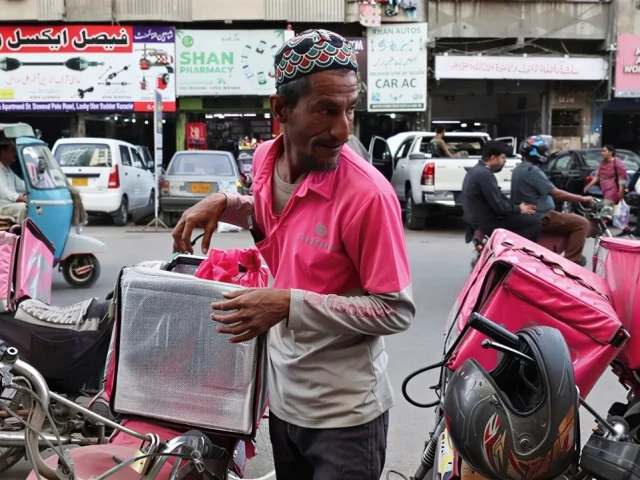
Rising fuel prices are hitting low-paid urban workers in Pakistan, leaving little for basic goods or Eid celebrations.
A Foodpanda delivery driver loads items into his delivery box before delivering them in Karachi, Pakistan, March 13, 2026. PHOTO: Reuters
As Eidul Fitr approaches, marking the end of Ramazan, delivery workers on the streets of Karachi say they are working more hours, but earning less, and have little left for the new clothes and treats that usually mark the festival.
A few weeks ago, Mohammad Mohsin, 23, earned around 1,500 rupees a day.
Today, with the US-Israeli war with Iran choking oil supplies, gasoline prices have soared above 320 rupees per liter and Mohsin’s income has fallen to around 1,100 rupees.
“Before, everything belonged to me,” he says. “Now a huge amount is spent on gasoline.”
Rising fuel prices are hitting some of Pakistan’s lowest-paid urban workers hardest, with many commuters earning barely enough to cover essentials, let alone Eid celebrations.
Learn more: Rising fuel prices push up weekly inflation
Reuters spoke to more than half a dozen riders in Karachi, all of whom said soaring fuel prices had reduced their income ahead of Eid, a time when they are usually able to increase their income.
No fixed salary or benefits
Inflation, which had eased after hitting a record high of 38% in 2023, has accelerated to around 7%, pushing up the costs of food, rent and utilities. Many gig workers earn less than Rs 32,000 as the monthly minimum wage, with no fixed salary or benefits.
Austerity measures, school closures and work-from-home policies have reduced commuting, reducing ride-hailing revenue even as delivery demand surges for breaking the fast and Eid, which falls this week.
Platforms that rely on workers, including grocery delivery app Foodpanda, say they are adjusting prices and taking other steps to increase rider revenue.
But workers say the measures have not kept pace with rising costs and they are spending more time on the road.
“We can’t afford to buy clothes or shoes,” said Hezbollah, a 26-year-old delivery man.
For many drivers, a normally joyful vacation has turned into a painful calculation of how many hours they will have to work to enjoy any holiday.


