
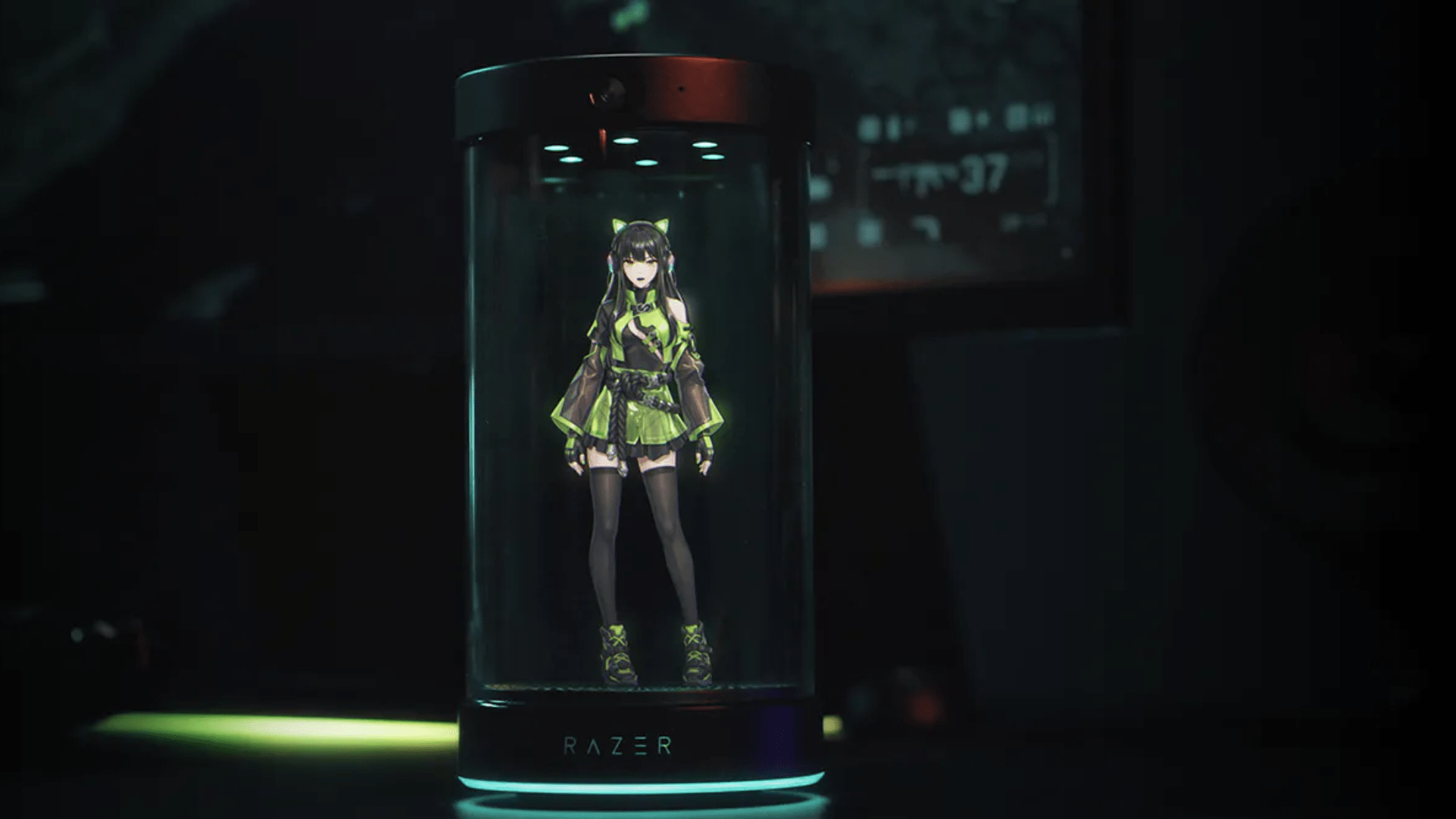
- Razer introduced an enhanced Project AVA animated holographic AI assistant at CES this year
- Project AVA offers a selection of avatars with their own simulated personalities that can initiate a conversation, see your screen, and follow your gaze.
- Razer expands Project Ava’s role beyond gaming coach to everyday tasks like planning and organizing your life
AI assistants currently mostly take the form of a wall of text or a disembodied voice, but Razer thinks people would prefer to talk to a small animated hologram with a corresponding personality sitting on their desk.
It brought its AVA project to CES this year to show off exactly that. AVA debuted at CES last year as an esports coach in a gaming rig, but the shiny 5-inch holographic avatar can now live on your desktop, chatting with you and offering help on everything from your daily schedule to the perfect outfit for the day.
AVA’s cylindrical house sits next to your keyboard, appearing to house an animated hologram resembling one of the few (so far) wizard forms, such as the original Razer characters AVA, Kira and Zane, or recognizable esports characters.
The holograms have facial expressions, lip-synched speech, and personalities that Razer says range “from bold and sassy to calm and friendly.”
Look on it
The built-in camera, far-field microphone array and “PC Vision Mode” allow AVA to see your screen, hear your voice and follow your gaze. According to Razer, the hologram isn’t just for show. The projected avatar mirrors your interactions with subtle head movements, eye blinks, lip syncing, and expressions designed to make you feel alive without veering into the uncanny valley. The eye-tracking hardware allows him to maintain “eye contact,” giving conversations a surprising sense of reciprocity.
Despite its roots in gaming, AVA is designed to be a full-service assistant. In addition to analyzing in-game footage and suggesting strategy adjustments in real time, it can organize your schedule, remind you of appointments, and suggest entertainment options based on your browsing.
Hologram AI
AVA is supposed to use what it learns about you, from your speaking habits to your on-screen activity, to adapt to your mood and habits. Razer suggests that AVA will leverage this information and its access to the screen to give you ideas that will help you create spreadsheets, edit code, or prepare presentations.
Standard concerns about sharing so much information with an AI model apply to AVA, but with an added dimension of possible strangeness when that AI has a face and a voice. Razer has said that data remains local and that privacy is a top priority, but the intellectual understanding of an AI collecting information about you can feel more visceral when it has a human or human-like form.
Razer has opened $20 refundable reservations for AVA in the US ahead of an undisclosed shipping date, likely later this year. While you technically only need a Windows PC and a USB-C connection, AVA needs relatively high system performance to support real-time avatar rendering and analysis, so it’s not a casual toy.
Whether power users ready to jump into AVA discover that it’s a persistent digital friend they miss when it’s turned off could decide the fate of AVA worldwide. The glow of a little animated being quietly watching you from your desk might not appeal to the most hesitant users of AI tools.
Follow TechRadar on Google News And add us as your favorite source to get our news, reviews and expert opinions in your feeds. Make sure to click the Follow button!
And of course you can too follow TechRadar on TikTok for news, reviews, unboxings in video form and receive regular updates from us on WhatsApp Also.

The best business laptops for every budget


