
Security forces say six militants killed in North Waziristan and five in Kurram during IBO
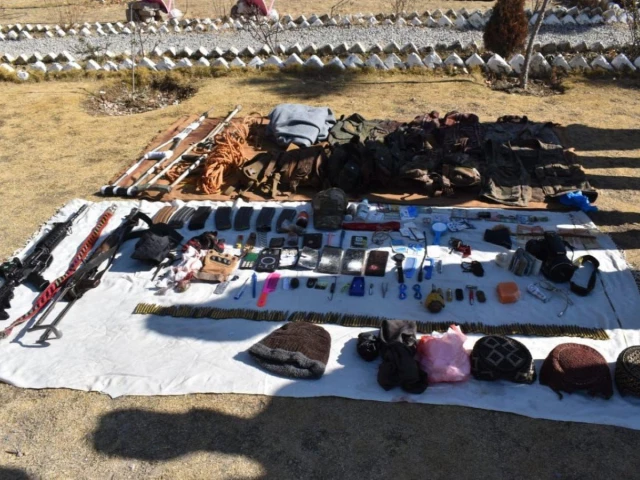
Arms and ammunition were also recovered from the khwarij killed by two ICPs. Source: ISPR
At least 11 khwarij belonging to what the army described as Indian proxy Fitna Al Khwarij – a reference to the banned Tehreek-e-Taliban Pakistan (TTP) – were killed in two separate battles in Khyber-Pakhtunkhwa on January 8, according to the Inter-Services Public Relations (ISPR).
In a statement, the ISPR said an intelligence-based operation was carried out by security forces in North Waziristan district after reports of the presence of khwarij in the area. During the operation, six militants were killed.
During a separate joint intelligence operation carried out in Kurram district by police and security forces, five more khwarij were killed, the statement said.
The ISPR said arms and ammunition were recovered from the militants, who were “actively involved in numerous terrorist activities against security forces, law enforcement agencies and targeted killing of innocent civilians”.
He added that disinfection operations were underway to eliminate any other kharji present in the area. Arms and ammunition were also recovered from the slain Indian-sponsored khwarij, who the statement said remained involved in terrorist activities and targeted killings.
Read: DG ISPR blames rise in terrorism on political environment in KP
The army said the disinfection operations are part of a “relentless anti-terrorism campaign” as part of the “Azm e Istehkam” vision, as approved by the Supreme Federal Committee on National Action Plan. The campaign will continue “at full speed to eliminate from the country the threat of foreign sponsored and supported terrorism,” the statement said.
Earlier this week, ISPR Director General Lieutenant General Ahmed Sharif Chaudhry said that 80 per cent of all terrorist incidents in Pakistan occurred in Khyber-Pakhtunkhwa.
Addressing a press conference on Tuesday, the chief military spokesperson attributed the trend to what he described as a “politically permissive environment” for militants and an “emerging nexus between political and militant elements” in the province.
He said the current environment had allowed extremist groups to organize, build facilitation networks and repeatedly challenge state orders, with implications for the country’s overall security situation.


