
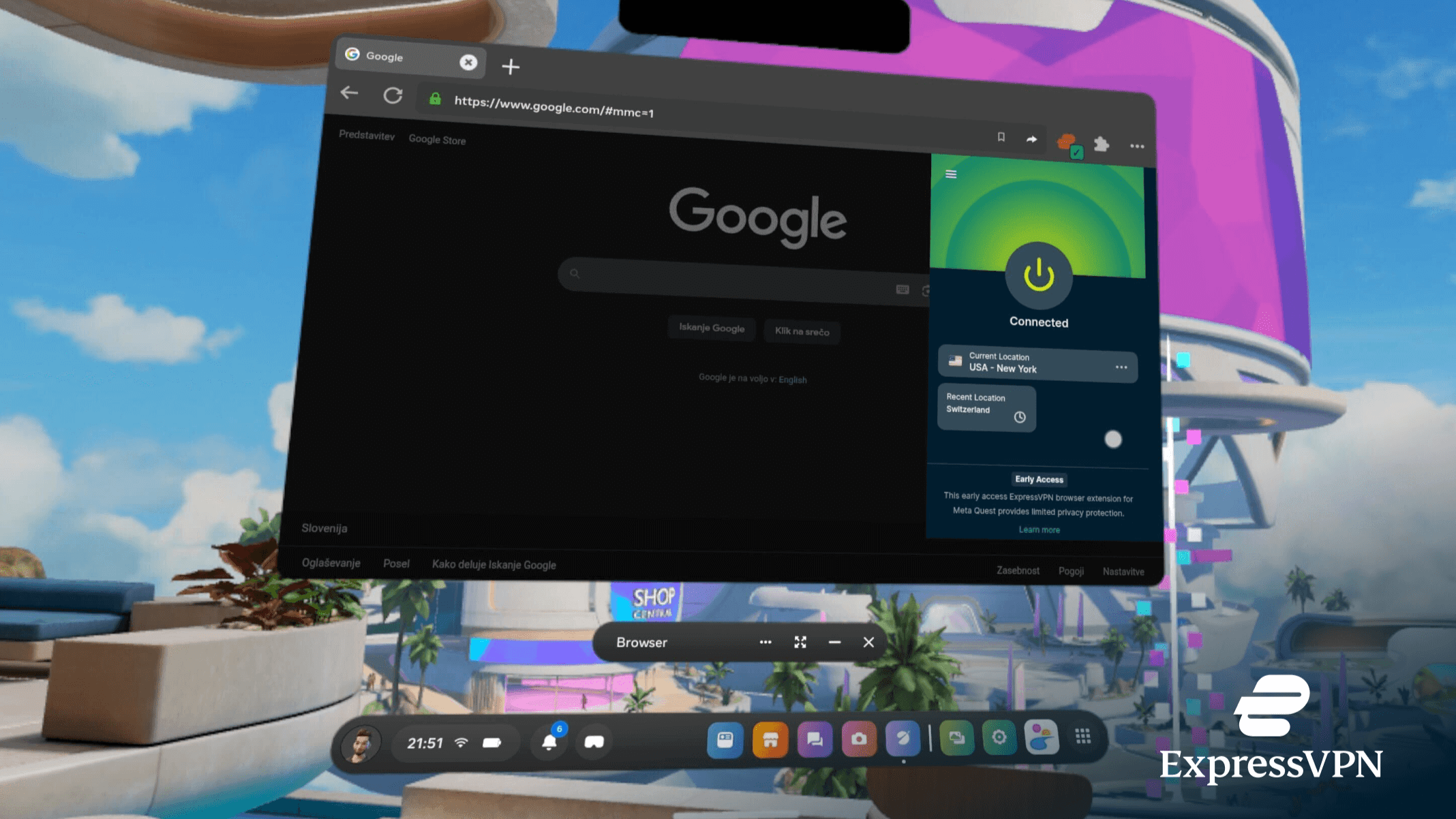
- Dedicated ExpressVPN app now available on the Meta Quest store
- The Hybrid VPN extension includes browser-only and cross-device protection.
- Smart Routing allows site-specific VPN locations in the same window
ExpressVPN has announced a major expansion of its service, launching a dedicated app for Meta Quest VR headsets and a new “hybrid” browser extension that aims to solve a long-standing frustration for privacy-conscious users.
The move sees the provider – which TechRadar reviewers currently rank as one of the best VPN apps – enter the mixed reality space while simultaneously overhauling the way we protect our web traffic on desktops.
While the arrival of a native Meta Quest app is significant for gamers and VR enthusiasts, the new VPN browser extension is arguably the biggest technical advancement. By combining a lightweight proxy and full remote control in a single interface, ExpressVPN claims to have created a “first” solution that adapts to the way you actually browse.
The “hybrid” advantage
Until now, VPN browser extensions generally fell into two camps: either simple proxies that only spoof your IP address in the browser (leaving other apps exposed), or simple remotes that turn your desktop VPN app on and off.
ExpressVPN’s new offering fills this gap. It works as a standalone proxy when you need fast, lightweight protection for browsing, but can instantly switch to control the full desktop app when you need device-wide encryption.
“Most VPNs make you choose: either a simple browser proxy or a full-featured app for the device. Our new hybrid browser extension does both in one tool,” said Shay Peretz, Group COO at ExpressVPN, in the official announcement.
Now, Peretz says, users can decide to protect only their browser activities when they want something lightweight, or upgrade to full device coverage. “We are excited to launch this expansion, the first of its kind in the industry,” he added.
Flexibility is key here. A “Smart Routing” feature also allows users to assign different VPN locations to specific websites. For example, you can browse a local news site with your real IP address (using split tunneling rules) or a specific proxy location, while serving content from a different region in another tab, all without constantly changing settings.
Importantly, the extension maintains essential privacy safety nets, including blocking WebRTC leaks and HTML5 geolocation spoofing. This ensures that your physical location is not inadvertently exposed by browser vulnerabilities, a common problem with lesser proxy tools.
Alongside the browser news, the partnership with Meta Quest brings comprehensive on-device VPN protection directly to the headset via the Meta App Store.
VR devices are increasingly being treated as general-purpose computers, used for everything from social media to productivity. A native app ensures that all traffic in and out of the headset is encrypted, rather than just that of the web browser. This is especially vital to prevent ISP throttling when streaming or playing high-bandwidth VR games.
However, ExpressVPN has confirmed that the new hybrid extension feature will also be available on the Meta Quest browser soon. This will offer a “browser only” mode for the headset, giving users a lighter option if they don’t want to run the entire process in the background during intensive gaming sessions where every frame counts.
The vendor also noted that the new extension supports its proprietary Lightway protocol, which now includes post-quantum protections, ensuring user data is future-proofed against next-generation decryption threats.
The hybrid extension is now available for Chrome and Firefox, with Meta Quest integration to follow shortly. For a more in-depth look at the provider’s performance and features, check out our full ExpressVPN review.
Follow TechRadar on Google News And add us as your favorite source to get our news, reviews and expert opinions in your feeds. Make sure to click the Follow button!


