
Jurrien Timmer, director of global macro at Fidelity Investments, calls the current market environment a “new rat race,” where each week seems to have stranger headlines than the last.
Yet despite the volatility, his main message is that the situation is not as dire as it might appear, and he remains relatively constructive on the markets’ outlook.
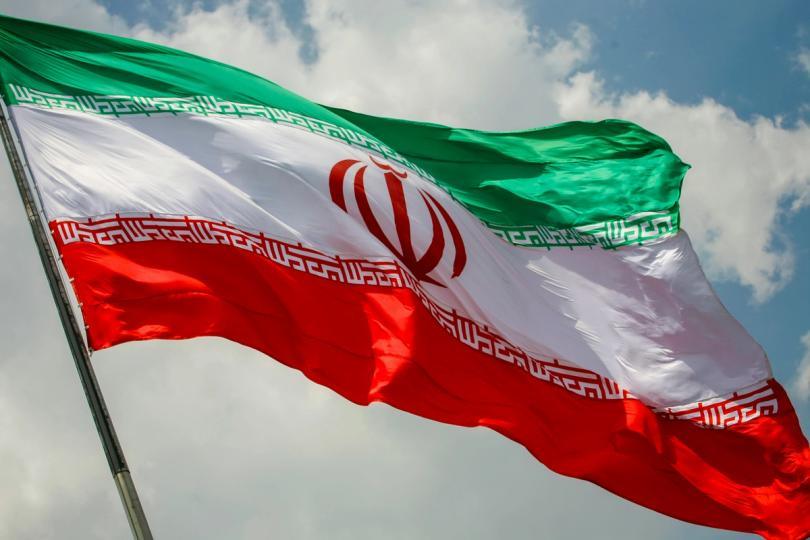
Timmer says markets, generally speaking, are “priced in some form of resolution” to current geopolitical tensions, particularly around Iran, “sooner rather than later,” he told CoinDesk in an interview.
The “deportation” of oil
While crude prices have surged above $100 a barrel, the futures curve remains in backwardation, with contracts trading further out at around $40 below the front month. This structure indicates that markets view the current supply disruption as a short-term bottleneck rather than a prolonged crisis, according to Timmer.
Elsewhere, market behavior reinforces this cautiously optimistic view. The S&P 500, which at one point was down about 9%, has recovered to a decline closer to 1%.
Credit spreads remain contained, suggesting that systemic tensions are limited. Even for traditionally defensive assets, the signals are nuanced. Gold and bonds, which are generally less correlated, move more closely, a dynamic that Timmer attributes in part to global capital flows.
Countries facing difficulties moving their energy across the Strait of Hormuz, he notes, could increase their liquidity by selling highly liquid assets such as gold and U.S. Treasuries, creating unusual correlations.
The crypto market saw a much-deserved boost on Tuesday after US President Donald Trump announced a two-week ceasefire with Iran. Oil prices plunged more than 17% following the news and stock markets also rose. WTI has since rebounded to trade around $100.
Bitcoin’s $65,000 Support
Bitcoin adds another layer to this changing landscape, behaving more like gold, while gold sometimes trades with characteristics closer to BTC.
When bitcoin hit $126,000 last October, the rapidly moving capital shifted from crypto to gold, a shift visible in exchange-traded fund (ETF) flows. Today, however, with bitcoin already down 50-60% from its peak, Timmer sees that there are fewer “paper hands” left in the market.
The selling pressure has been largely absorbed, while gold, after a strong rise, appears more vulnerable to a pullback. Despite this, he remains bullish on both assets. Bitcoin, in particular, looks technically interesting to him, with the $65,000 level providing strong support.
He sees the potential for a foundation to form, while emphasizing that a catalyst will be needed to advance the next stage.
The world’s largest cryptocurrency was trading at just $70,000 at press time.
“The price of success”
Timmer believes that stocks are indeed priced based on success, with only single-digit declines despite significant geopolitical uncertainty. One of the main reasons, he says, is strong corporate profits.
Importantly, Timmer emphasizes that the broader context before the Iranian conflict was already constructive. The removal of tariffs by the US Supreme Court improved the policy environment and fears of an AI-driven trade bubble did not materialize. In fact, he sees investor skepticism, particularly toward AI and software valuations, as a sign of good health. In a real bubble, investors stop asking difficult questions; today, they do the opposite. According to him, this monitoring helped prevent the market from exceeding its limits.
Nevertheless, the situation in the Middle East remains fluid and the range of possible outcomes is wide. The worst-case scenario, in which Iran escalates by targeting Gulf energy infrastructure, could prove highly destabilizing. With around 20% of the world’s oil supply passing through the Strait of Hormuz, a prolonged disruption could lead to a stagflationary shock, combining high inflation and lower growth.
Timmer nevertheless believes that markets have developed a more measured response to geopolitical shocks. After a series of “false alarms,” including last year’s tariff-related selloff, which saw the S&P 500 fall 21% from its highs, investors are less likely to panic. There is now a “demonstration” attitude, whereby weak hands are less easily shaken.
This backdrop remains constructive, Timmer says, supported by what he describes as a strong mid-cycle economic expansion. However, he highlights several risks that investors should actively manage.
One of them is concentration risk, particularly in the so-called “Magnificent Seven” technology stocks. Interest rate risk is another major concern. The 10-year Treasury yield is approaching 4.5% and could move toward 5%, a move that has occurred even amid geopolitical uncertainty. Rising yields, rather than falling, are an important signal that investors should watch closely.
The real risk
Ultimately, Timmer views periods of volatility not only as challenges but also as opportunities. It encourages investors to act as liquidity providers rather than takers. Those who panic during periods of turbulence become price takers, while disciplined investors with a long-term outlook can step in as price makers. At Fidelity, he notes, that means leaning into volatility, providing liquidity and rebalancing portfolios when others pull back.
While recognizing that geopolitical events are inherently unpredictable, Timmer emphasizes that staying on the sidelines out of fear is not a viable strategy. Instead, a well-diversified portfolio, combined with a willingness to engage in times of stress, may offer the best path forward.
Learn more: Iran oil shock and risk of war keep crypto investors on the sidelines: Grayscale


