
- Researchers have achieved a breakthrough in anode-free lithium-ion batteries
- New gel electrolyte could solve one of technology’s biggest problems
- This could improve the longevity and safety of lithium-ion cells in electric vehicles.
Researchers at Columbia University’s School of Engineering and Applied Science say they have developed a new gel electrolyte that will help stabilize anode-free lithium-ion batteries. This should improve the safety and longevity of this emerging battery technology, while saving manufacturers money.
Anode-free lithium-ion batteries have been explored for several years, with a South Korean research team last year using an anode-free lithium metal battery architecture to double the volumetric density of a battery, without increasing its size.
Removing the anode frees up more internal space, allowing more active material to be packed into the same volume. It’s like managing to fit more fuel into the same size tank, according to Interesting Engineering.
The main issues facing this technology are battery safety and longevity, as anode-less lithium-metal batteries have suffered from uneven deposition of lithium during charging sessions.
This means that lithium can form sharp, needle-like structures (called dendrites), which can pierce internal components and cause dangerous short circuits and thermal runaway events.
But according to Interesting Engineering, which cites the results of research first published in the journal Joule, researchers at the Columbia University School of Engineering and Applied Science have found a solution to this problem in a gel electrolyte.
To get very technical for a moment, the team used a “network of salt-phobic parasitic polymers in the design of their electrolyte,” which “selectively repels lithium ions while attracting solvent molecules.”
In relatively simple terms, the gel electrolyte is divided on the nanoscale into different compositions. This allows the formation of a protective layer on the surface of the lithium which prevents the formation of harmful dendrites.
During laboratory experiments, the researchers found that the gel electrolyte retained more than 80 percent of its capacity in near-real-world conditions, while improving the thermal stability of the battery, which would mean less energy consumed by an electric vehicle to heat or cool the pack for optimal operating temperatures.
Apparently the gel electrolyte also withstood significant drilling without any thermal runaway. In contrast, conventional liquid electrolyte batteries ignited or exploded during testing.
In a real-world application, the researchers believe that a gel electrolyte in an anode-free lithium-ion battery could lead to EV packs with greater energy density, longer life, and safer operation – all without the costs involved in developing entirely new electrolyte formulations.
Analysis: there is still life in lithium

Much of the discussion around the future of electric vehicles revolves around solid-state batteries, which have been called the “holy grail” for solving many of the problems associated with electric vehicles, such as slow charging speeds, short range, overly heavy batteries and persistent safety concerns.
But the technology is still in its infancy, and while some Chinese companies claim to put it into production, it remains a much more expensive proposition than current lithium-ion offerings.
“There is still a lot of life left in lithium-ion technology,” says Akhil Krishnan, vice president of the Volvo EX60 product line. “Of course I’m excited about the future of solid-state, but we’ve already made great progress with lithium-ion,” he adds.
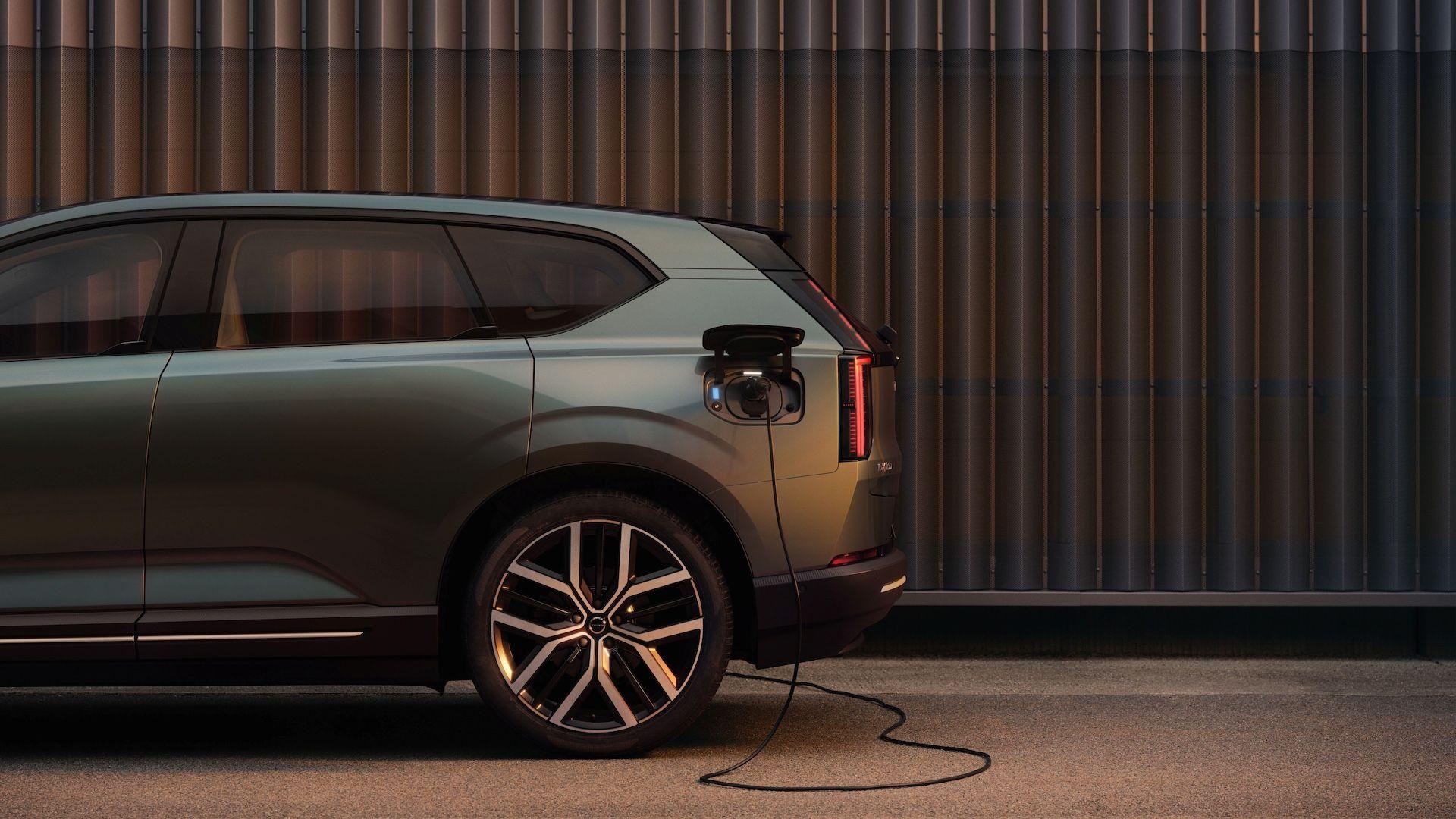
Working alongside Breathe, a battery software company that uses simulations and models to get the most out of electric vehicle batteries, Volvo has proven that lithium-ion technology works. The upcoming Volvo EX60 offers a WLTP range of more than 500 miles and consistent fast charging speeds in all conditions.
Yan Zhao, co-founder of Breathe Battery Technologies, says convincing the next 25% of car buyers to go electric will be one of the toughest tasks yet. “Their purchasing decisions will be very price sensitive,” he says.
This is where improvements in lithium-ion batteries can help, as they enable greater range and faster charging speeds without passing on the costs of emerging battery technologies to customers.
As is the case with the internal combustion engine, which even after more than a century continues to see improvements in performance and efficiency, lithium-ion technology will only improve over the next three to five years, experts say.
Follow TechRadar on Google News And add us as your favorite source to get our news, reviews and expert opinions in your feeds. Make sure to click the Follow button!
And of course you can also follow TechRadar on YouTube And TikTok for news, reviews, unboxings in video form and receive regular updates from us on WhatsApp Also.


