
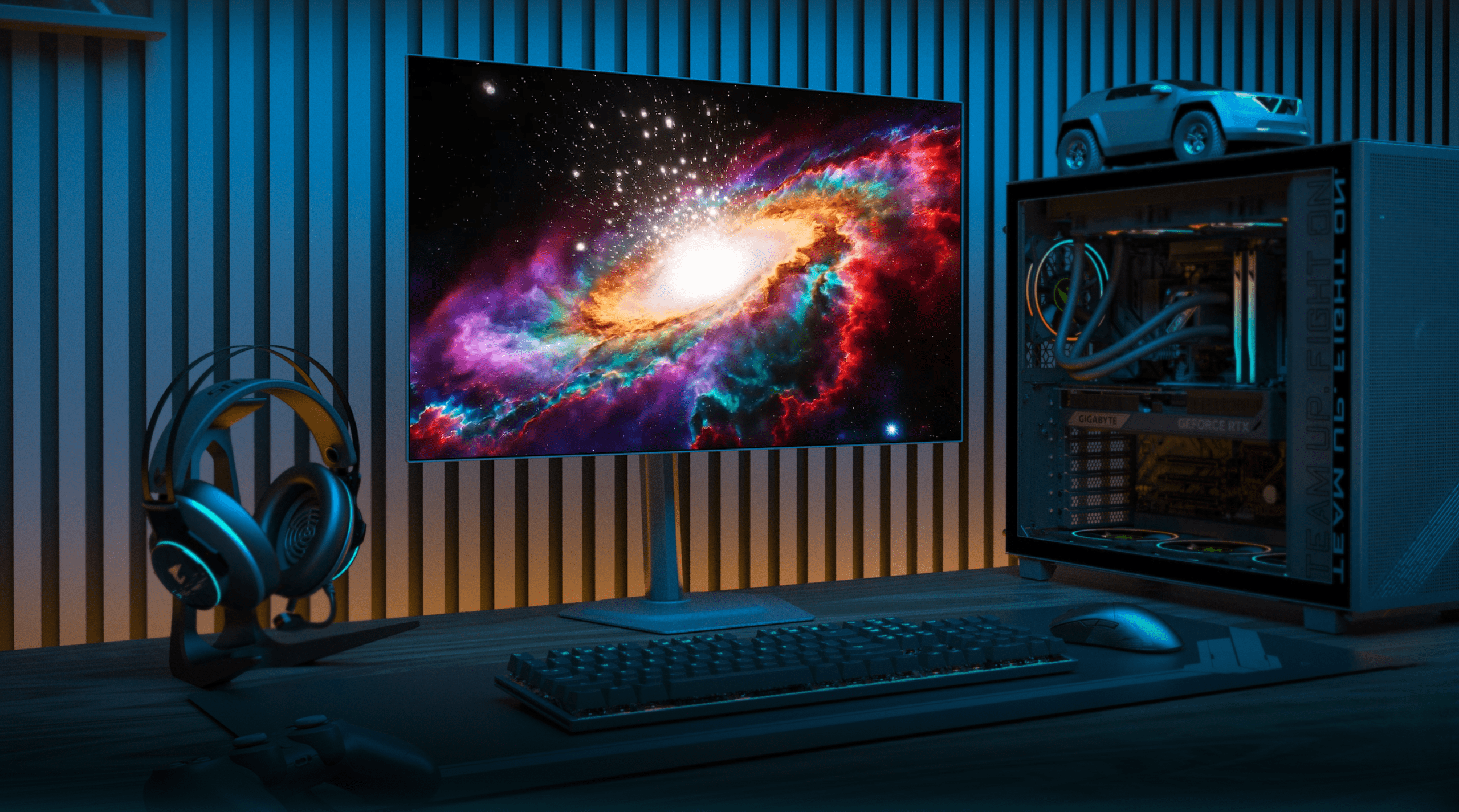
- Gigabyte revealed new OLED monitors at CES 2026
- A new HyperNits HDR feature seeks to improve brightness levels and avoid dimming issues
- Tandem OLED is also used here to increase brightness and reduce burn-in
CES 2026 is coming to a close and there have been plenty of big gaming reveals, but we’re not done yet: a major manufacturer may have just solved one of the biggest problems with OLED gaming monitors.
As reported by KitGuru, Gigabyte revealed its new OLED gaming monitors at CES 2026, using a new HDR feature called “HyperNits” to address OLED average picture level (APL) issues. To put it simply, HyperNits promises to increase overall brightness levels, but avoid blowing out highlights.
Automatic Brightness Limiter (ABL) on OLED monitors is present to protect them against burn-in and increased power consumption, intervening when APL levels are high, in other words, when bright areas occupy a significant portion of the screen.
This poses a problem for gaming scenarios, as games (or even movies) can constantly switch from dark to light or vice versa, which can lead to a frustrating experience of overall brightness dimming. This is one of the few advantages of mini-LED displays over OLEDs: ABL still exists to some extent on mini-LEDs, but it is not as aggressive as on OLEDs.
This was visible in my ultrawide review of Mobile Pixels’ 34-inch mini-LEDs, where blooming and haloing were the drawbacks, but brightness was consistent even when APL levels were at 100% (full-screen gaming), highlighting the main advantage of mini-LED over OLED.
Gigabyte’s HyperNits seeks to improve brightness consistency with OLED displays, with a claim of “30% more brightness” when the feature is enabled on the new MO27Q28GR OLED monitor (a mouthful of a model name, I know).
It’s also a major advantage that the MO27Q28GR uses a tandem OLED panel. This is a technology that improves brightness levels, energy efficiency and reduces the risk of OLED burn-in by stacking two OLED layers together.
With these two innovations working together, we could now be looking at a major breakthrough for OLED displays.
Analysis: OLEDs could beat mini-LEDs if it works
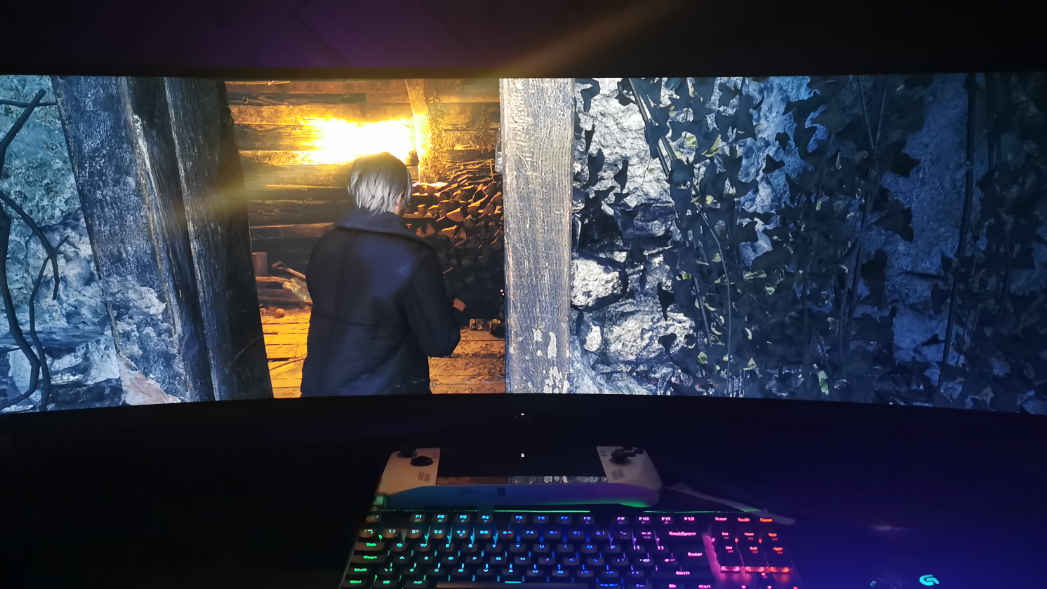
OLEDs remain ahead in the battle against mini-LEDs, and some would even argue that there was no battle to begin with. The deep black levels on both are perfect for gaming immersion, but the OLED takes the win in this area – even if it’s not quite the same story in terms of brightness.
While there are many OLED displays capable of 1,000 nits or more in HDR, the APL issues mentioned prevent them from maintaining high brightness levels without noticeable dimming, whereas mini-LEDs are excellent at consistently high brightness.
If the combination of the OLED and HyperNits tandem can avoid such brightness limitations, we could be looking at a scenario where mini-LEDs are completely left behind, potentially losing what is arguably the only major advantage they have over OLED monitors.
TechRadar will cover this year’s events extensively THESEand will bring you all the big announcements as they happen. Visit our Live news from CES 2026 page for the latest stories and our hands-on verdicts on everything we’ve seen.
You can also ask us a question about the show in our Live Q&A from CES 2026 and we will do our best to answer them.
And don’t forget to follow us on TikTok for the latest news from the CES show!


