
- Google Pixel Watch 3 now offers a loss of impulse detection in the United States
- The company revealed how it created the functionality
- It’s all about opportunistic detection and prevent heart events
The loss of detection of Google Pulse recently began to take place in the United States after receiving authorities for health authorities in February. Now Google has revealed how it has exactly created the rescue function, and what makes it so important.
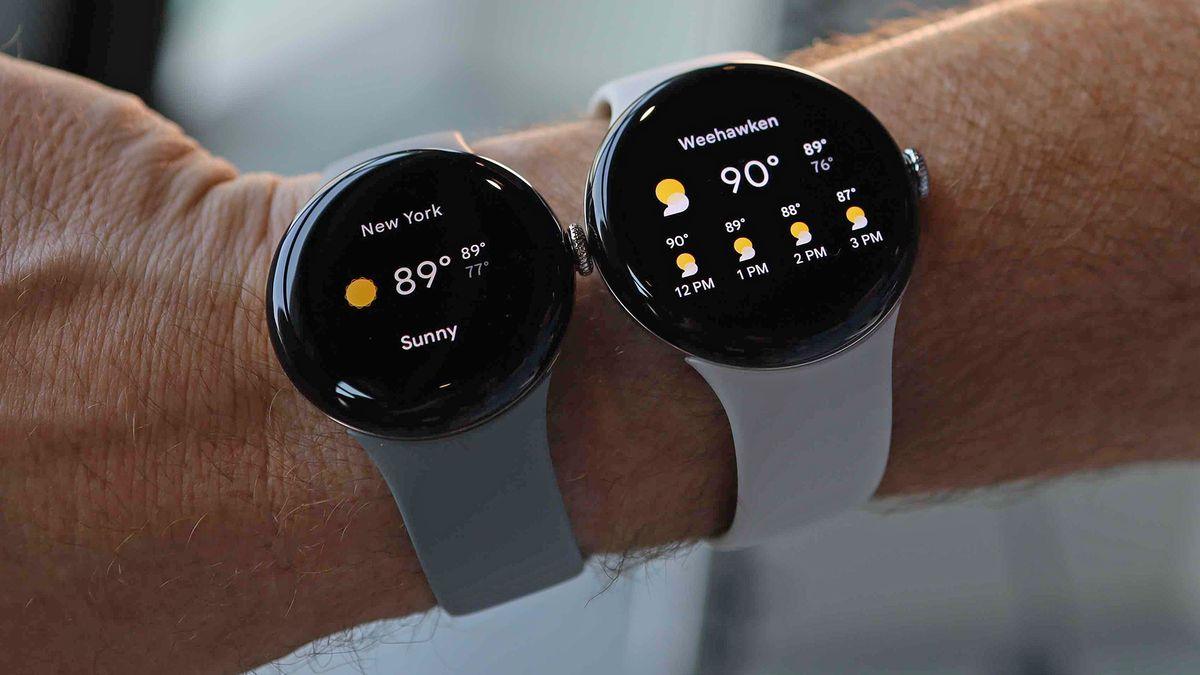
The Google Pixel Watch 3 is the best Android smartwatch on the market because of its excellent performance, its elegant design and its decent battery life. During the launch, it was unveiled with a loss of impulse detection, which can alert emergency services and passers -by if the carrier undergoes cardiac arrest.
Now Google has revealed part of the work behind the scenes that participated in the functionality of the resolution of “an apparently insoluble public health challenge”.
As Google notes, cardiac arrest events (OHCA) excluding hospitals cause millions of deaths worldwide, with half a quarter of events that are contained.
By Google, ” half Victims from Ohca to reduction receive no resuscitation because they are found too late and an attempt at resuscitation is determined as futile. “”
Ohca and successful resuscitation are almost time. The survival chain, which ends with advanced care, begins with access to emergency services or passers -by who can deliver RCR or administer treatment with a defibrillator. However, the conscience in a timely time that someone knows the Ohca is crucial.
Testing events have a survival rate of 7.7 times higher than reduction events, which is why the loss of pulse detection is so vital.
How Google has loss of impulse detection
Google says that its loss of impulse detection is based on a multimodal algorithm using photoplethysmography (PPG), a process that uses light to measure blood volume changes, as well as accelerometer data from on -board sensors.
There are several “doors” which must have passed because the events are so rare and the false positives are far from ideal.
Before an alert goes out, there is data from the PPG sensor (normally used to monitor your heart rate), an automatic learning algorithm to check the pulsatile transition (having an impulse) to an impulse pulse, and other sensor checks to confirm the absence of a low impulse using other LEDs and photodids.
It is a very technical way to say that your pixel watch must be absolutely sure that your heart has stopped beating before triggering an alert, rather than alert because a user has removed his watch, for example.
Google says that during development, it has teamed up with cardiac electrophysiologists and their patients, including patients with scheduled tests of implanted cardiac defibrillators, where Google has measured temporary planned cardiac stops.
Google says that the other vital aspect of functionality development, apart from precision, is responsibility. He detailed the efforts he made to minimize the false positives, and also notes that the complexion is not a barrier to the efficiency of the functionality.
Google also claims that the design explains the maximization of the battery life, using sensor data which would already be activated to trigger additional subsequent checks, rather than running a background monitoring system all the time.
The full blog is a fascinating preview and is well worth reading. As indicated, the loss of pulse detection is now available in the United States, as well as all the other territories in which it is already alive, including the United Kingdom and 14 other European countries.


