

- Google has revealed AR glasses prototypes at Ted
- These glasses are apparently made by Samsung under Android XR
- AR glasses should be released in 2026
The Ray-Ban Meta intelligent glasses were a wild success for Meta, and it seems that Samsung and Apple have taken note while the duo plans to launch their own Android XR and Apple XR glasses.
We had our first overview of the Android XR glasses last week during a Ted Talk organized by the augmented reality chief of Google and the extended reality, Shahram Izadi.
The specifications are a much smaller package than the Moohan Android XR Headset Google and Samsung project on which collaborates (via Axios) – and you can see the helmet behind it on a shelf to have an idea of the difference in size.
In the surprise demo, Izadi used the glasses to perform some tasks, including the live translation from Farsi to English, the digitization of a book using its integrated cameras and helping them find their keys using a functionality called “Memory”. They also pack in a screen so that the wearer can receive visually information, not only via audio indices.
From now on, the Korea Economic Daily claims that this prototype is manufactured by Samsung as part of the existing Android XR partnership of the duo – and it should be launched next year.
Although leaks are taken with a pinch of salt, we have heard many reports that Meta plans to launch her Smart Ray-Ban glasses with a display later this year, so it is not out of the question that an Android XR device could follow shortly after.
In addition, given how impressive the prototype already seems – being able to perform a series of tasks in an elegant package – it seems likely that Google and Samsung are not far from having a product ready for the consumer. I just hope that they are not as expensive as Meta glasses would be.
What does Apple do?
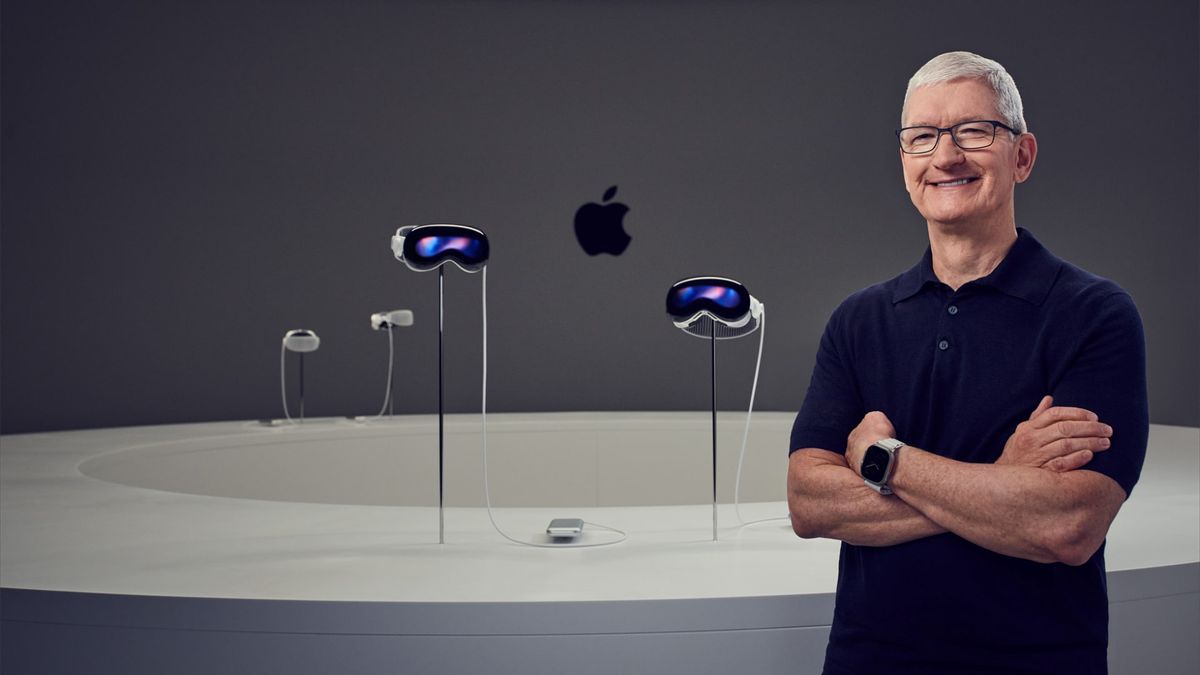
Apple also wants to create light AR specifications, according to Mark Gurman from Bloomberg (behind a paid wall). According to people familiar with Apple’s AR plans “is the only thing he really spends his time from the point of view of product development.”
Although according to Gurman, Apple glasses could still be in a few years.
Because the real AR glasses are not yet achievable in Apple’s mind (according to people of knowledge), he apparently wants to focus on the equipment of his Apple Watch and AirPods with AI cameras to reach part of the features of the Ray-Ban Meta AI Glasses that we have today.
Given Apple’s difficulties with AI on the iPhone 16, it is logical that he would not currently want to focus on AI smart glasses, although it seems that it can be late at the Glasses Day given the speed with which Samsung, Google and Meta should launch specifications.
As with all leaks and speculation, we will have to wait and see what Apple has in its sleeve, but it could benefit from the same advantage that Google goes – the one that is missing in Meta.
Summone synergy strategy
The most striking part of the Google prototype is that the XR device seems a lot thinner than the other AR glasses prototypes we have seen – such as Meta Orion AR specifications and the 5th generation Snap show developer kit. Indeed, it apparently draws the biggest advantage of Google: an Android phone according to Izadi.
He explained: “These glasses work with your phone, streaming back and forth, allowing glasses to be very light and access all your phone applications.”
Because they do not have their own telephone brands on which to count, Meta and Snap would ideally like users counting only on their own autonomous platform – of which they have a complete control to introduce the applications and experiences they wish most. Check that they did not have when they simply pushed Android via telephone applications.
Google, since it manages the Android ecosystem, probably does not yet want people to abandon its phones.

Its glasses are therefore rather designed to take advantage of the processors of your phone rather than a sophisticated chipset integrated into the glasses themselves (although we suspect that they still have a little integrated treatment power for simple display and camera operations).
This allows Google to remove part of the bulk from which a reinforced chipset requires – such as sophisticated cooling and a larger battery – to create a thinner final product without sacrificing overall performance (at least in theory).
Apple could take advantage of a similar relationship for smartphones / glass with its own AR specifications, although the third -party approach of Meta and Snap has an advantage in that they are system agnostics. You can use the smartphone you want, or you may not even need a smartphone.
Hopefully the symbiotic relationship of Google between its glasses and its phones leads to intelligent specifications which are not as expensive as its competitors, because they do not need to pack as many components. For example, Meta to come from Meta with a screen should cost up to $ 1,400 (£ 1,100 / $ 2,200 at).
For the moment, we will have to wait and see, but the smart specifications of Google and Samsung seem promising, and if they should be launched next year 2026 cannot arrive early enough.


