
ISLAMABAD:
The government on Wednesday approved the sale of 500,000 tonnes of wheat in the open market at subsidized rates, including nearly 300,000 tonnes of imported wheat, which could result in a loss of Rs 2,355 per 40 kilogram bag to the exchequer.
In addition to sale in the open market through competitive bidding, the government has decided to sell an additional 300,000 metric tonnes of wheat to the Punjab government at Rs 592 per 40 kg below its price.
The government’s Economic Coordination Committee (ECC) took the decision to sell wheat at a loss, highlighting poor economic and business planning by the federal government. Expensive wheat was imported earlier and now it will be sold well below the cost of purchase and storage.
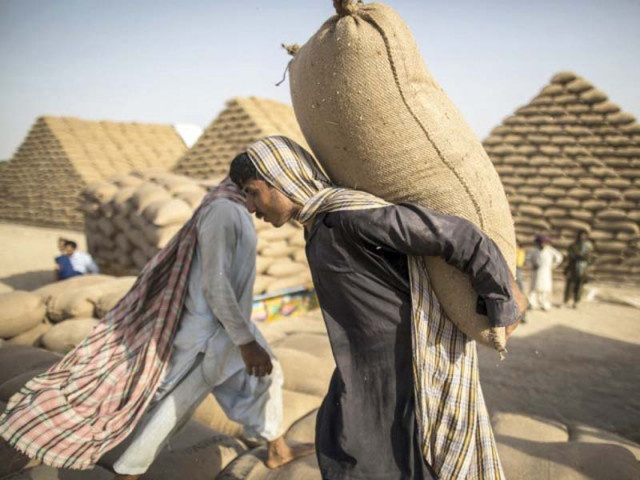
The 294,994 tonnes of wheat imported in 2022 are currently stored at the premises of the Pakistan Agriculture Storage and Services Corporation (PASSCO), which is being dissolved by the federal government.
The ECC approved the disposal of 500,000 tonnes of PASSCO wheat stocks through competitive bidding, citing objectives such as managing excess stocks, reducing storage costs, stabilizing domestic wheat prices and safeguarding food security, according to a press release from the Ministry of Finance.
The Finance Division had proposed to fix the reserve price equal to the PASSCO cost of Rs 4,742 per 40 kg for local wheat and Rs 6,425 per 40 kg for imported wheat. However, the ECC approved the reserve price of Rs4,400 for local wheat and Rs4,070 for imported wheat.
PASSCO has two million tonnes of wheat stocks available for disposal and the federal cabinet decided last month to close the entity.
The ECC was informed that based on these prices, the estimated financial loss for disposal of 500,000 tonnes of wheat ranges from Rs20.5 billion to Rs22 billion. However, the annual cost of carrying the proposed quantity is estimated at over Rs.11 billion.
Farmers suffered immense losses due to abrupt decisions by the federal and Punjab governments to stop purchasing wheat from farmers two years ago. Prices fell to Rs 2,500 per 40 kg and the situation was further aggravated due to import of wheat. From now on, the Ministry of Finance would grant a subsidy of around Rs 20 billion to sell off wheat stocks, including Rs 9 billion which will be immediately paid.
The ECC was informed that PASSCO has held 294,994 tonnes of imported wheat stock since 2022, which is gradually losing its market value compared to new arrivals, a trend that will further intensify if the stock is held for a longer period.
The Food Ministry further said that continued withholding of imported wheat was leading to increased transportation costs and any delay in clearance was likely to put downward pressure on market prices during the upcoming Rabi harvest season.
The Ministry of National Food Security and Research has also become a den of experiments and mismanagement since the government has transferred food secretaries one after the other.
The ECC also approved the supply of 300,000 tonnes of PASSCO wheat to the Punjab government to maintain adequate supply of wheat to flour mills, stabilize prices and ensure uninterrupted availability of wheat flour to consumers, the Finance Ministry said.
The Punjab government had requested the federal government to urgently supply 300,000 tonnes of wheat from PASSCO stocks at the rate of Rs 3,900 per 40 kg. However, the cost of wheat, including incidental charges for local wheat from PASSCO, is calculated at PKR 4,742 per 40 kg.
The matter was submitted to Deputy Prime Minister Ishaq Dar who authorized the sale of wheat at the rate of Rs 4,150 per 40 kg. The ECC endorsed the Deputy Prime Minister’s decision on Wednesday. The federal government will bear a loss of Rs 4.4 billion on the sale of 300,000 tonnes of wheat to Punjab.
Oversight Committee
All provinces, as well as relevant federal institutions, have reported sufficient wheat stocks to meet the country’s current needs, as well as encouraging sowing trends for the 2025-26 Rabi season, according to an official statement issued on Wednesday.
Food Security Minister Rana Tanveer Hussain chaired the fourth meeting of the National Wheat Monitoring Committee, which reviewed the overall wheat situation, with emphasis on reserves, inter-provincial cooperation, procurement planning for 2026 and market stability.
The meeting brought together representatives from all provinces and relevant federal institutions. The committee reviewed the wheat supply situation and expressed satisfaction that sufficient supplies were available to meet the requirements of the current year.
The meeting was informed that there has been no shortage of wheat across the country and adequate arrangements are in place to ensure uninterrupted availability of this commodity till the next harvest.
Wheat procurement strategies at the provincial level were also discussed, with emphasis on protecting farmers from exploitation. The provinces said effective monitoring and implementation measures have been taken at the district level to ensure fair income to farmers.
While reviewing the role of the private sector, the meeting was informed that regulatory mechanisms are operational to safeguard the interests of farmers. Interprovincial coordination was highlighted as essential to maintaining national efficiency and market balance.
Regarding the planting season, the meeting noted encouraging trends reflecting farmers’ confidence and improved agricultural practices. Concluding the meeting, the minister reaffirmed the government’s commitment to food security, market stability and maintaining adequate strategic reserves.


