
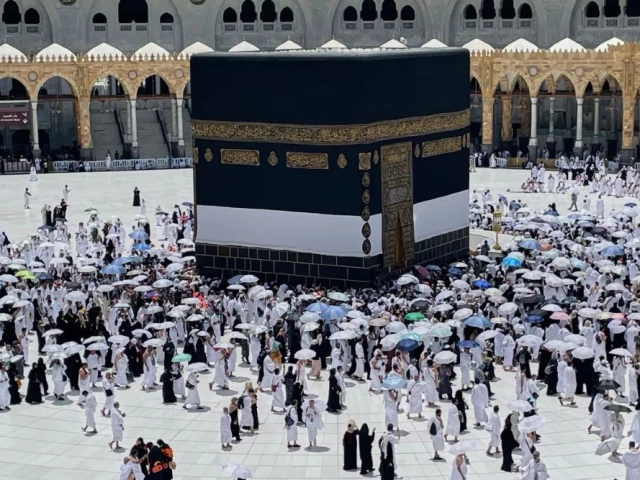
The Saudi Ministry of Health has issued medical guidelines defining the conditions that disqualify candidates for Hajj.
The federal government has extended the deadline for submitting Hajj dues by three days, giving would-be pilgrims a final opportunity to pay the second tranche of their dues.
According to the spokesperson of the Ministry of Religious Affairs and Interfaith Harmony, Muhammad Umar Butt, candidates must deposit the required contributions by November 19. He said failure to submit the second installment will result in cancellation of the Hajj application.
Previously, Saturday was the last day to deposit payments. The Ministry of Religious Affairs had announced that all designated banks would remain open on Saturday to allow applicants for the 2026 Hajj program to pay their second installment of dues.
The ministry also urged prospective pilgrims to receive a computerized receipt after depositing their membership fee. This is to avoid any potential inconveniences or problems with the pilgrims’ application, thereby ensuring a smooth process.
The government program sends Pakistani citizens to perform the Hajj, providing a road map of all the steps that must be taken in the process. The government also provides guidance and packages to facilitate citizens during their travel. The program includes the traditional packages of 38 to 42 days, as well as a shorter option of 20 to 25 days, the estimated costs of which are expected to be between Rs 1.15 million and Rs 1.25 million.
The first phase of the project began in early August this year, receiving over 70,000 applications from enthusiastic Pakistanis. The second phase began on August 11 and applicants were advised to keep their passports until at least November 26, 2025. The Hajj program operates on a first-come, first-served basis. Once payment of dues is completed, successful candidates will be able to begin their sacred journey.
The day before, Saudi Arabia had imposed strict medical conditions for the 2026 Hajj, banning a wide range of seriously ill pilgrims from performing the Hajj and introducing an expulsion policy for those who arrive in an unfit state. According to the Saudi Ministry of Religious Affairs, any pilgrim deemed medically unfit will be sent back to their country of origin and repatriation costs will be borne by the pilgrim.
The Saudi Ministry of Health has issued detailed medical guidelines defining the conditions that disqualify candidates for Hajj. The ministry said people with kidney diseases, including those on dialysis, will not be allowed to perform Hajj in 2026. It added that heart patients unable to withstand physical exertion are also banned.
Pilgrims suffering from chronic lung or liver diseases, serious neurological or psychiatric disorders, memory weakness or dementia and other significant disabilities will also be prohibited.
Restrictions were also imposed on older people suffering from serious age-related illnesses, including Alzheimer’s and Parkinson’s diseases. Pregnant women and those suffering from whooping cough, tuberculosis or viral hemorrhagic fever are also not allowed to travel for Hajj. Cancer patients were also declared ineligible under the new guidelines.
The Ministry of Religious Affairs said doctors will have the power to prevent unfit people from traveling before they leave. Saudi monitoring teams will verify the authenticity of the fitness certificates, ensuring that only pilgrims meeting essential health standards visit the holy sites.


