
Islamabad:
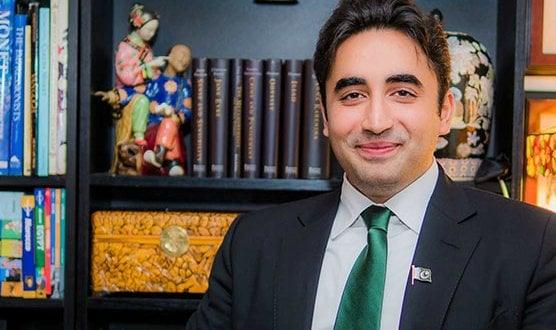
One day after he was invited to start the high-level security group again, the federal government on Tuesday charged the president of the People’s Pakistan Party (PPP), Bilawal Bhutto Zardari, to hire Pakistan Tehreek-E-insaf (PTI), accepting its offer to mediate between firing and opposition.
Speaking on a private television channel, the advisor to Prime Minister Shehbaz Sharif and the senior PML-NN, Rana Sanaullah, said that the government was open to reconstructing the National Security Parliamentary Committee (PCN) if the Bilawal had brought PTI to the table.
“Bilawal Bhutto is already part of the government. If he has managed to make media between PTI and the government and negotiations give positive results, it will be a significant success for us,” said the Prime Minister’s advisor.
Although Sanaullah has referred to Bilawal as part of the government, it is relevant to note that the president of the PPP has constantly argued that if his party supports the government led by PML-N and sits on Treasury benches, it is not part of the federal cabinet.
The government’s decision follows Bilawal’s call to a united front against terrorism and its concerns concerning the absence of key political parties, in particular PTI, of the recently kept security meeting.
Addressing PPP workers at the Punjab governor’s house on Monday, he urged the Prime Minister to reconstruct the PCN session with a complete political representation, stressing that Pakistan security challenges demanded collective responsibility.
While putting pressure for a wider participation, Bilawal also criticized the opposition parties to prioritize political disputes on national security.
Addressing directly to the opposition chief Omar Ayub Khan, he urged the PTI to put aside internal grievances and to focus on pressing national issues, including terrorism, economic instability and governance failures in Khyber Pakhtunkhwa and Balutchistan.
He stressed that national security should not be kept hostage on the unique request of PTI for the publication of his Supremo Imran Khan. He warned that the internal divisions of Pakistan were exploited by external forces and underlined the need for national unity.
Positioning PPP as a bridge between the government and the opposition, Bilawal argued that the unique position of his party – neither fully in the government nor the opposition – allowed him to facilitate dialogue and work to resolve the main national challenges.
On March 18, PCNs approved a unanimous statement, reaffirming Pakistan’s unshakable commitment to eradicate terrorism in all its forms and judged decisive action against any elements threatening national stability.
The main civilian and military leaders in the country reaffirmed its commitment during the first security meeting in Parliament during the coalition government led by PML-NN, which was boycotted by the main opposition party, PTI, among others.
The committee had reiterated that no institution, individual or group acting in collusion with hostile forces will be authorized to undermine peace and stability of Pakistan. Expressing the regrets of the absence of certain members of the opposition, an official press release said that the Committee reaffirmed that consultations on this subject would continue.
During the session on the camera, the military management had provided a detailed briefing on the dominant security situation, especially in Balutchistan and Khyber Pakhtunkhwa. The meeting was informed of the operations to combat current terrorism, recent threats and the complete state strategy to ensure internal security.
The meeting of PCNs was called after the security problems intensified following a series of attacks, in particular in Balutchistan, where activists recently diverted a passenger train and carried out a bombardment of suicide on a security convoy.
Earlier, terrorists had attacked the canton of Bannu at Khyber Pakhtunkhwa, where 16 terrorists were killed and five soldiers were martyred.
In addition, Maulana Hamidul Haqqani-The son of Maulana Samiul Haq and chief of his own faction of the Jamiat Ulema-E-Islam (JUI-S)-was one of the six people who died in a recent suicide attack at the Darul Uloom Haqqani Inshera District, Khyber Pakhtunkhwa.


