
Khawaja Asif says it is ‘humanly impossible’ to run Karachi in current administrative structure
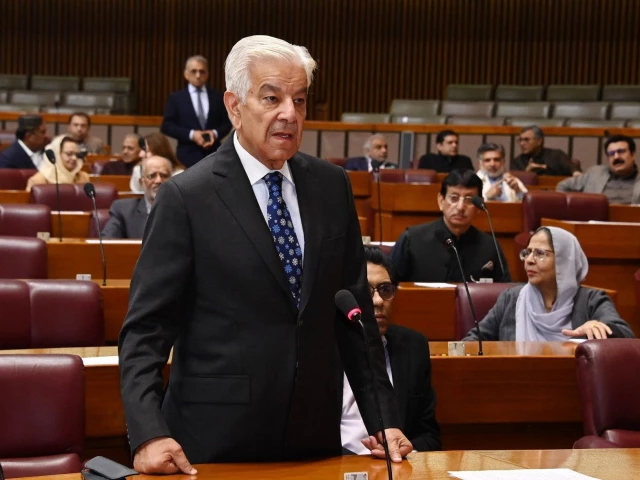
Defense Minister Khawaja Asif speaking during the National Assembly session on Tuesday, January 20, 2026. PHOTO: Facebook/National Assembly of Pakistan
ISLAMABAD:
The fire at Karachi’s Gul Plaza dominated debate in the National Assembly on Tuesday, with MQM-P leader Farooq Sattar calling the fire a “national tragedy” and accusing the Sindh government and municipal authorities of negligence and delayed response.
He said the people of Karachi had the right to question the provincial and federal governments on where the city was in their list of priorities.
The fire that broke out in Gul Plaza on Saturday evening killed at least 28 people, while dozens more are still missing.
Tempers flared in the House as MQM-P members tore up agenda papers and demanded that current affairs be suspended to focus only on the Karachi tragedy. Law Minister Azam Nazeer Tarar then moved a motion to postpone the rest of the agenda, which was approved by Vice President Ghulam Mustafa Shah.
Sattar said decades of neglect had left Karachi short of firefighting resources, arguing the city was undervalued, underrepresented and underfunded. Paying tribute to firefighter Furqan Ali, who died while battling the blaze, he said accountability was inevitable and those responsible should seek forgiveness from the public. He renewed calls for stronger local governments, saying a city the size of Karachi could not be led by a single chief minister.
PPP leader Shehla Raza rejected the MQM-P’s criticism, saying there was no need for ministers to immediately visit incident sites and the priority should be effective emergency management. She described the official response to the fire, acknowledging delays caused by traffic jams, and insisted that Sindh had a functioning local government system.
Later, Defense Minister Khawaja Asif echoed calls for empowered local governments, saying it was “humanly impossible” to run Karachi under the current administrative structure.
Read: Gul Plaza fire death toll rises to 28 as DNA tests begin to identify victims
“I don’t blame individuals, I blame the system,” he said, arguing that the concentration of power in provincial capitals had weakened governance.
He said the spirit of the 18th Amendment had not yet been realized because power had not been truly transferred to the local level. True public empowerment, he said, requires a strong, self-governing local government system.
“If there is no empowered local government, there will be no effective firefighters, no rapid emergency response and no accountability at the neighborhood level,” he said.
Terming the Gul Plaza fire as a wake-up call, Asif urged Parliament to think seriously and pursue constitutional reforms to strengthen local governments.
MQM-P lawmaker Wasim Hussain, responding to remarks by PPP’s Abdul Qadir Patel, accused his political rivals of past complicity in Karachi’s problems, including developments related to Gul Plaza. Patel rejected the allegations, saying the Sindh government was committed to stabilizing the city and supporting those affected by the fire.
The debate had opened with Pakistan Tehreek-e-Insaf lawmaker Shehryar Afridi congratulating Mahmood Khan Achakzai on becoming opposition leader, calling it an honor for Balochistan and the country. He questioned coordination between provincial and federal disaster authorities following the Karachi fire, while criticizing the use of the term “internally displaced persons” to refer to those affected by military operations in the merged districts, saying forced displacement undermined human dignity.
Learn more: MWM leader Raja Nasir Abbas named leader of opposition in Senate
Afridi claimed that the tribal areas had been used to raise funds without providing basic services and called for wider consultations in the Jirga to take all stakeholders into confidence.
The House also witnessed heated exchanges over security operations in Khyber and Waziristan, with PTI and JUI-F lawmakers protesting against travel during the harsh winter conditions. PTI’s Iqbal Afridi warned that failure to provide relief could trigger protests, while former President Asad Qaiser accused the federal government of withholding funds owed to Khyber-Pakhtunkhwa under the NFC award.
Several bills, including a proposed constitutional amendment and institutional legislation, were referred to the standing committees before the session adjourned until 11 a.m. Wednesday.


