
ISLAMABAD:
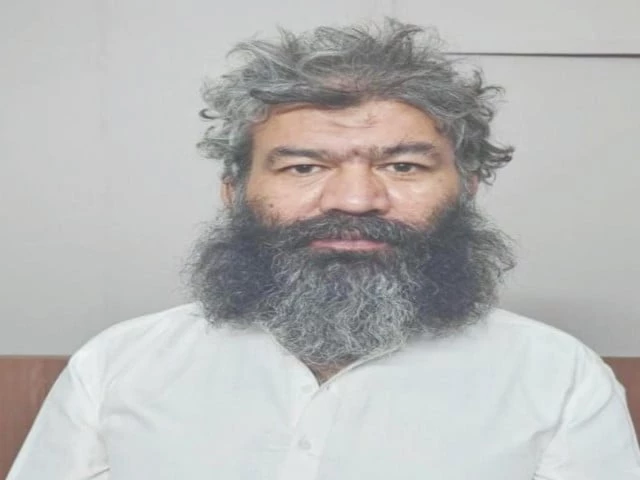
Pakistani intelligence agencies have struck the nerve center of the Islamic State of Khorasan (IS-K), arresting its public face and architect of propaganda in an operation near the Pakistan-Afghanistan border, a move that has disrupted the group’s media apparatus and weakened its cross-border reach, it was reported on Thursday.
The detention of Sultan Aziz Azzam, which took place months ago but was kept secret for operational reasons, had immediate consequences for IS-K’s ability to maintain its propaganda-driven model.
Officials said the arrest led to the suspension of key media platforms linked to the group, undermining recruitment pipelines and weakening its ability to formulate narratives, issue operational signals and inspire isolated or coordinated attacks.
Security officials said the Al-Azaim Foundation was a central pillar of IS-K’s propaganda ecosystem, responsible for recruitment messages, ideological dissemination and operational signaling.
They said its closure weakened the group’s ability to communicate with its followers and coordinate its stories.
Azzam was arrested on May 16, 2025, as part of a broader campaign by Pakistani authorities against ISIS-K networks. In recent weeks, several high-profile arrests have been made against the group, reflecting intensified counterterrorism operations.
At the same time, the impact of these actions has also been recognized internationally. The 16th report of the UN Analytical Support and Sanctions Monitoring Team noted that Pakistan’s operations have weakened the organizational structure of the IS-K globally.
The report said several planned terrorist attacks were foiled and the number of militants affiliated with the group declined.
The UN report further highlights that the arrest of Sultan Aziz Azzam, as well as top ISIS-K leader Abu Yasir al-Turki, in May 2025 significantly reduced the group’s operational strength.
Following these arrests, ISIS-K’s main propaganda platforms, including Voice of Khorasan, were also suspended, further limiting the group’s ability to project power and support recruitment.
“Overall, the capacity of [IS-K] was degraded as a result of counter-terrorism operations,” the UN report said. [IS-K] commanders and ideologues were neutralized, and the number of [IS-K] the fighters were probably reduced. Several planned attacks were foiled. »
The report observes that IS-K’s ability to operate freely on both sides of the Pakistan-Afghan border has been reduced. However, it also casts doubt on the Afghan Taliban’s claims that no militant group operates from Afghan soil.
“The Taliban claims that no terrorist groups are operating in or from Afghanistan,” the report said. “Reports from member states, however, indicate that a number of terrorist groups still operate in the country, with varying degrees of autonomy and oversight from Taliban authorities.”
He further warned of alarming recruitment practices in border regions, saying: “In northern Afghanistan and areas close to the Pakistani borders, [IS-K] allegedly indoctrinated children in madres, creating a suicide training course for minors around the age of 14.
In a letter dated December 8, Pakistan’s permanent representative to the United Nations, Asim Iftikhar Ahmed, formally requested that the report be circulated among members of the UN Security Council.
According to the UNSC, Sultan Aziz Azzam has been IS-K’s spokesperson since the group’s emergence in Afghanistan in 2015. Islamabad-based security platform The Khorasan Diary described him as the group’s second-in-command, while the European Council identified him as the operator of IS-K’s media arm, Al-Azaim Media.
Writing for the Jamestown Foundation’s Militant Leadership Monitor, analyst Shan A Zain noted that Azzam was born in Afghanistan’s Nangarhar province and worked for at least three local radio stations before becoming IS-K’s main propagandist. He is also the author of books and poetry.
One of his major works, Travelers of the Maze, recounts the alleged experiences of ISIS fighters in the Spin Ghar mountains. Excerpts from the book were distributed on Telegram platforms frequented by potential recruits.
“Sultan Aziz Azzam has been credited with recruiting ISIS members to carry out high-profile attacks in Afghanistan,” Zain wrote. “He wrote several books and articles telling stories about [fighters] in order to encourage people to join the ranks of ISIS.”
The UNSC has described Azzam as a central figure in amplifying the ideological reach of IS-K. “As [IS-K’s] spokesperson, Azam was instrumental in spreading ISIL’s violent ideology, glorifying and justifying terrorist acts,” the organization’s website states.
“With his former experience as an Afghan journalist, his activity as [IS-K’s] the spokesperson increased [IS-K’s] visibility and influence among his followers.
Azzam had claimed responsibility, on behalf of IS-K, for the August 26, 2021 suicide attack near Kabul’s Hamid Karzai International Airport. It also released IS-K statements following the killing of three female journalists on March 2, 2021 and a major attack at a prison in Jalalabad on August 3, 2020.


