
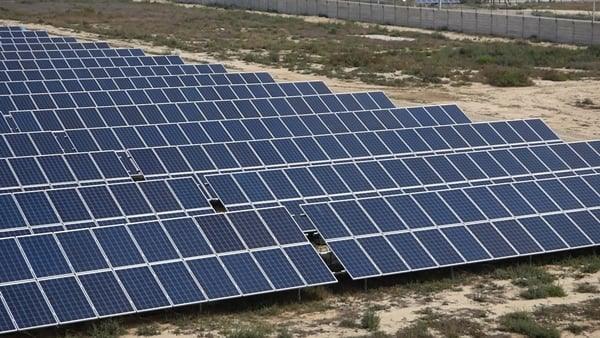
Pakistan has unexpectedly became one of the main world importers of solar panels, an important 17 Gigawatt Gigawatts in 2024 only – more than double its contribution compared to the previous year, according to the Global Electricity Review 2025 by Think Tank Ember, based in the United Kingdom.
This growth occurred without sweeping government mandates or international green finances. Instead, it is drawn by an upward increase in solar facilities on the roof in all households, small businesses and commercial users seeking to worry about the rise in energy costs and chronic power outages, according to the report published in The independent.
“It marks a structural change in the way energy is perceived in Pakistan,” Muhammad Mustafa Amjad, program director at Renewables First, told The Outlet. He described the solar boom as a “survival response” in an increasingly expensive country of his unreliable grid.
The air satellite imaging of Pakistani cities shows that the roofs are quickly becoming blue as solar panels proliferate. Ubaid Ullah, an energy expert based in Karachi, said: “If you look at satellite images from any Pakistani city, all the roofs seem blue.”
Unlike most energy transitions shaped by national policies or foreign investments, the change of Pakistan is largely motivated by market logic and individual need. According to EMBER, the majority of new installations are out of network or in the background, escaping inclusion in official statistics and letting the national grid play the catch-up.
“The role of the grid must adapt massively to remain relevant,” added Amjad. “Solar on the roof quickly becomes the favorite energy supplier.”
Without large -scale solar auction or major public investment programs, infrastructure and regulatory systems have struggled to keep pace. Experts warn that the decentralized energy revolution can lead to instability unless planning and surveillance are improving.
The so -called “spiral of the death of public services” – where users turn away from the public grid, eroding its financial base – already takes place in urban centers, exacerbating the challenges during evening peak hours.
However, the example of Pakistan provides important lessons for other nations in the world worldwide. Like Harjeet Singh, advisor to the non-proliferation treaty of fossil fuels, explained: “It is no longer simply a question of decarbonization; It is fundamentally a question of ensuring access to energy, stimulating economic stability and strengthening the energy security of the base. ”
Battery storage should follow a similar basic trajectory, further accelerating change to clean and clean energy.


