
Integrated circuit fleas (ASIC) specific to the application form the backbone of the Bitcoin mining industry (BTC). ASIC machines are designed for a single purpose: solving Bitcoin SHA-256 algorithm as quickly as possible in order to collect block rewards.
They are extremely good in this area. One of the most used ASIC machines, Antmin S19 is capable of making 82 billions of calculations per second – 820 times the number of stars in the Milky Way. The ASIC manufacturing market of $ 30 billion is dominated by Bitmain. Chinese business machines fuel around 80% of Bitcoin hashrate, according to Theinermag.
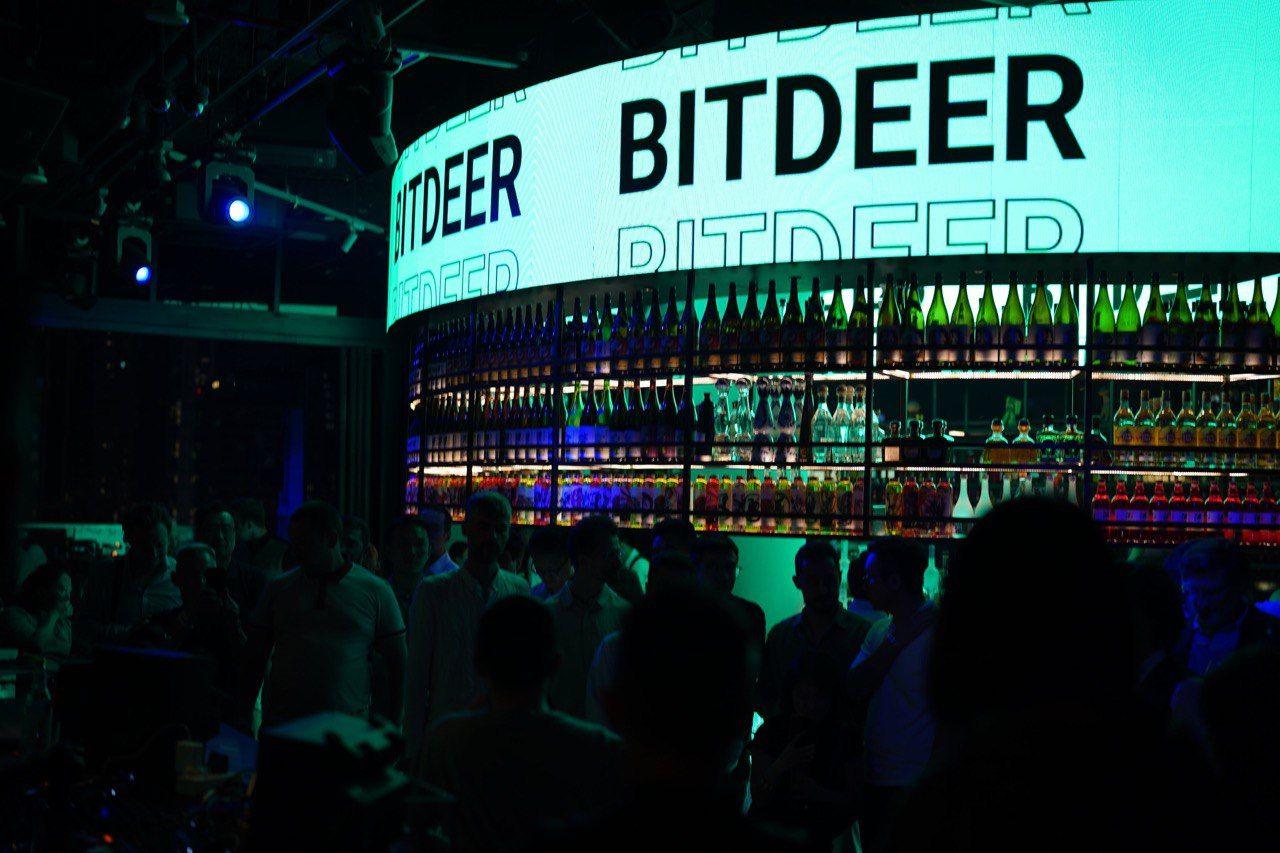
But Bitdeer (BTDR), the Bitcoin extraction company based in Singapore, intends to make things happen with the release of a new architecture of Puce Asic. These new chips could lead to a huge leap in efficiency, says society, while improving the transparency of the ASIC manufacturing process.
“The two prevailing players [Bitmain and MicroBT] are both private and very opaque companies, ”said Coindesk Jeff Laberge, head of capital markets and Bitdeer strategic initiatives. “They don’t really get involved with the media or do not give advice on what they do from R&D’s point of view, and that makes end for end buyers to plan.”
“We want our customers to know where we are in our manufacturing process, what is our roadmap in terms of new flea conceptions, where we are in our production cycles,” said Laberge.
Shanon Squires, director of mines of the Bitcoin accommodation company, Compass Mining, told Coindesk that an increased visibility in ASIC production would help minors plan new material expeditions and facilitate the forecast of Bitcoin’s difficulty. “Bitdeer’s commitment to transparency is ideal for the mining industry,” he said.
“While Canaan reveals its annual sales volume for various mining models, Bitdeer goes further by providing more frequent delivery volume updates,” Coindesk Wolfie Zhao, research manager at Theinermag, told Coindesk Wolfie. “Although the two are smaller players on the equipment market, their efforts show in good faith in promoting transparency. Hopefully this will encourage the biggest market holders to take note. »»
Efficiency search
Asic chips have mainly used the same plan since 2014. Over the past decade, the biggest increases in ASIC energy efficiency occurred at the foundry level, as the leading manufacturer of Global TSMC chips refined its manufacturing process. Although minors have also made changes to the design of fleas, such modifications have only made incremental gains.
Even thus, progress has been great. The very first ASIC, Canaan’s Avalon (2013) had an energy efficiency of 6,000 joules by Terahash (J / TH). Hydro Antmin S21XP of Bitmain, the most effective machine current on the market, has an efficiency of 12 days / th.
Bitdeer, which is listed on Nasdaq, wants to create an architecture completely new for its ASIC. “We believe that it will be necessary to enter what we call the efficiency beach in a figure,” said Laberge, referring to mining platforms with less than 10 d / TH in efficiency.
Scale with the traditional plan means using thinner fleas gradually. But the thinner beams are more likely to be defective and the Lot yields tend to fall. “You are also in competition with Apple and Nvidia and some of the world’s largest companies for the same materials,” said Laberge.
Bitdeer’s strategy director Haris Basit heads a team of engineers to create a new executive. Some members of this team worked on conceptions found in the first Bitmain Asic chips in 2014 – the tokens whose architecture has become the norm in the whole industry. (Bitmain did not respond to a request for comments.)
Bitdeer’s research has already had successes. The most recent product of the company, the Sealminge A3, carried out an electrical efficiency of 9.7 d / TH during the performance tests, the company reported on Monday. This means that the A3 – which still uses the traditional ASIC plan – could end up taking the S21XP hydroelectricity efficiency crown.
However, the minor’s Sealminer A4, which will use the new company’s chip architecture, should consume 5 J / TH. It will probably be the most effective ASIC machine on the market by a significant margin.
“People have long known that you could recycle [the electric] Load on a chip, but nobody could really understand how to do it in a way that allows high performance … We fell in love with the way to do so in a very high performance application, “Bastroad The Coin Stories told Podcast in December.
“Instead of simply using [charge] Once and discharge it, we use it several times, four, five, six times. So we get [a] Improving the efficiency of 75 to 80% by doing this, ”added Basit.
“Our Sealminer A4 chips will use this technology, but it should also be applicable more generally in digital chips, in particular digital fleas which are very active, such as GPUs and signal processing chips.”
Flea
Making ASIC is not easy. Bitdeer’s research team is divided into two units (one in Singapore, another in Silicon Valley) which both work on new conceptions of fleas. “For such a simple machine – everything he does is resolve the SHA -256 algorithm – it’s extremely complicated to design. We have some of the best engineers in the world to work on it, ”said Laberge. The company spends about 6 to 8 million dollars in quarter research.
So far, the company has delivered new products at a quick pace. Bitdeer expelled both the Sealmin A1 and A2 in 2024 and expects the A3 to enter mass production in the second half of 2025. He indicates that the A4 should reach the adhesive tape (the last stage of its design process) in the third quarter of the year, with a version probably at the end of 2025 or at the beginning of 2026.
When a new flea design is finalized, Bitdeer sends the TSMC plans. Not only is the Taiwanese company the largest flea manufacturer in the world, but it is also the most advanced at the technological level, which makes Bitdeer’s partnership with IT crucial.
“You can’t just go to TSMC and say:” Hey, I want 100 chip exams in the next three months. “There is a process to go through it,” said Laberge. “You enter and ask them for a flea allocation, and they will give this according to priority.”
Once he has the plans in hand, TSMC produces a mask, which works essentially as a model for fleas – like platinum in a print press. The mask is sent to Bitdeer alongside risky chips (a small batch of chips that the company can use for trials) to ensure that the design works properly. If the company needs modifications to be made to design, this is when it happens. In this case, TSMC provides corrections based on Bitdeer’s comments and sends a new mask with new risky chips. All this occurs at a significant cost. Bitdeer spent $ 14 million on the A2 strip and $ 26 million for the A3.
When Bitdeer is satisfied with a design, TSMC uses the mask to mass produce platelets. Laberge compared the sheets to the leaves, each containing hundreds of chips. Technically, a mask can be used to create an almost unlimited number of platelets, but TSMC has finished resources and can only produce a certain number of chips, so companies end up competing for them.
According to Laberge, one of the advantages of the design of the A4 is that it is supposed to facilitate the process of allowing the company’s chips. “”[Basit] Has the team challenged to offer a new architecture that did not need to undergo the latest TSMC processes, but could step back some generations, which would allow us to use a node which is much less in demand, “he said. A semiconductor node is essentially a specific version of the business manufacturing technology of the company; TSMC constantly builds new nodes in order to refine its processes.
It takes about three months for Bitdeer to receive his mask and his risk tokens after submitting his design to TSMC for the first time. Then, it is still three or four months for the company to receive its chips once it gave the foundry the green light for mass production. The chips are sent directly to the Bitdeer manufacturing facilities in Asia. From there, it can take four to eight weeks so that the operating platforms are fully built and packaged.
Peak
Despite all the costs incurred during production, part of the capital required for the manufacture of Asics comes from Bitdeer customers.
Minors interested in buying the Bitdeer ASICs generally deposit a deposit of 25% to 50% of the total cost of the order. The production cycle tends to make an average of six to seven months, so it takes long to the company to recover its funds and make a profit.
The construction of ASICS also creates advantages for Bitdeer’s own mining operations. Until recently, the company, which was founded in 2021, focused on the accommodation company, which means that it provided facilities to other bitcoin minors to place their platforms. Bitdeer is slowly going from this model and expanding its own mining operations alongside its ASIC manufacturing arm.
The acquisition of ASICS is generally the most expensive part of the construction of a Bitcoin operating operation. These machines generally only last about three or four years before the new models make them obsolete, so that the Bitcoin operating companies are constantly looking to acquire more.
Not only is Bitdeer capable of considerably reducing these costs by producing its own machines, but it also has the possibility of selling its mining platforms to other companies according to its needs.
Downstairs, Bitdeer aims to give Bitmain and Microbt a race for their money and to disturb what Laberge called the duopoly of the ASIC market. “We want to be the best actor on the market, absolutely,” said Laberge. “We think we have the team and technology to do so.”
Update (March 14, 2025, 15:30 UTC): Adding the cost of the Sealmin A3 adhesive tape.


