
- Huawei Qingyun W515y and W585y replace Windows with Linux systems made in China
- Both machines use the Kirin 9000X, a chip still shrouded in mystery
- HarmonyOS is missing as UnionTech UOS and Galaxy Kylin aim to replace Western operating systems
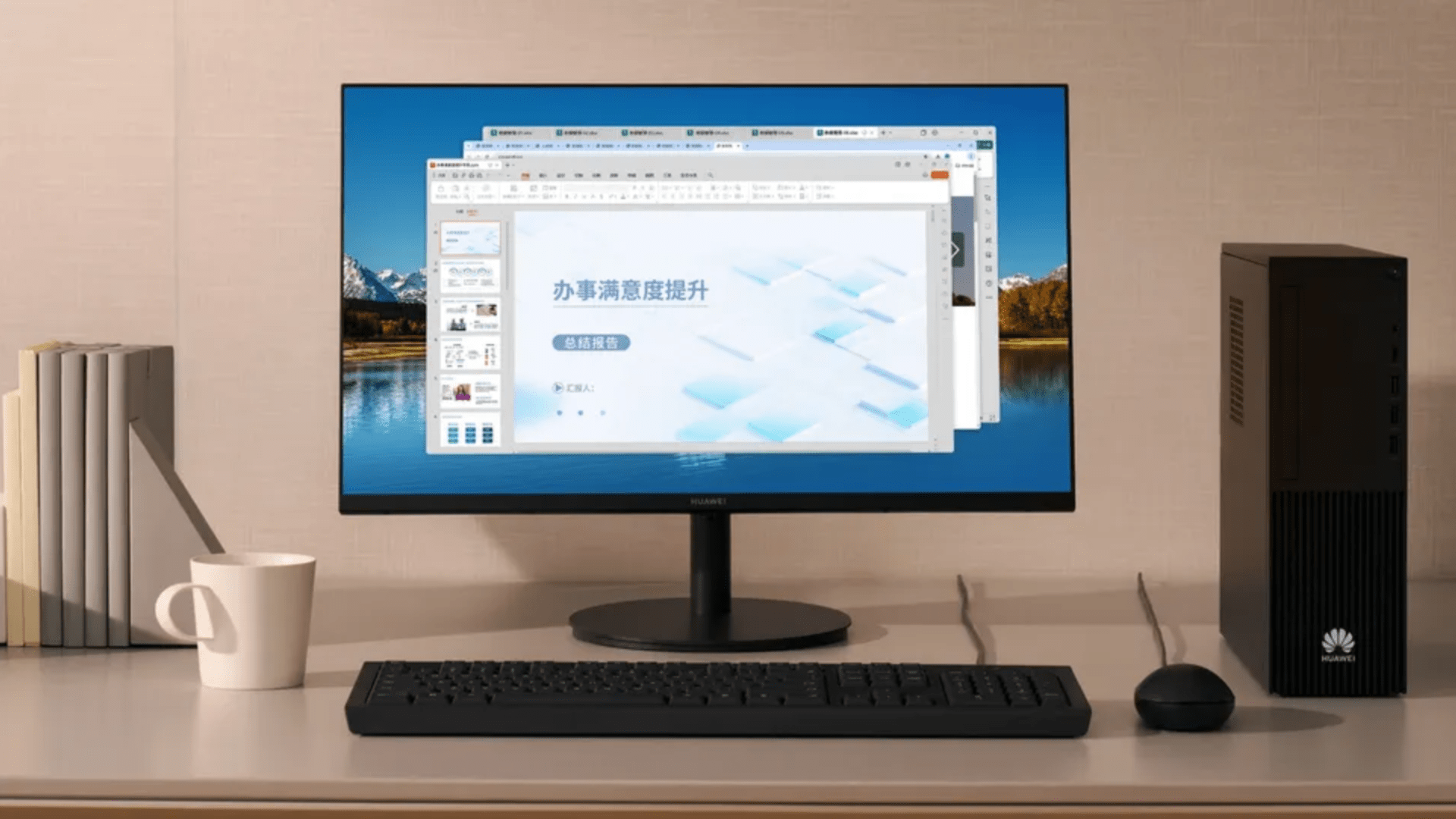
Huawei has unveiled two new desktop workstations, the Qingyun W515y and W585y, aimed directly at China’s domestic IT market.
Both systems feature the Kirin 9000X processor and use operating systems developed entirely in China, suggesting a move away from reliance on Western software.
Huawei has promoted HarmonyOS across all of its product lines, but none of these models use this system.
Material consistency despite radical change
Both devices come with UnionTech’s UOS V20 or Galaxy Kylin V10, two Linux-based platforms designed to replace Windows in enterprise environments.
The Qingyun W515y and W585y share identical hardware dimensions, measuring 11.5 x 3.7 x 12.4 inches and weighing 7.9 pounds without an optical drive or hard drive.
The chassis remains unchanged from the previous Qingyun W515x and W585x, retaining the same front and rear connectivity options.
Users will find multiple USB Type-A ports, a USB Type-C port, HDMI and VGA outputs, as well as audio and Ethernet connectors.
The optional DVD-RW drive feels like a nod to older users rather than a modern necessity.
Huawei is including the K100 wired keyboard and M100 wired mouse with both models, highlighting the focus on deployment-ready enterprise systems rather than consumer PCs.
At the heart of both mobile workstations is the Kirin 9000X processor, a chip that has yet to be officially detailed by Huawei.
Reports indicate that it is a 16-thread octa-core processor running at 2.5GHz, succeeding the Kirin 9000C found on previous workstations.
Although based on the Arm architecture, its lineage can be traced to earlier chips produced by TSMC, raising questions about how much of the current design remains under Chinese control.
For professional laptop users and enterprise environments, these systems suggest a broader state-driven goal: reducing reliance on American software and hardware ecosystems.
Huawei has not revealed the actual pricing, performance data, and compatibility results of these devices.
Therefore, it remains unclear whether these laptops mark a real breakthrough or just another cautious experiment in China’s long quest for digital independence.
Via TomsHardware
Follow TechRadar on Google News And add us as your favorite source to get our news, reviews and expert opinions in your feeds. Make sure to click the Follow button!
And of course you can too follow TechRadar on TikTok for news, reviews, unboxings in video form and receive regular updates from us on WhatsApp Also.


