
You probably know Meta’s Neural Band as a companion controller that lets you use one hand as input for the Ray-Ban Meta display glasses, but it could one day be sold separately and work with a host of other hardware.
Garmin, which makes a host of technologies inside devices, showed off a concept of its next generation of in-car systems at CES 2026 – one in which its own computer can power more than just a heads-up display and main screen, but also integrate dynamic lighting, ultra-wideband technology and even new inputs ranging from voice to hand gestures.
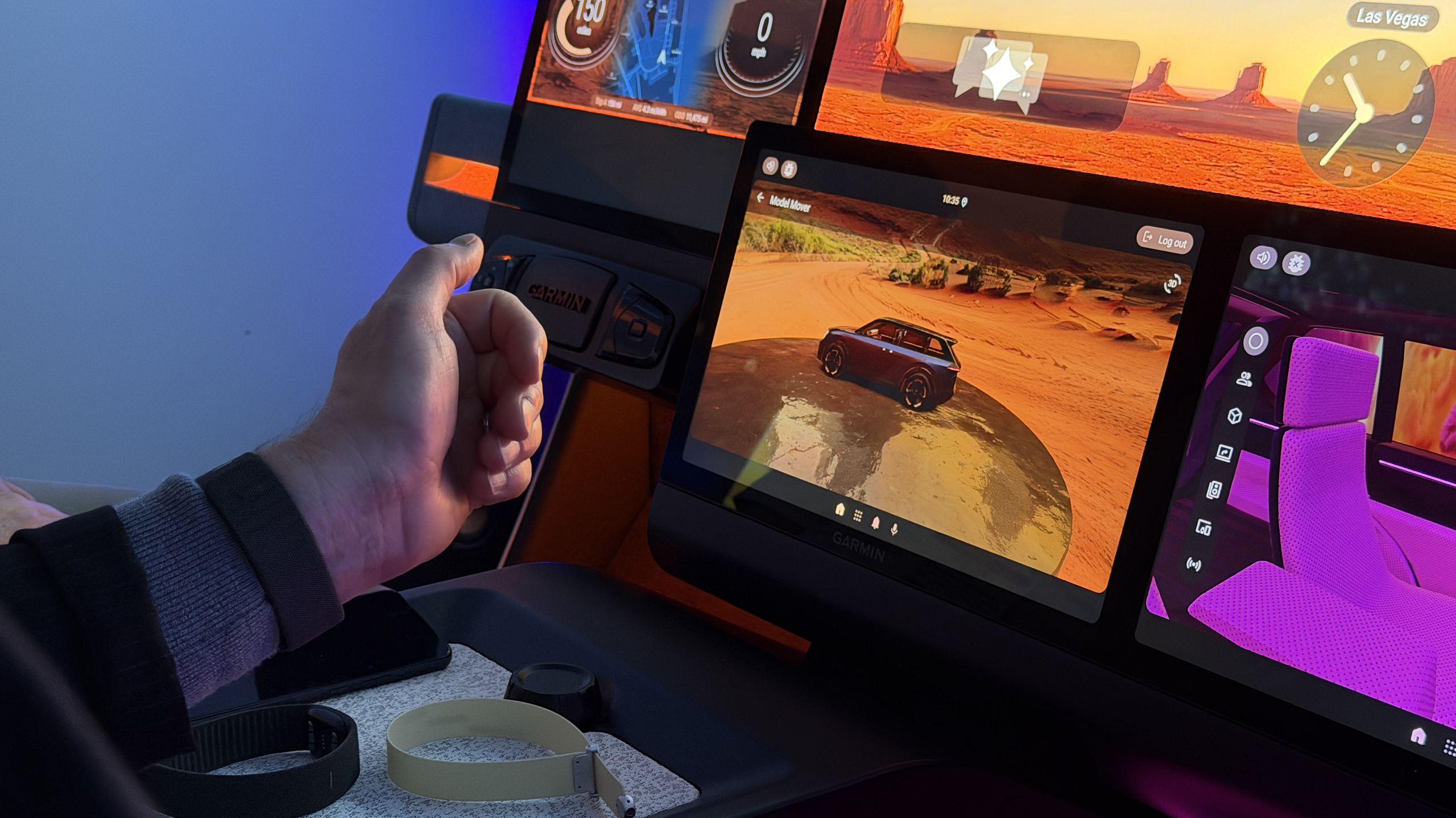
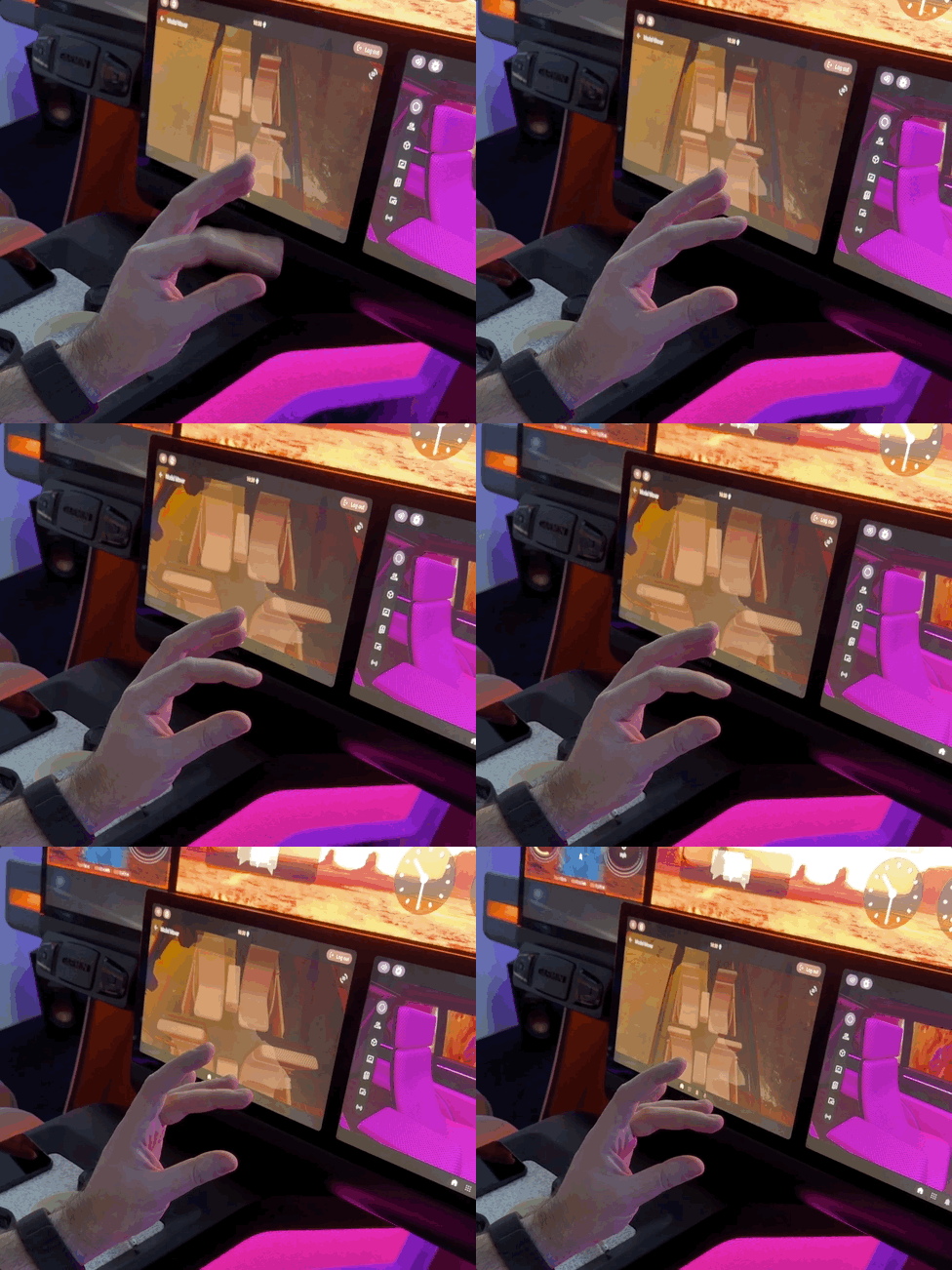
And while it was only a concept, I sat in the demo car, which was very still and only had four seats in a rough setting, put on the Meta Neural Band and was off to the races, able to spin the electronic version of the car on the main screen and even pinch to zoom in or out. It’s basic, but mostly a testing ground for how these different types of inputs might prove useful in the car.
This is part of Garmin’s Unified Cabin concept, which is essentially a much smarter, next-generation interior for future vehicles. The ability to use the Neural Band is part of a collaboration between Garmin and Meta, exploring how this technology could be used.
The idea, however, is that in Android Auto, instead of saying “Hey Google” or swiping with your fingers, you can use gestures without needing to reach out. I was sitting in the passenger seat and had my hand just above my knees, able to make the right gestures to control the display. It was limited, but you could also use it to navigate the interface and interact with various input elements.
There was no steering wheel in this cabin concept, but it could even be operated with hands on the wheel – although I’m not sure about the safety. And the way the Meta Neural Band works is pretty ingenious; This was my first demo with it, and it’s basically able to read gestures and finger movements via electrical signals coming from your wrist. It’s neat and provides feedback with subtle haptics in the band.
The unified cabin concept also highlighted the ability of UWB, potentially in future vehicles, to know the position of a digital key – whether it’s a key fob, a phone or perhaps even a meta-neural strip one day – to greet you with illumination as you approach, but also to provide more precision when you’re in the vehicle. If you’re with a partner who also has a digital key on their phone, they can be more specific in defining the right seat style for the person actually in the driver’s seat. It’s not perfect like it is today.
Although it is only a concept, it is interesting to see that those responsible for the technology used in the vehicles are considering future contributions. The Meta Neural Band could one day be sold on its own rather than just paired with the display bezels – and who knows, it could be the smart car key fob you get in the future.
TechRadar covered extensively this year THESEand brings you all the big announcements as they happen. Visit our CES 2026 News for the latest stories and our hands-on verdicts on everything from wireless TVs and foldable displays to new phones, laptops, smart home gadgets and the latest in AI.
And don’t forget to follow us on TikTok And WhatsApp for the latest news from the CES show!


