
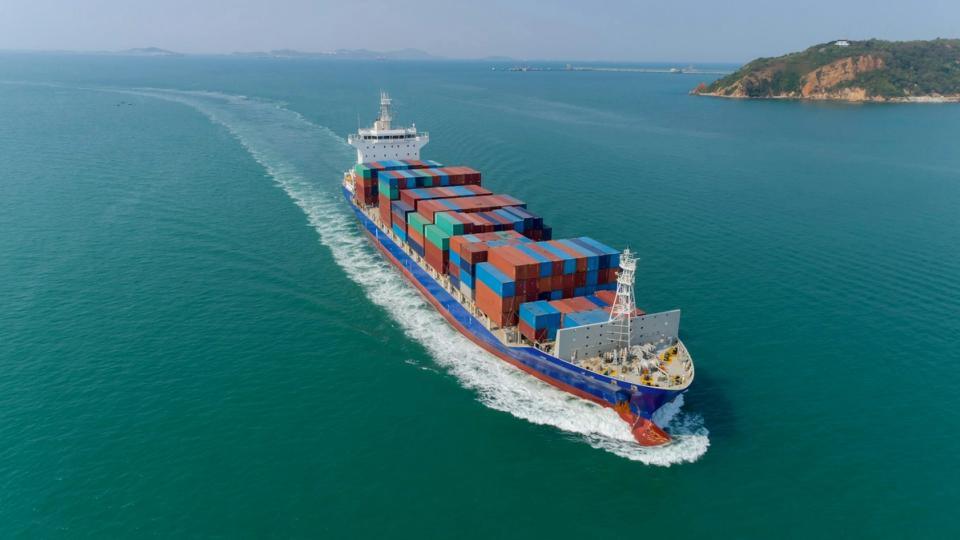
The ripple effects of geopolitical conflict are reshaping the plumbing of global trade finance, pushing some commodity traders out of the banking system and into the arms of stablecoins.
That’s according to Luke Sully, CEO of trade finance-focused stablecoin issuer Haycen, who says the war involving Iran has increased compliance fears among Western banks, triggering a new wave of “debanking” in commodity markets.
“Since the war, banks are withdrawing even more from certain commodity flows,” Sully told CoinDesk in an interview.
“We have spoken with some commodity traders who are currently locked out of their banks,” he added.
A $2 trillion market
The concern focuses on counterparty risk.
Banks fear that seemingly legitimate transactions, for example involving businesses in Oman or other regional centers, could have indirect exposure to sanctioned Iranian entities. Rather than take the risk, some institutions are withdrawing altogether.
The result is reduced access to traditional railways in an industry already largely financed outside of traditional banking.
Trade finance, an approximately $2 trillion market for international trade transactions, is increasingly dominated by non-bank lenders, including private credit funds that finance the movement of raw materials and goods globally.
“Everyone thinks they know trade finance, but they don’t,” says Sully. “These are primarily non-bank investment funds that lend to borrowers around the world to move goods and services.”
These lenders provide critical liquidity, often generating annualized returns of around 15%, and enable transactions such as shipping helium from Qatar to South Korea or manganese from South Africa to Indonesia.
But they rely on banks for settlement and payment channels, relationships now under strain.
Stablecoins, digital tokens tied to fiat currencies, typically the US dollar, are emerging as a key workaround. In particular, Tether’s USDT has been increasingly adopted by commodity traders and counterparties operating in emerging markets.
These cryptocurrencies have quickly evolved from a niche cryptocurrency trading tool to one of the fastest growing segments of global finance, with a total market capitalization surpassing $300 billion in 2025 after annual growth of around 50%.
Transaction volumes have grown even faster, surpassing $4 trillion in 2025 and now accounting for around 30% of all onchain activity, highlighting their growing role as a means of cross-border payments and dollar access in emerging markets.
The dominance of Tether
Once primarily used in crypto markets, stablecoins are increasingly being adopted for real-world use cases, from remittances to trade settlement, due to their speed, global liquidity, and ability to bypass traditional banking channels.
One such stablecoin is Tether’s USDT, which is currently dominating the flow.
“Tether takes up a lot of the payment flow,” says Sully. “If you want to make a one-time payment in an emerging market, USDT helps you.”
The appeal is simple: significant global liquidity and widespread acceptance.
“There is so much USDT liquidity in the world that people don’t hesitate to send it or accept it as payment,” he added, “because someone in their country will eventually exchange it for dollars.”
This growing familiarity also changes perceptions.
Still, Sully sees this trend as a workaround rather than a long-term solution. “This is more of a workaround for these people than a solution for trade finance in general. »
“A different problem”
The geopolitical context also produces more extreme signals.
Sully highlighted reports that Bitcoin is used as the “currency of choice” for payments related to safe passage through the Strait of Hormuz, a critical chokepoint for global oil shipments.
“This shows that trade finance is increasingly being led and managed by non-bank actors and non-bank transaction modes,” says Sully.
Haycen is positioning himself to capture this change. The company issues a US dollar-backed stablecoin, USDhn, designed specifically for trade finance.
According to Sully, “Haycen aims to be the liquidity and settlement layer for global non-bank trading and is currently working with industry players around the world.” The objective is to rationalize a very fragmented system.
Haycen’s model allows users to deposit funds, transact using its stablecoin and potentially earn interest, subject to regulatory eligibility, while avoiding delays and inefficiency of correspondent banking.
“Funds are not lost for seven days. You can log in, see your deposits and counterparties in one place and settle instantly.”
Unlike most stablecoin issuers, which focus on crypto trading or retail payments, Haycen targets a specific institutional niche. “All other stablecoin activities are cryptocurrency payment or trading activities,” Sully explains. “We’re solving a different problem.”
This problem, how to move money efficiently in a fragmented and increasingly risk-free global trading system, is likely to worsen as geopolitical tensions persist.
Ironically, Sully notes, banks pulling out could accelerate crypto adoption faster than the industry itself ever did.
Learn more: Banks exercise caution on stablecoins despite market growth, says S&P Global


