
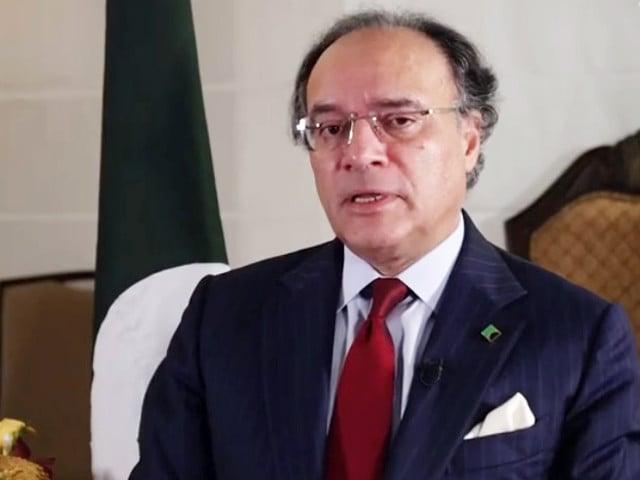
The Minister of Finance Muhammad Aurangzeb has urged world leaders to reform global trade policies, arguing that developing countries are facing excessive prices, commercial restrictions and financial obstacles that hinder their economic growth and integration into the global economy.
Speaking at the Boao Forum for Asia 2025, Aurangzeb stressed how disloyal global business practices benefit disproportionately in developed countries, leaving emerging savings struggling with high debt charges, commercial imbalances and limited financial access.
He warned that if these inequalities persist, the gap between the rich and poor nations will continue to expand.
Aurangzeb stressed that an inclusive global economy is not a choice but a necessity, declaring that despite significant economic progress, the current system remains deeply uneven.
He stressed that if certain savings thrive under existing commercial rules, others – in particular those in the world of world – are left due to systemic barriers.
To remedy this, he proposed the creation of a global alliance for inclusive trade, urging developing countries to unite and demand:
-
Farlking trade policies that reduce prices and restrictions on emerging economies.
-
Better representation in international financial institutions such as the IMF and the World Bank.
-
Best access to digital and financial technologies to fill in economic disparities.
Aurangzeb also called to exploit technology as an equalizer, proposing the creation of global AI and Fintech funds which would support digital transformation and economic participation in developing countries.
The Minister of Finance underlined the need for the G20 and the IMF to restructure sovereign debt to ensure the financial stability of economies in difficulty. He argued that the current debt system trap in developing countries in a financial distress cycle, preventing them from achieving long -term economic growth.
In addition, he highlighted the importance of climate financing reforms, noting that if Pakistan contributes less than 1% of world carbon emissions, it remains among the most climatic vulnerable nations. He called for greater international support in climate and technology transfers to help developing countries mitigate and adapt to climate change.
Aurangzeb described Pakistan’s efforts to strengthen its economic foundation, citing initiatives such as the Special Investment Facilitation Council (SIFC) and the Chinese-Pakistani Economic Corridor (CPEC). These projects, he said, have improved commercial potential, attracted foreign investments and improved infrastructure.
However, he noted that global cooperation is crucial in fields such as AI, Fintech and Digital Trade, which could considerably benefit small and medium -sized enterprises in Pakistan (SMEs) by opening up new economic opportunities.
“The time of speeches is over. It is time for action,” said Aurangzeb, calling on the world leaders to work together in the construction of a multilateral economy and focused on innovation that promotes fair trade, sustainable development and equal financial chances for all nations.


