
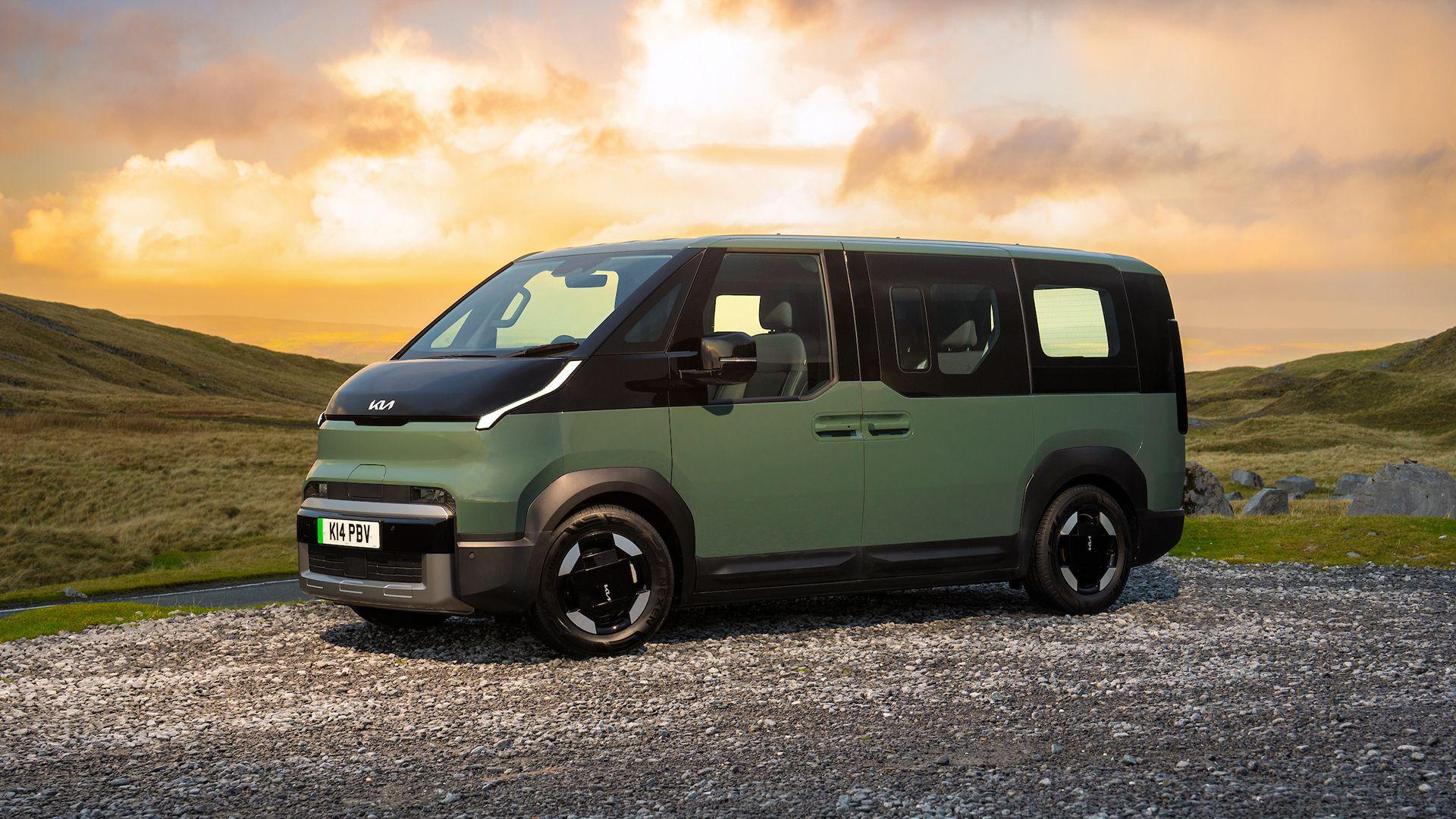
- Registrations of gasoline cars fell by 18.7% at the end of 2025
- Electric vehicles overtook gasoline car sales in December last year
- BYD had a particularly strong year in Europe
Latest sales figures from the Association of European Automobile Manufacturers revealed that sales of battery electric vehicles overtook those of petrol cars in Europe for the first time in December last year, marking a milestone for the technology.
Overall, gasoline cars have still dominated when considering data from January to December 2025, with 26.6% accounting for 17.4% of BEV sales. But hybrid vehicles, which combine a small gasoline engine with batteries and electric motors, were the favorites, accounting for 34.5% of all European sales in 2025.
Perhaps the most telling figure is that gasoline car registrations fell 18.7% at the end of last year, with all major markets seeing declines. Diesel fares even worse, with registrations down 24.2%, which represents a meager share of 8.9% in 2025.
The trend appears to confirm recent reports that some petrol stations in Europe and the UK could stop selling diesel as early as 2030, as new vehicle registrations fall.
Although the European Union has eased its ban on the sale of pure gasoline cars, moving the date back from 2030 to 2035, the trend toward increasing electrification is very much underway, with Europeans purchasing more than 300,000 electric vehicles last month alone.
There are several good reasons for this. The first and most obvious is that Europeans have the largest choice of purely electric vehicles outside of markets like China and Asia, with even the “legacy” carmakers now offering everything from compact electric city cars to large seven-seat SUVs.
Peugeot, for example, sells a purely electric version of every car and light commercial vehicle in its entire range, giving customers a simple choice between a pure electric or hybrid version in many models.
Second, alongside the rapid increase in model choice in Europe, the cost of electric vehicles has also fallen significantly, with smaller, more affordable electric cars now on the market.
Models like the best-selling Renault 5 E-Tech, for example, start at just under £23,000 in the UK, which equates to around $32,000 / AU$45,500.
Likewise, Chinese brands like BYD, Omoda, Jaecoo and Leapmotor have all arrived on European shores and are offering exceptionally good deals on new electric vehicles.
BYD, for example, saw its sales increase by an astronomical rate of 228% in 2025, from 39,000 to 129,000 cars sold during the year.
Hybrids do the heavy lifting
While most major automakers are moving toward an increasingly electrified lineup, buyers simply don’t have as much choice in Europe when it comes to purely gasoline or diesel cars. In fact, these have all been removed from most model ranges.
Instead, hybrid cars have been seen as a way to bridge the gap between fossil fuels and pure electrification, offering increased range over BEVs and the ability to quickly fill a gas tank from a traditional gas station if necessary.
European sales figures for hybrid cars speak for themselves, but purely electric vehicles are quickly catching up. Additionally, many manufacturers are moving toward range-extended hybrids, in which the engine acts solely as a generator to charge the batteries, rather than driving the wheels.
This helps reduce fuel consumption and emissions, while providing a range of more than 1,000 miles without stopping in the case of Xpeng’s formidable G7 SUV and P7+ sedan, both of which will soon be available in Europe.
Follow TechRadar on Google News And add us as your favorite source to get our news, reviews and expert opinions in your feeds. Make sure to click the Follow button!
And of course you can also follow TechRadar on YouTube And TikTok for news, reviews, unboxings in video form and receive regular updates from us on WhatsApp Also.


