
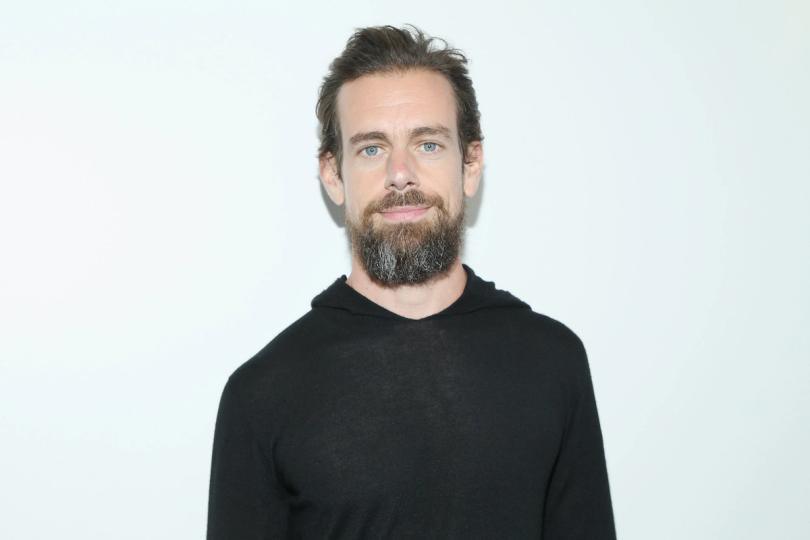
In Jack Dorsey’s worldview, the job most threatened by the AI revolution is middle management.
Dorsey argues in a new essay, “From Hierarchy to Intelligence,” published with Roelof Botha, managing partner of Sequoia Capital and an investor in Block, that his company’s decision to cut about 4,000 of its more than 10,000 employees was not a cost-cutting but a permanent restructuring aimed at replacing middle management with AI.
According to the essay, corporate hierarchy has always existed to solve a problem: funneling information through organizations too large for a single person to oversee.
Managers aggregate context from the bottom, act as messengers from the top, and maintain alignment across teams. AI can now perform these functions continuously and at scale, the authors argue, making the messenger redundant.
In place of management layers, Dorsey and Botha propose two AI-driven “global models.”
One aggregates internal data from code, decisions, workflows and performance metrics to create a continually updated picture of business operations, replacing the context that managers traditionally carried.
The other maps customer and merchant behavior using transaction data from Cash App and Square.
These models power what Block calls an “intelligence layer” that dynamically composes financial products to meet market demand.
If applied correctly, the models absorb the coordination work that previously justified the existence of middle management.
Rather than relying on fixed roadmaps, the trial proposes dividing Block’s businesses into modular capabilities, including payments, lending, card issuance and payroll.
When the system identifies a need, the trial example is that of a merchant facing a seasonal cash flow deficit, it assembles a solution from existing capabilities. When this is not the case, the missing functionality defines what will be built next, replacing the product roadmap with a system-generated backlog.
The organizational structure is reduced accordingly. Block plans to operate with three roles: individual contributors who build the system, directly accountable people who own specific results over 90-day cycles, and player coaches who stay involved while developing people.
Dorsey told Wired in early March that the restructuring was triggered by a capacity shift he observed in December in tools such as Anthropic’s Opus 4.6 and OpenAI’s Codex 5.3, which he said were now able to operate effectively in large code bases.
But current and former Block employees told the Guardian that around 95% of AI-generated code changes still require human editing and that AI tools cannot yet lead in regulated areas such as banking and money transfers.


