
Legitimate constitutional process under partition, debunking narratives of forced annexation
ISLAMABAD:
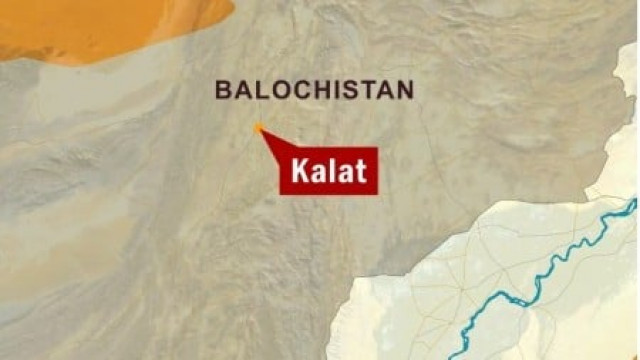
The misleading claim that Pakistan forcibly occupied Kalat and Balochistan continues to circulate, often used to distort history and fuel grievances. A detailed examination, however, shows that Kalat’s accession in March 1948 followed the legal framework of partition and did not constitute an act of occupation.
Kalat, like hundreds of other princely states under British dominance, was never fully sovereign. Its external affairs, defense and communications were controlled by the British, leaving it with treaty-based autonomy rather than complete independence. When British rule ended in 1947, the doctrine of supremacy lapsed, forcing all princely states, including Kalat, to join India or Pakistan. Independence has never been a third legal option.
By the time the Khan of Kalat signed the Instrument of Accession, the majority of present-day Balochistan was already part of Pakistan. British Balochistan – including Quetta, Pishin and Sibi – had legally merged with Pakistan, while Lasbela, Kharan and Makran had voluntarily joined in 1947-48. Gwadar later joined through a purchase from Oman in 1958.
Read: Kalan Kot Fort battles ghosts of the past and squatters of the present
The accession was signed by the Kalat rulers themselves, with the support of many Baloch sardars and political elites. Opposition was limited to a small faction, notably Prince Abdul Karim, acting on external incentives rather than public consensus. Even considering the objections regarding Kalat, they cannot justify the claims that Pakistan “occupies” the entire province. British Balochistan and the other three princely states had already joined independently.
No country, including Afghanistan, Iran or the United Nations, has ever recognized Kalat as a sovereign state. Occupation involves the violation of a recognized state, which does not apply here. The narrative of “forced membership” emerged decades later, particularly from the 1970s and intensified after 2000, often used to justify political agendas or mobilize international sympathy.
Learn more: 4 terrorists neutralized in Kalat
Calling Kalat’s accession “colonization” would imply similar assertions against India’s integration of Hyderabad or Junagadh, thereby revealing the selective nature of such arguments.
Today, the challenges in Balochistan revolve around governance, development and the fight against indoctrination, not occupation. Decades-long narratives of “deprivation” often reflect propaganda rather than reality, highlighting the need for solutions focused on progress, inclusion and national unity.


