
PESHAWAR:
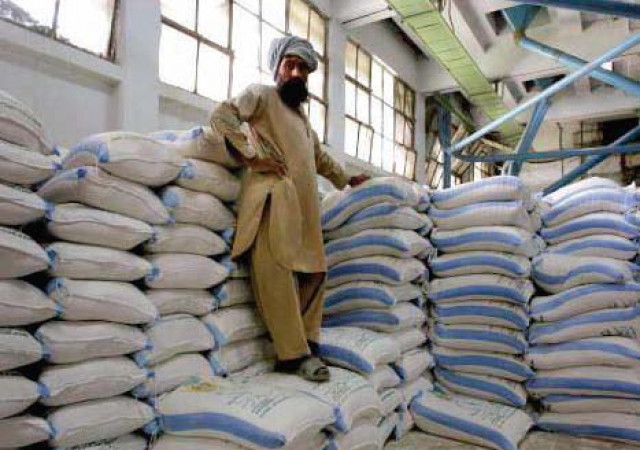
In response to Punjab’s ban on inter-provincial procurement of flour and wheat, the Khyber-Pakhtunkhwa (KP) government has decided to launch government-regulated flour across the province, officials said on Tuesday.
The initiative aims to stabilize prices and ensure product availability following rising costs caused by supply disruption.
Under the plan, wheat will be supplied directly to flour mills in the province, and the Ministry of Food has issued a detailed code of conduct for flour mills and flour merchants.
The move comes after attempts to restore wheat supplies to Punjab failed, despite protests from KP authorities, flour mill owners and local bakers.
Under the scheme, a 20 kg bag of government flour will be sold to the public at a price of Rs2,220. Flour mill owners will get the same bag at Rs2,190. To distinguish government regulated flour, mills will sell it exclusively in green colored bags.
All Food Green warehouses will be equipped with CCTV cameras to monitor distribution and sales. The District Food Officer or Ration Controller will prepare a list of approved flour dealers and provide it to the Deputy Commissioner concerned.
Retailers will have to display a banner reading: “Khyber-Pakhtunkhwa Government flour available here at Rs 2,220 per 20 kg”.
Flour mills receiving wheat from the Food Department are required to submit daily reports detailing the quantity of wheat received and flour produced at approved ratios.
In the event of non-compliance, the mills will no longer be able to receive wheat from the government. Distribution of government wheat will be carried out equally among operational flour mills holding a valid Food Green license. A full report will be submitted to the Food Directorate through the Divisional Deputy Director of Food.
For districts without operational flour mills, the wheat quota will be redistributed to operational flour mills in adjacent districts, as per the decisions of the PFC.
If the district is not covered under these provisions, the Food Directorate will ensure that the quota is transferred from surplus districts to deficit districts based on the allocations of the concerned DFC.


