Cassidy Carlisle was in seventh year, she said, when she had to change in the same locker room as a transgender student.
During a gym class at the almost Isle intermediary school in northern Maine six years ago, she said, she entered the locker room to find a biological man who would change with her and other girls. She alleges that she was informed by the administrators that if she was trying to avoid changing with the Trans student, she would risk being late in class.
“It was really my first experience knowing that something is wrong, but not knowing what to do with it,” Carlisle told PK Press Club Digital in an exclusive interview. PK Press Club Digital contacted almost Isle Middle School to comment.
How transgender in sports changed the 2024 elections and sparked a national counterculture
Gender identity was first included in the Maine Human Rights Act in the context of the definition of sexual orientation in 2005. In 2021, the law was modified to add gender identity as its own protected class, by joining other protected classes such as sex, sexual orientation, handicap, race, color and religion. The law specifically indicates that refusing a person on equal opportunities in sports programs is discrimination in education.
The transgender student was in the girl’s locker room only for about a week, says Carlisle, before mysteriously disappearing. But the memory of the experience remained to him.
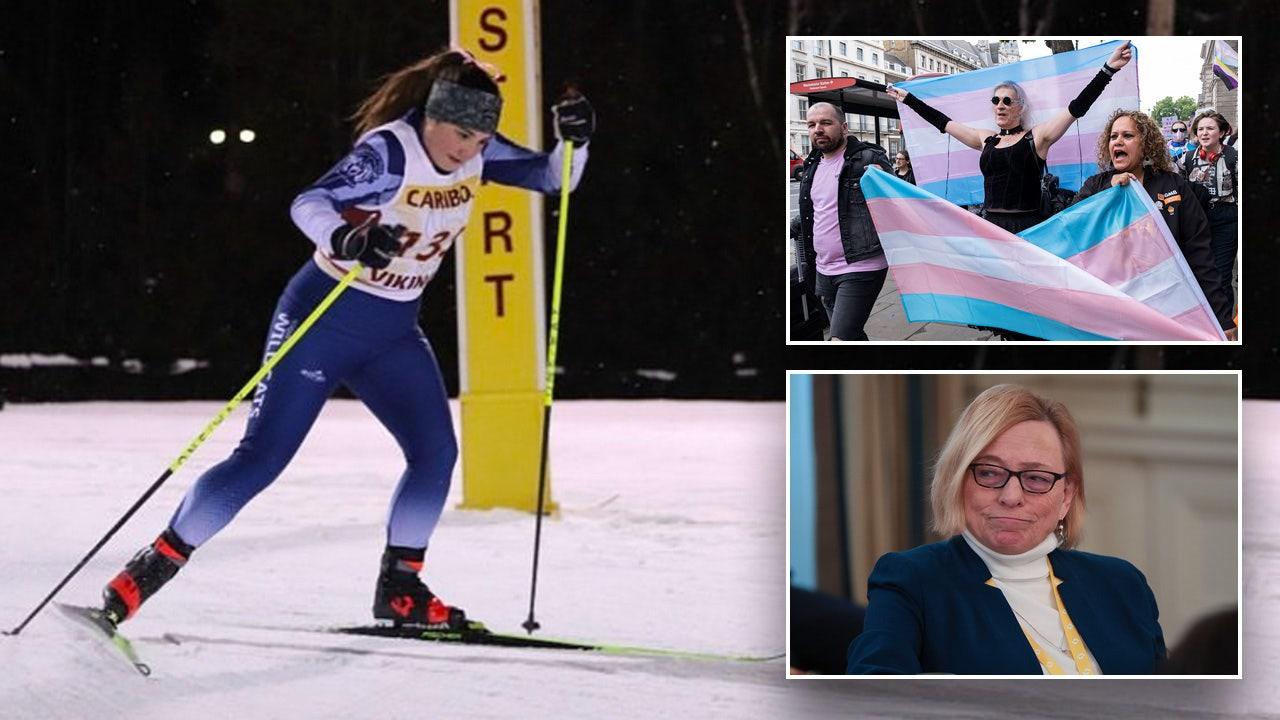
Student of Maine High School Cassidy Carlisle Skiing (Gracieuse of Cassidy Carlisle)
Memory remained particularly with her in her first year of high school, when she discovered that she would compete in a trans athlete in the Nordic state ski team.
She was an athlete with whom she knew. She had already lost against the Trans athlete in cross-country competitions in previous years.
When her father told her that she should again face the athlete in skiing, Carlisle did not believe that it happened.
“I said to myself:” Oh, that’s just something I hear about in the news. … It’s not going to happen to me, “recalls Cassidy.
Maine’s universities agree to keep transgender athletes outside female sports after Trump administrator has taken a break
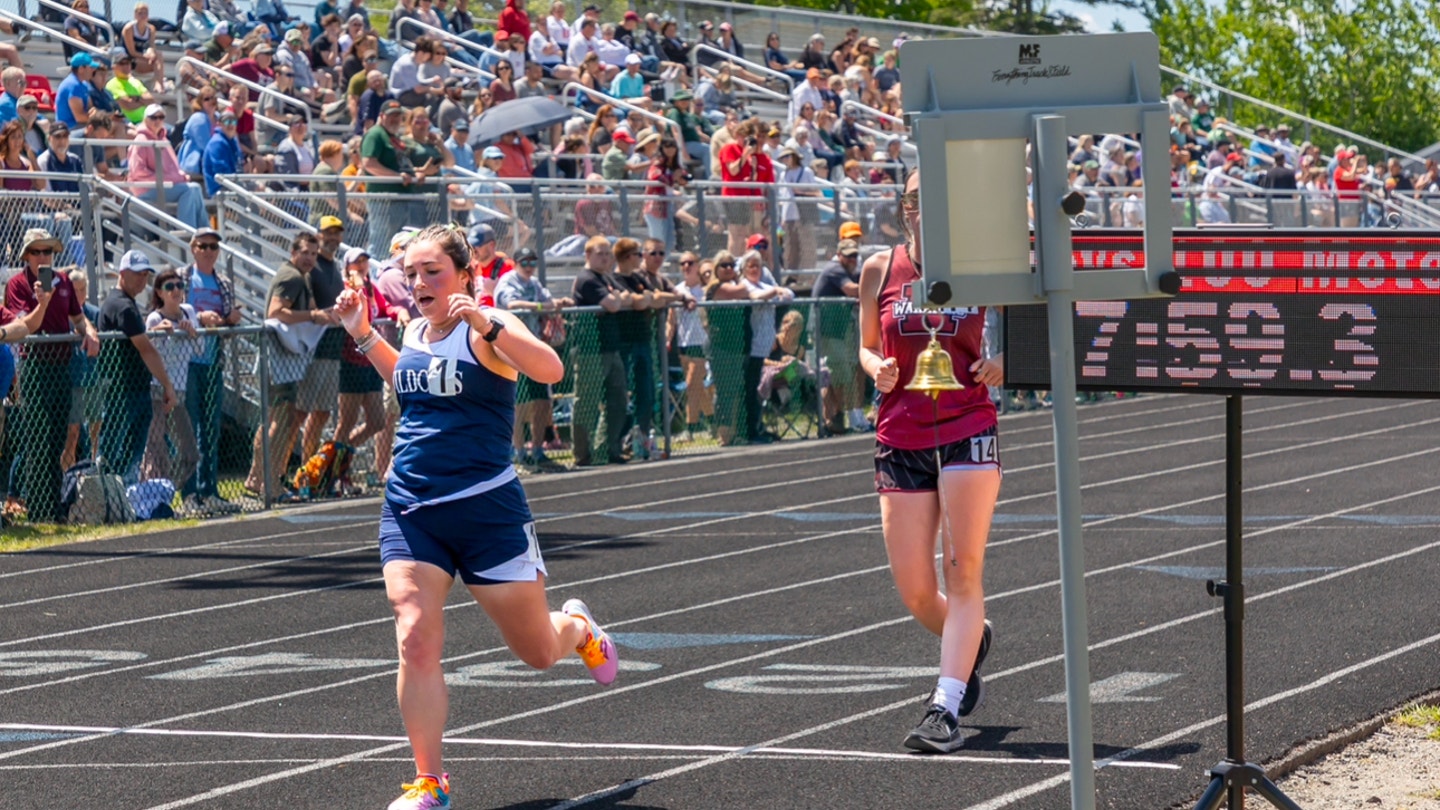
Cassidy Carlisle of Maine Cassidy Carlisle secondary school in a track event (Gracieuse of Cassidy Carlisle)
But it happened to him.
“The defeat that comes with this at that time is heartbreaking,” said Carlisle. “I’m just in shock in a way. I didn’t believe it. … I didn’t think it happened to me.”
As a child, Carlisle left her mixed hockey team specifically because she felt that she “could not follow” the boys. Then, even after engaging in a sport reserved for girls, she could not escape the physical disadvantage that came to organic men.
Maine responds to the declaration of Trump’s administrator’s administrator violated title IX by authorizing transgender people in girls sports
In addition to the anxiety of the situation, Carlisle felt like she couldn’t talk about it.
“I remained silent for a while,” said Carlisle. “It is very difficult to speak if you do not have a platform to do so.
What she could do was vote in the November elections. As an elector for the first time, she voted with the question of trans athletes in girls sports at the forefront.
A National exit survey Directed by the Legislative Action Committee for Women concerned for women concerned revealed that 70% of moderate voters saw the question of “Donald Trump’s opposition to boys and transgender men playing sports of girls and women and transgender boys and men using female girls and bathrooms” as important to them.
And 6% said it was the most important question of all, while 44% said it was “very important”.
When the representative of the Maine republican state, Laurel Libby, spoke earlier this year against another Trans athlete who won a women’s jump competition in February, Carlisle suddenly acquired an opportunity to influence the problem.
Trump’s administrator responds to Maine’s reluctance to ban trans sports athletes from girls
The publication of Libby’s social media identifying the Trans athlete injected the whole state into an ongoing cultural war. He became Ground Zero for a national battle on the issue led by the Trump administration against several states controlled by Democrats like Maine after Trump signed a decree to solve the problem on February 5.
All of a sudden, thousands of people in Maine denounced the laws of the state which allow the inclusion trans into sports and changing rooms for girls, all with the support of the president.
So Carlisle joined.
On February 27, Carlisle made a White House trip with several other current and old female athletes that were affected by Trans inclusion, notably Payton McNabb and Selina Soule. There, they met the attorney general Pam Bondi and several other prosecutors of state and shared their stories.
Carlisle could not help notify an absence in the White House that day,
“None of our GA was there in our state,” said Carlisle.
So when Carlisle returned to her state, she took matters into her own hands.
Last weekend, she gave a speech in front of the Maine Capitol, which was addressed to hundreds of other residents there to protest against Governor Janet Mills for his pursuit of trans athletes in girls sports.
It was the second protest against the mills outside the Capitol in a month after the March on March 1 rally on March 1.
The Trump administration takes aggressive measures to bring the state to join Carlisle and other residents who want women to be protected from trans inclusion.
On March 17, the Office for Civil Health and Social Services (OCR) announced that if the Maine Ministry of Education, the Association of Managers of Maine and the Greely High School, in violation of title IX, continued to allow trans inclusion in girls.
In the announcement, the ministry said that Maine had 10 days to correct its policies through a signed agreement or reference risk to the US justice ministry for an appropriate action.
Trump has already shown a desire to reduce federal funding to enforce these policies. He took a financing break of $ 175 million at the University of Pennsylvania and temporarily interrupted the financing of the Maine University system last week until an examination found that the system was in full compliance with Trump’s orders.
The deadline for the rest of Maine complies is to come within a week.
“I really hope that Maine conforms because our schools need federal funding, and we cannot risk losing this,” said Carlisle. “It would really hurt our state to lose this federal funding. So I hope that our government will be able to meet.”